Section
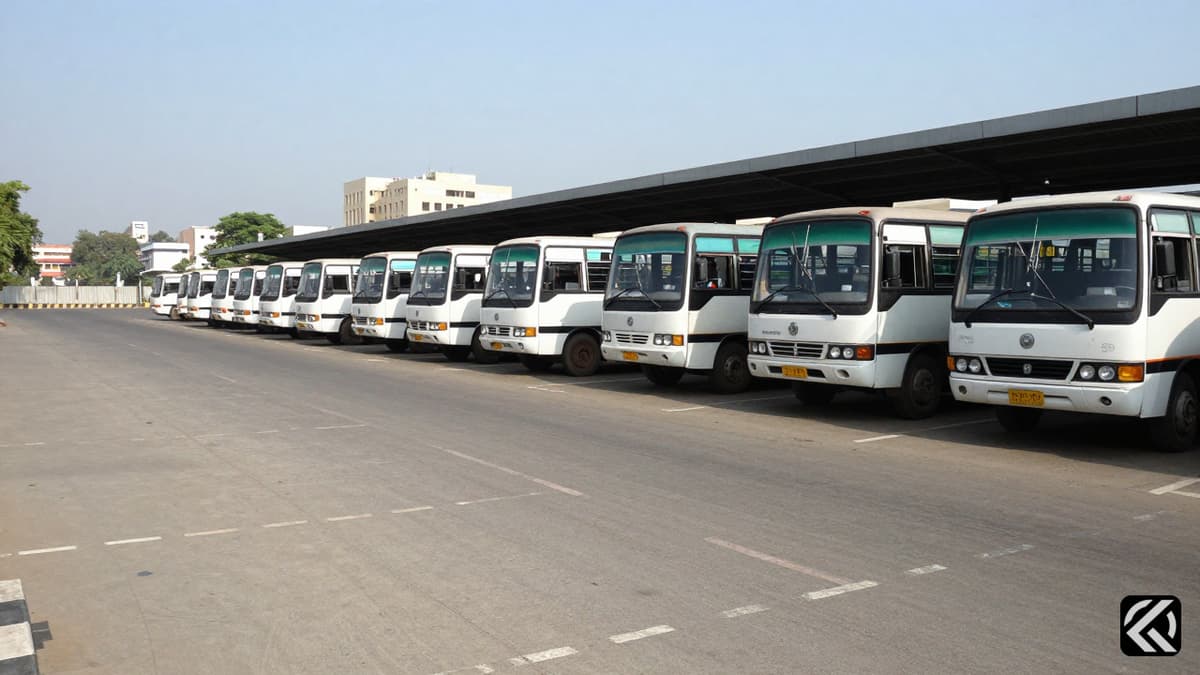
Major shutdowns loom for August 13 across Karnataka as activists mobilize against water disputes. While essential services continue, commercial and transport sectors face significant interruptions.
The state of Karnataka is bracing for a significant day of disruption on Thursday, August 13, 2026, as various Kannada political outfits and activist groups call for a statewide Karnataka bandh. While numerous organizations are expected to finalize their level of support by Wednesday evening, veteran Kannada activist Vatal Nagaraj has confirmed that his group will definitely proceed with the shutdown. As a precursor to the main event, Nagaraj’s organization has already mobilized supporters for a demonstration utilizing “brooms” at the Majestic Bus Stand on Wednesday, August 12, signaling the imminent start of widespread civil action.
The planned shutdown is set to remain effective from 6 a.m. to 6 p.m., creating a substantial window where normal civic and commercial life will be suspended. This timing will heavily impact public transport networks, with unions for hotels, cabs, and autorickshaws preparing to announce their participation following meetings with their respective members. Commercial establishments and shops are also expected to close, although the final list of affected sectors will become clearer as the evening of August 12 progresses.
Initially, the directive for this shutdown was framed as a direct protest against the Cauvery Water Management Authority’s recent directive to release water to Tamil Nadu. However, the scope of the protest has expanded. On Tuesday, August 11, Nagaraj clarified that the day is not solely about the CWMA’s decision but is intended to highlight all major irrigation and development issues affecting the state. This includes critical infrastructure projects such as the Kalasa-Banduri project and the Mekedatu project, which are central to the ongoing debate over water resource management and regional development.
In a significant development regarding the education sector, private schools are expected to remain open during the shutdown. The Karnataka Associated Management of Schools (KAMS), which represents a large portion of the private school network, has officially withdrawn its earlier advisory that had suggested school closures in connection with the ‘Cauvery Bandh’. This decision was driven by the urgent need to prevent the loss of critical academic days, which can have long-term impacts on student learning outcomes.
While classrooms will remain active, KAMS has expressed its moral and peaceful support for the cause of protecting Karnataka’s legitimate interests in the water dispute. D. Shashikumar, the General Secretary of KAMS, stated that as a symbolic gesture of solidarity, school management representatives, teaching staff, and non-teaching staff may wear a black ribbon or black strip on the day of the bandh. This allows for visible support without disrupting the essential function of academic activities.
Furthermore, KAMS has advised member schools to treat this occasion as an educational opportunity rather than just a day of protest. The association recommended that students from Classes 5 to 12 be provided with age-appropriate and factual awareness regarding the history and background of the Cauvery water dispute. This educational initiative aims to inform students about Karnataka’s dependence on Cauvery water for drinking, agriculture, and livelihoods, as well as the difficulties faced during years of deficit rainfall and water scarcity. By understanding the reasons behind Karnataka’s concerns, students can gain a deeper perspective on regional geopolitical and environmental challenges.
Not all groups are adhering to a full shutdown, with some opting for symbolic gestures instead. The Karnataka Kavalu Pade (KKP), after holding a meeting in Mysuru with various Kannada outfits, students’ organisations, farmers’ leaders, and progressive groups, has decided to indirectly support the bandh. KKP President Mohan Kumar Gowda announced that members of the outfit would stage a symbolic protest at Harding Circle, also known as Jayachamarajendra Circle, in Mysuru.
Gowda cited assurances from Chief Minister D.K. Shivakumar regarding the protection of state interests as a factor in this alternative approach. “Chief Minister D.K. Shivakumar has said that farmers and Kannada activists can rest, since his government has promised to protect our interests,” Gowda explained. “As the CM has given such an assurance, we will lie down for an hour at the Harding Circle, starting 11 a.m.” This indicates a segment of the protest movement is balancing civil disobedience with political dialogue, utilizing specific times and locations to maintain visibility without causing total gridlock.
The August 13 shutdown presents a complex logistical landscape for Karnataka, balancing economic disruption with political expression. The decision by private schools to remain open ensures that the education sector continues to function, mitigating one of the most significant potential long-term costs of such protests. However, the impact on commerce and transport remains severe. With major transport unions likely to withdraw services, daily commuters and logistical supply chains will face significant hurdles between 6 a.m. and 6 p.m.
Essential services such as healthcare, pharmacies, and banks are expected to operate normally, providing a crucial safety net for the public during the day. The expansion of the protest’s focus from the CWMA’s specific water release directive to broader issues like the Kalasa-Banduri and Mekedatu projects suggests that the underlying tensions regarding water resource allocation are deepening. As hotel and trader associations finalize their stances later in the day, the economic impact will be fully realized. The mixed response from different groups, ranging from full shutdowns to symbolic hour-long protests, indicates a fragmented but determined opposition movement. Future implications may include intensified negotiations between state activists and the central government regarding water management policies, as well as a potential precedent for how educational institutions engage in political solidarity without halting academic progress.
Aug 17, 2026 14:29 UTC
USS Abraham Lincoln Crew Faces Mental Health Crisis During Extended Deployment
Aug 17, 2026 04:30 UTC
Trump Reduces Joint Military Exercises With South Korea
Aug 17, 2026 02:52 UTC
Kushner Meets Hamas in Egypt Over Rejected Gaza Ceasefire Plan
Aug 16, 2026 20:37 UTC
Kushner Mediates Gaza Ceasefire Amidst Escalating US-Iran Conflicts
Aug 18, 2026 02:32 UTC
Trump Cites India Election Success For SAVE America Act Push