Section
The death toll from a powerful 7.4 magnitude earthquake in Colombia has risen to 224. Rescue teams are battling difficult terrain to aid survivors in the hardest-hit cities.
The death toll from yesterday’s earthquake in Colombia has risen to 224 people killed, according to a CNN count based on reports from agencies and authorities in the country.
Since CNN’s last update, nine more deaths have been reported in the department of Chocó in western Colombia, according to its governor Nubia Carolina Córdoba-Curi. A total of 138 people have also been injured with another five people missing in the department, Córdoba-Curi said. At least 213 people have died and more than 1,500 homes are damaged or destroyed as a result of the powerful 7.4 magnitude earthquake that struck Colombia on Monday.
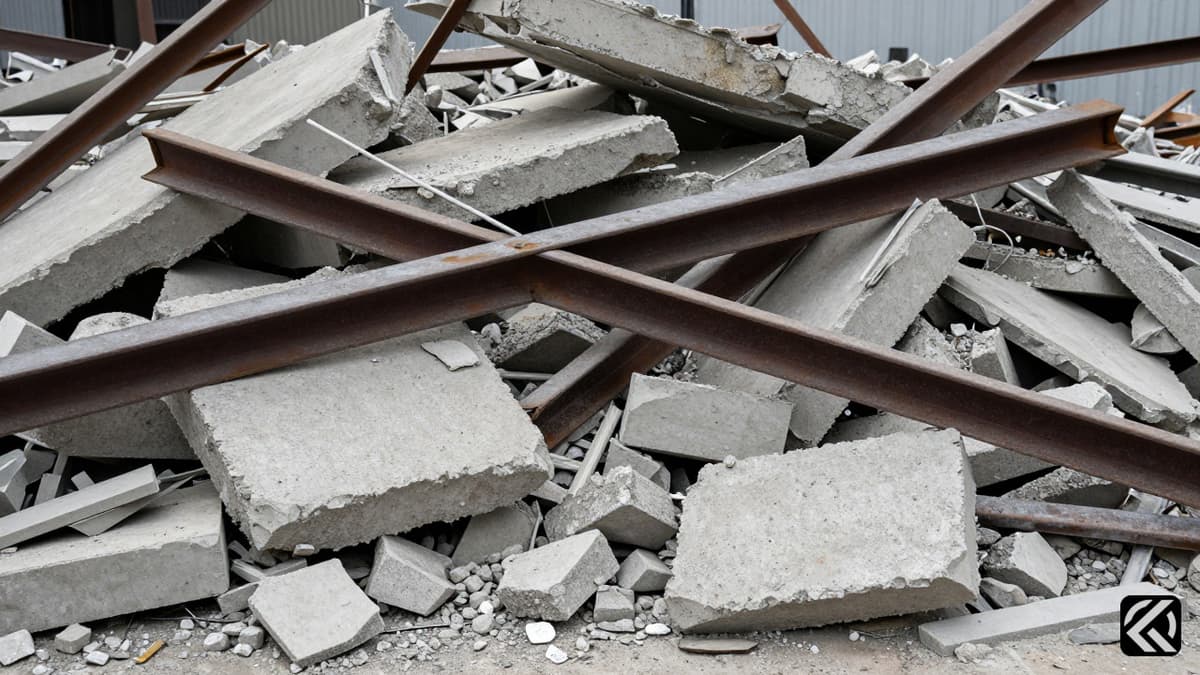
Communities in two of the most densely populated cities in the South American nation - Cali and Pereira - are facing some of the heaviest impact, according to the Colombian Association of Capital Cities. Throughout the country, disoriented residents, health workers and volunteers are scrambling through the rubble of pancaked buildings and clambering over mounds of debris - as they reckon with the mammoth scale of destruction.
In the Colombian city of Pereira, a CNN crew has witnessed the scale of the destruction after yesterday’s deadly earthquake, as rescue teams desperately search for survivors in the rubble of collapsed buildings. Describing the scenes from Pereira live on CNN, Culver said the atmosphere was “eerily quiet” as rescuers listened out for survivors. A crane has been deployed and canine search and rescue teams are searching for people trapped under rubble, Culver said, including under one building that used to host apartments, a bar and a drug store.
First responders work ferociously to try and rescue elderly woman and young girl believed to be trapped in Pereira building. Culver spoke to one man who witnessed the building collapsing in the earthquake. The man said that he felt “a lot of confusion” and “powerless at times.” “What’s happened in Venezuela and other parts of the world now is happening right here in his community,” Culver said of the man. “And he said, ‘It’s moments like this that you have to come together.’”
A native Californian, Mark Ericson grew up with earthquakes. But little could have prepared him for the once-in-a-decade quake that careened through Colombia on Monday. The former TV journalist was inside his house in Cali, west of the capital Bogotá, when he felt a gentle rumbling that quickly morphed into convulsive tremors - lasting about 45 seconds to a minute. Ericson noted that his son, who has autism, found it very difficult to escape the building. Moments later, disoriented residents were streaming onto the streets, said Ericson. Just a couple of blocks away, an entire apartment building had collapsed, he told CNN. “It was chaos… Like you’re in one of those disaster movies,” said Ericson.
Nearly 24 hours after the earthquake first struck Colombia, paramedics are struggling to keep apace of emergency needs, according to Ericson, propelling civilians into action. “Everybody is just coming together to help each other out,” he said.
Cali has been particularly hard hit, with at least 95 people killed there alone, according to local agencies and authorities in the country. Multiple landslides trapped residents in parts of the city on Monday, the UN reported. Pereira also suffered significantly, with 66 deaths recorded there. The number of confirmed deaths as a result of yesterday’s earthquake in Colombia has reached at least 213, according to a CNN count based on reports from agencies and authorities in the country, as search and rescue efforts for survivors continue. CNN’s current tally includes deaths in the department of Valle del Cauca, excluding Cali, at 38, deaths in Quibdó at 9, and deaths in Manizales at 5.
Scattered rescue efforts are hampered by geography and infrastructure. Victor Chamapuro, leader of the Wounaan Indigenous Reserve “Buenavista” in Litoral del San Juan, Chocó department, warned aid is yet to reach the area, which can only be entered by boat on a five-hour journey from the port of Buenaventura, on Colombia’s Pacific coast. Food assistance needs are critical, with Nils Grede, the country director for the UN’s World Food Programme (WFP) in Colombia, saying getting food and water to survivors would be “important in these first days after the catastrophe.” Residents with disabilities are struggling with additional survival challenges, the global NGO, CARE International said on Tuesday. For Ericson’s son, who has autism, trying to escape the building “was very difficult,” he said. Across the country, those with disabilities are plagued by additional survival challenges, the global NGO, CARE International said on Tuesday.
International leaders have stepped in to support the response. The European Union mobilized its satellite service and is providing funding to strengthen response operations, the bloc’s foreign policy chief Kaja Kallas said on Tuesday. Pope Leo XIV is “deeply saddened to learn the painful news of the earthquake” in Colombia. In the letter to survivors, which was sent through the Colombian Episcopal Conference, the pope said he is praying “for the eternal rest of the deceased.” As charities on the ground are providing aid to those affected, CNN’s Impact Your World has ways readers can help victims. Pledge your donation for those affected by the quake here. Impact Your World will continue to monitor the situation and add additional vetted organizations as they begin operations in Colombia.
The disaster has also disrupted local culture and daily life. A music festival that was set to be held in Cali this week has been canceled after yesterday’s deadly earthquake, in which the western Colombian city was hit particularly hard. The mayor of Cali, Alejandro Eder, “has decided to suspend” this year’s edition of the Petronio Alvarez Festival following the disaster, the event’s organizers announced on Instagram. This year was set to be the 30th edition of the festival, which is held every August, according to Colombia’s tourism board. The tourism board calls the event an “opportunity to show the world the music, gastronomy, crafts and ancestral knowledge of the country’s Afro-descendant culture,” noting that more than 3,500 artists bring the festival to life.
Colombia is highly vulnerable to seismic activity given its position on the Pacific Ring of Fire and the confluence of three tectonic plates, and experts say that the country needs to do more to prepare for future earthquakes. Speaking to Spanish newspaper El País in an article published Monday, Flover Rodríguez, geologist and director of the Colombian Association of Energy Geologists and Geophysicists (ACGGP), said that authorities need to update the land-use maps on which seismic regulations are based. “Colombia needs to establish a clear land use policy to protect its people,” he said. To this end, the ACGGP had already called on the government to improve the quality of mapping data in a statement published at the end of July. It also expressed its concern that there is no centralized database detailing which municipalities have carried out basic geological studies, which would help to reduce the risk of damage from earthquakes, landslides and floods.
John Londoño of the Colombian Geological Service (SGC) told El País that, despite recent advances in earthquake resistance rules for new construction projects, there are many buildings that fall short of these requirements. “A huge number of low-income and social housing dwellings don’t meet these standards,” he said. “This is a huge danger for the most vulnerable people.” Gina Villalobos, a civil engineer and professor of seismology, added that although engineering and building designs are of a high quality, standards can slip during the construction phase. “A lot of the time construction projects don’t follow the plans in order to save time or money, and the earthquake resistance rules are broken,” she told El País.
The collapse of homes and public buildings underscores critical failures in urban planning and enforcement of building codes. John Londoño of the Colombian Geological Service (SGC) told Spanish newspaper El País that a “huge number of low-income and social housing dwellings” do not meet earthquake resistance rules for new construction projects, exacerbating “danger for the most vulnerable people.” The lack of a centralized database for geological studies means that risk assessment for municipalities remains fragmented, leaving communities in Pereira and other seismic zones without precise data to guide reconstruction or mitigation efforts.
As the immediate search for survivors transitions to long-term recovery, the structural integrity of remaining buildings in Cali and Pereira will be a primary concern. Experts argue that without a clear land-use policy and updated mapping, future tremors will likely result in similar devastation. The suspension of the Petronio Alvarez Festival highlights the broader cultural impact, but the economic and social reconstruction of these western cities will require sustained international support and strict adherence to revised seismic standards. The convergence of inadequate housing stock, geographic isolation in regions like Chocó, and insufficient geological data presents a complex challenge for Colombian authorities as they navigate the aftermath of this catastrophic event.
Aug 17, 2026 14:29 UTC
USS Abraham Lincoln Crew Faces Mental Health Crisis During Extended Deployment
Aug 17, 2026 04:30 UTC
Trump Reduces Joint Military Exercises With South Korea
Aug 17, 2026 02:52 UTC
Kushner Meets Hamas in Egypt Over Rejected Gaza Ceasefire Plan
Aug 16, 2026 20:37 UTC
Kushner Mediates Gaza Ceasefire Amidst Escalating US-Iran Conflicts
Aug 18, 2026 02:32 UTC
Trump Cites India Election Success For SAVE America Act Push