Section
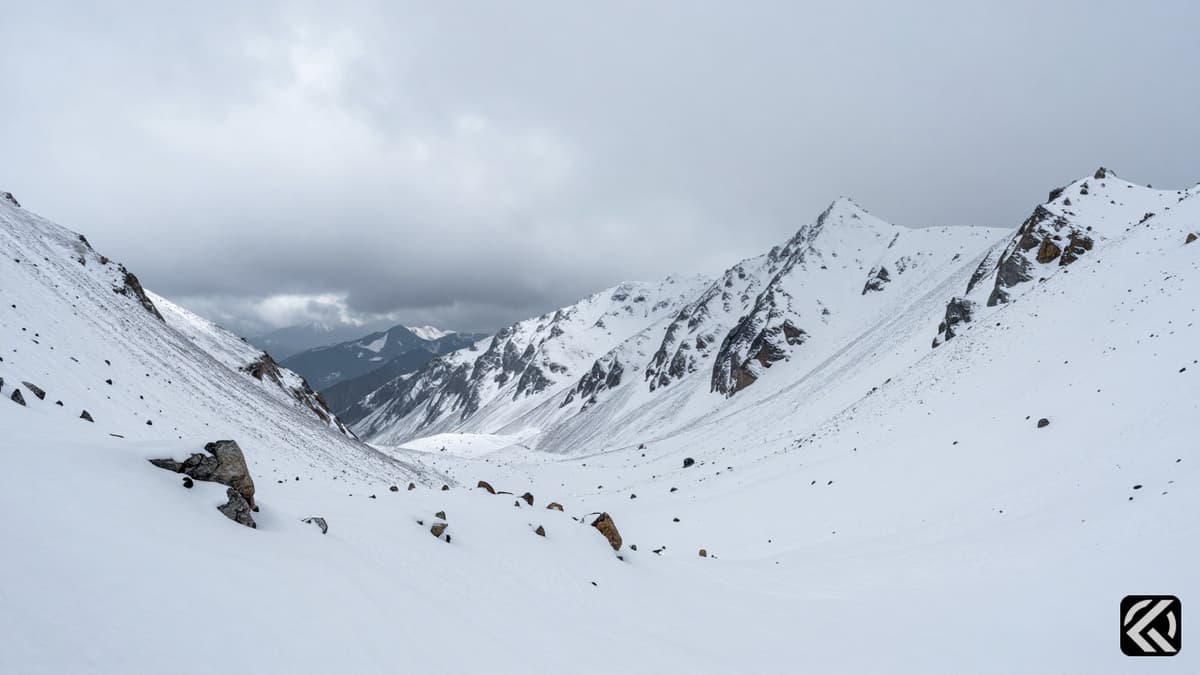
Rescuers are racing against time and volatile weather to locate four climbers who fell on Alaska’s Mount McKinley, with their conditions currently unknown.
Rescuers are currently attempting to reach four climbers who fell on Alaska’s Mount McKinley, identified as North America’s tallest peak, according to an announcement made by the National Park Service on Thursday.
The fallen climbers’ medical conditions were not immediately known following the incident, which was reported to Denali National Park and Preserve rangers during the overnight hours. Park officials stated that rangers were actively seeking a favorable weather window to allow a helicopter to reach the specific area of the fall. The incident involved four individuals who were part of a larger seven-person climbing team. According to the agency’s statement, the three other members of the team initially attended to those who had fallen before returning to camp. The fall occurred near Denali Pass, located at approximately 18,200 feet (5,547 meters). The survivors made their way back to an area known as high camp, situated around 17,000 feet (5,181 meters). Denali, which is locally known as McKinley, stands at approximately 20,310 feet (6,190 meters).
Park officials have maintained contact with the three surviving climbers. Scott Carr, a spokesperson for the park service, confirmed that authorities are in communication with the group but emphasized that additional information regarding the fallen climbers would only be released “if and when it becomes appropriate.” This cautious approach highlights the uncertainty surrounding the situation, as the specific status of the injured parties remains a critical factor in determining the urgency and method of the operation.
The traverse between high camp and Denali Pass is a notorious section of the mountain. Over the years, many climbing injuries and deaths have occurred in this specific area, with most incidents resulting from unprotected falls. To mitigate these risks, park rangers and mountain guides install and maintain snow pickets between high camp and Denali Pass. These pickets are used to help build anchors for extra protection on steep slopes. However, climbers are urged to bring their own pickets in case the protection placed by rangers and guides is missing or insufficient for their needs.
Despite the urgency of the situation, weather conditions have not improved as rescuers had hoped. Carr reported late on Thursday that conditions throughout the day had been variable, characterized by low cloud ceilings and limited visibility. Consequently, authorities were still awaiting an opportunity to safely fly the rescue helicopter to the site. “Helicopter operations will start when a weather window opens up,” Carr stated, underscoring the dependency on meteorological conditions for any successful rescue mission in this high-altitude environment.
A typical climbing season for Mount McKinley begins in late April and continues into mid-July. As of Thursday, Carr noted via email that there were 516 climbers on the mountain. The presence of such a large number of climbers highlights the popularity of the route, even as it amplifies the risks associated with high-traffic areas like the Denali Pass traverse.
In a separate incident earlier in the week, two climbers were evacuated from the mountain by helicopter around 11 p.m. on Wednesday. The park service did not provide additional information regarding this earlier evacuation, but it indicates that helicopter operations are active on the mountain during this period, though they are strictly contingent on weather viability.
The ongoing situation on Mount McKinley underscores the volatile nature of high-altitude mountaineering in Alaska. With weather windows dictating the safety and feasibility of rescue operations, climbers and rescuers alike remain at the mercy of atmospheric conditions. As the climbing season progresses through mid-July, the risk of adverse weather patterns increasing may lead to more frequent delays in emergency responses. The reliance on helicopter access for critical situations highlights the logistical challenges inherent in Denali National Park and Preserve. Future incidents may necessitate further analysis of snow picket placement and climber preparedness to ensure that the historical trend of injuries on the high camp to pass traverse does not result in more fatalities during this busy season.
Aug 17, 2026 14:29 UTC
USS Abraham Lincoln Crew Faces Mental Health Crisis During Extended Deployment
Aug 17, 2026 04:30 UTC
Trump Reduces Joint Military Exercises With South Korea
Aug 17, 2026 02:52 UTC
Kushner Meets Hamas in Egypt Over Rejected Gaza Ceasefire Plan
Aug 16, 2026 20:37 UTC
Kushner Mediates Gaza Ceasefire Amidst Escalating US-Iran Conflicts
Aug 17, 2026 04:45 UTC
Tragedy at Ashok Dham: Seven Lose Lives in Lakhisarai Stampede