Section
A deadly crowd crush at a popular Bihar shrine during religious festivities claimed at least seven lives, mostly women, while over a dozen others sustained injuries requiring hospital care.
The atmosphere at the Ashok Dham temple in Bihar’s Lakhisarai district turned from one of devotion to chaos on Monday, August 17, 2026, resulting in a tragic loss of life. At least seven devotees were killed, and a dozen others were injured in a severe stampede that erupted due to an overwhelming rush of crowds at the site. The incident took place during the third auspicious Monday of the month of Shrawan, a period traditionally marked by significant religious observances and temple visits across the region. Eyewitnesses reported that the sheer volume of people gathering to offer sacred water to Lord Shiva created a dangerous density that local authorities struggled to manage effectively in the initial moments.
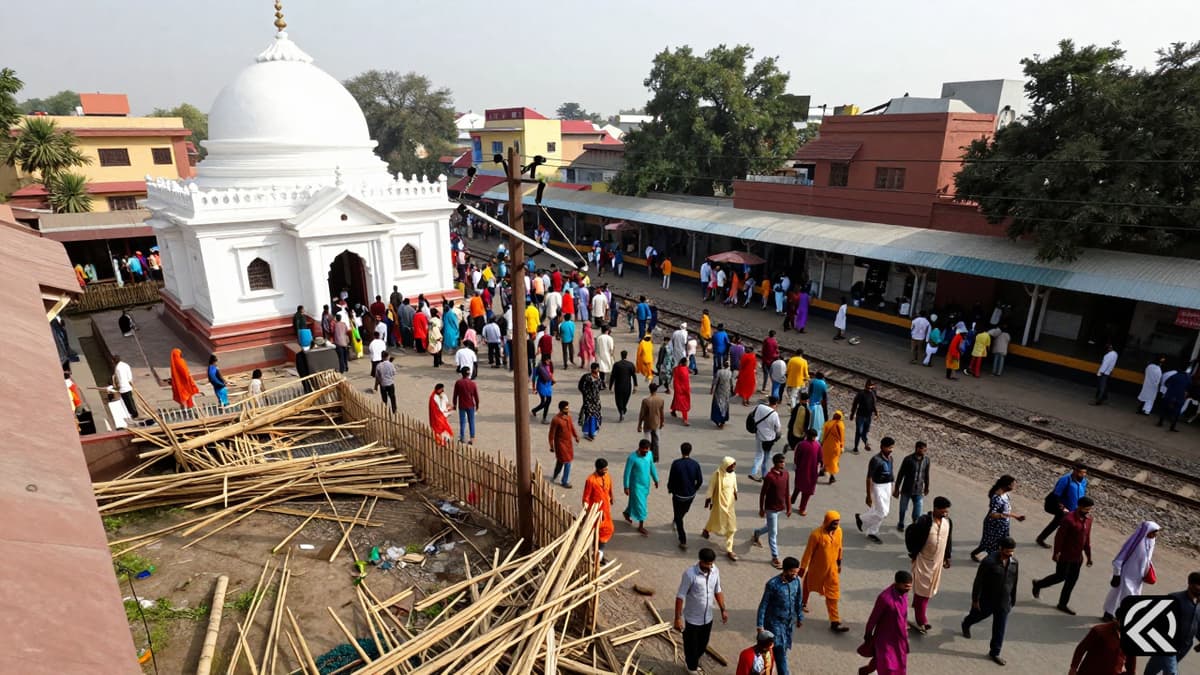
According to local accounts and official statements, the immediate trigger for the disaster was a series of structural failures amid the growing crowd. Two trains full of devotees had recently arrived at the nearby Lakhisarai railway station, with the majority of the passengers being women eager to reach the Ashok Dham temple. The temple, recognizable by its white dome, is situated in close proximity to the railway station, making it a highly accessible destination for pilgrims traveling by rail. As the devotees flooded the area, a bamboo barricade intended to manage the flow of people broke down. Simultaneously, an electric pole snapped at the site, contributing to the confusion and panic that led to the sudden stampede. The incident occurred at approximately 6:40 in the morning, when the rush was at its peak, leaving little time for emergency response before the tragedy unfolded.
Lakhisarai District Magistrate Shailendra Kumar, who took charge of the district in April 2026, confirmed the details of the incident. He stated that district officials were present at the site attempting to control the situation as the barricade gave way. The white-domed temple remains a visible landmark from the train, drawing continuous streams of pilgrims during the auspicious month. Locals reported that the victims of the Lakhisarai stampede were predominantly women, underscoring the specific demographic most affected by the crush. The injured individuals were quickly admitted to the Sadar (town) government hospital to receive immediate medical assistance. While the current confirmed death toll stands at seven, local sources have indicated that the number of fatalities could rise further as some injured persons are in critical condition. The administration has since intensified efforts to secure the area and provide necessary aid to those affected.
This tragedy highlights the ongoing challenges of managing large-scale religious gatherings in India. While specific historical data on previous incidents is not detailed in the immediate report, the reference to "a list of major stampedes in India" in related coverage suggests that such events are part of a broader pattern of crowd management issues during peak religious seasons. The convergence of railway transport and temple visits during the Shrawan month creates a unique logistical pressure. The arrival of two entire trains loaded with devotees in a short span indicates a coordinated pilgrimage effort that likely exceeded the anticipated capacity of the temporary barriers and ground staff. The failure of both the bamboo barricades and the electric pole points to potential infrastructural weaknesses or inadequate load-bearing assessments for the sheer weight of the crowd.
In the aftermath of the stampede, the focus has shifted to stabilizing the injured and ensuring the safety of remaining devotees. The Sadar government hospital is now the central point of care for the over a dozen injured, with medical teams working to treat trauma and other injuries sustained in the crush. District officials have maintained a presence to prevent further disorder, although the initial breakdown of control measures serves as a stark reminder of the volatility of such masses. The incident has prompted urgent questions regarding crowd control protocols and the structural integrity of safety measures at popular religious sites. As the community mourns the seven lives lost, the focus remains on preventing similar tragedies in the future through better planning and infrastructure.
The Ashok Dham temple tragedy underscores the critical need for robust crowd management strategies during the Shrawan month festivities. With the confirmed death toll of seven and numerous injuries, the incident serves as a grim indicator of the risks associated with unregulated mass gatherings near transport hubs. Future religious events must incorporate more durable infrastructure than bamboo barricades and ensure that utility poles are secured against crowd pressure. The reliance on railway transport for pilgrims necessitates coordinated efforts between transport authorities and temple administration to stagger arrivals and distribute crowds more evenly. Without immediate enhancements to safety protocols and physical barriers, the potential for further casualties in similar settings remains high, demanding a comprehensive review of current emergency management practices in the region.
Aug 17, 2026 14:29 UTC
USS Abraham Lincoln Crew Faces Mental Health Crisis During Extended Deployment
Aug 17, 2026 04:30 UTC
Trump Reduces Joint Military Exercises With South Korea
Aug 17, 2026 02:52 UTC
Kushner Meets Hamas in Egypt Over Rejected Gaza Ceasefire Plan
Aug 16, 2026 20:37 UTC
Kushner Mediates Gaza Ceasefire Amidst Escalating US-Iran Conflicts
Aug 17, 2026 22:32 UTC
Hemant Soren Cancels JSSC-CGL Exam Amid Student Protests