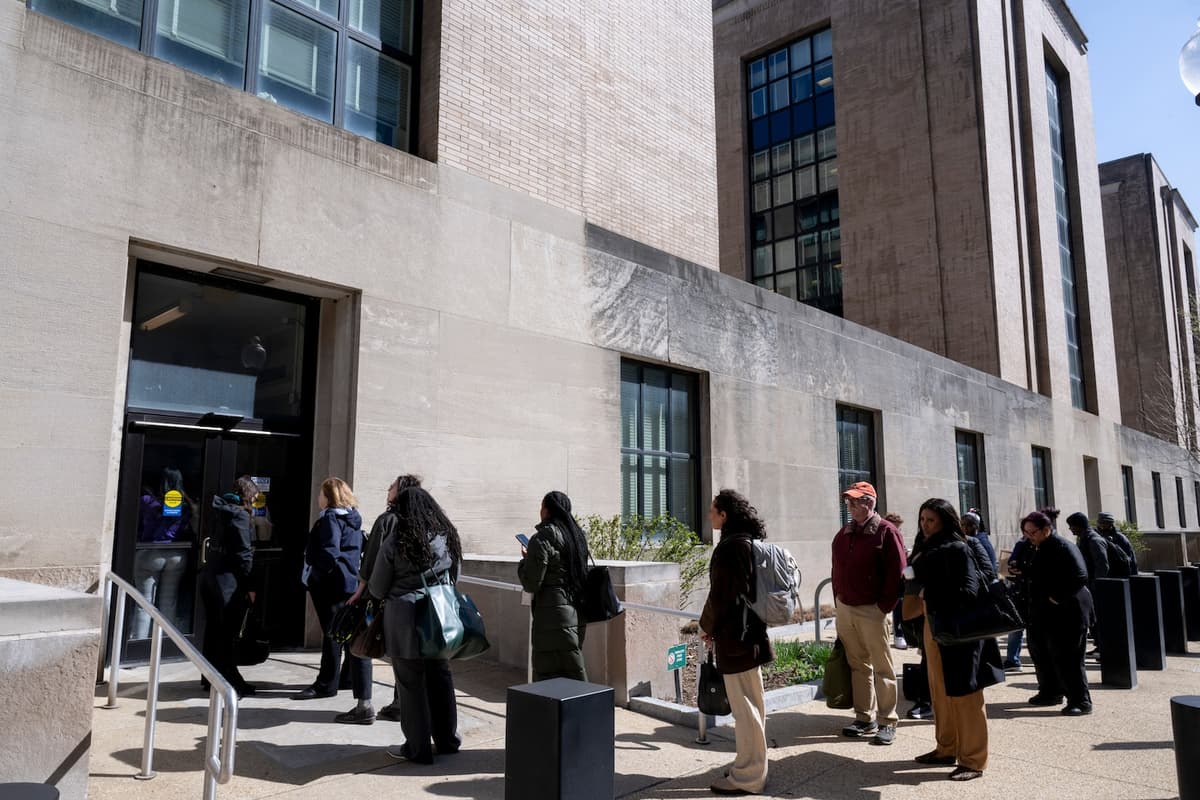
One year after significant federal job cuts, the administration is reversing course to rebuild staff numbers amidst concerns over agency capacity and operational blind spots.
In a significant policy shift occurring in March 2026, the Trump administration has initiated a substantial hiring push that stands in stark contrast to the aggressive workforce reductions implemented just one year prior. This strategic reversal marks a departure from one of the president’s defining early priorities and signals a new phase in efforts to reshape the federal bureaucracy. Following a period where hundreds of thousands of federal employees were purged by Elon Musk and his Department of Government Efficiency allies, the current administration is now seeking to rebuild its ranks. Scott Kupor, the head of the Office of Personnel Management, acknowledged that the initial restructuring may have been too severe, noting that there are specific skills currently required for the government to function effectively. This transition reflects a quiet retreat from previous mandates while attempting to establish new rules designed to give the White House greater influence over the civilian workforce.
The current hiring initiative is unfolding under a framework of new regulations that fundamentally alter how the federal government manages its two-million-person civilian workforce. The administration has officially lifted restrictions that were imposed during the previous year’s drastic reductions. Furthermore, new job classifications have been created to facilitate easier recruitment and dismissal processes for employees who align with the president’s specific priorities. Scott Kupor, who was sworn in last July, stated that the administration intends to rebuild by rebranding the government as a launchpad for college graduates and early-career professionals. The focus of this recruitment drive is heavily weighted toward health care, program management, and technology roles.
In recent months, decision-making power regarding hiring has been centralized within the executive branch. This shift involves expanding the role of political appointees in the recruitment process while simultaneously rolling back diversity initiatives that were adopted under previous administrations. Supporters of these changes argue they will make the government more responsive to elected leadership. However, critics warn that these moves could erode long-standing protections intended to keep the civil service nonpartisan. Kupor defended the approach, stating that when the administration exercises its priorities, it is simply following the process as designed.

Despite the renewed focus on recruitment, officials acknowledge that the federal government remains significantly smaller than it was when Trump took office and unleashed the Department of Government Efficiency. That department previously deleted entire agencies, eliminated offices devoted to civil rights and diversity, and imposed a hiring freeze for most of the calendar year. While Trump and his senior staff promised these cuts would slim a bloated bureaucracy and expose waste, no large-scale evidence of reduced waste emerged publicly. In fact, the government spent more in 2025 than it had the previous year.
The consequences of the earlier purges are now creating operational blind spots across critical agencies. The Cybersecurity and Infrastructure Security Agency (CISA), responsible for defending domestic infrastructure against cyberattacks, lost nearly forty percent of its workforce last year. This reduction in capacity is occurring while cyberthreats from nation states remain a significant concern. A former agency official noted that with the loss of hundreds of experts, CISA’s ability to detect threats from adversaries like China, Russia, and Iran is severely diminished. Meanwhile, the U.S. Agency for International Development is hiring contractors to wind down aid programs but has explicitly excluded former employees to avoid conflicts of interest regarding audits of actions they previously initiated.
Specific departments are struggling to stabilize basic services or recruit enough applicants to fill vacancies created by the earlier layoffs. At the Department of Veterans Affairs, job applications for all positions, including nurses, have dropped by fifty percent in fiscal year 2026 compared with the previous year. Secretary Douglas A. Collins has told lawmakers he wants to hire more health care workers but faces stiff competition in a tight labor market. He has requested that Congress lift salary caps, noting that starting salaries for anesthesiologists in the community can reach six hundred thousand dollars, making it difficult for the agency to compete.
In the financial sector, the Internal Revenue Service (IRS) presents a mixed picture. IRS CEO Frank Bisignano told the House Ways and Means Committee that he believes the agency is sufficiently staffed and feels good about the current number of employees. However, the agency’s inspector general reported conflicting data, stating that the IRS had onboarded only fifty of the roughly two thousand two hundred employees it expected to hire to help process tax returns for the 2026 filing season. This represents about two percent of its target as of the end of last year. Similarly, at the Social Security Administration, employees in IT and policy offices were reassigned to answer phones and handle customer inquiries as call volumes surged. Officials there are moving forward with plans to hire at least seven hundred customer service representatives this year.
Senior White House officials have been personally involved in shaping the rebuild of the workforce. Deputy Chief of Staff Stephen Miller has been active in hiring discussions, emphasizing the recruitment of young staffers and ensuring that new hires are aligned with Trump’s agenda. Some job postings now reflect this ideological framing explicitly. For example, an immigration services officer position titled “Homeland Defender” urges applicants to be ready to protect their homeland and defend their culture. Prospective hires for these roles must explain how they would advance Trump’s executive orders and policy priorities.
Kupor noted that just seven percent of the federal workforce is under thirty years old, a demographic imbalance he intends to address. With White House backing, he launched “Tech Force,” a two-year program partnering with companies including OpenAI and Meta to deploy teams of software engineers and data analysts across federal agencies. Participants will have streamlined pathways to private-sector roles after completing the program. Kupor stated his goal is to demonstrate that public service allows individuals to learn skills translatable to any industry. While Kupor declined to release agency hiring plans submitted under Trump’s executive order, he suggested there are more opportunities to reshape agencies this year, though additional staff reductions could come in some departments.
The Trump administration’s current efforts to rebuild the federal workforce highlight a complex transition from aggressive reduction to strategic recruitment. While officials maintain that the government will remain smaller than it was at the start of the term, the operational strain on agencies like CISA and the IRS suggests significant challenges remain. As lawsuits regarding last year’s dismissals continue through the courts, uncertainty persists for thousands of employees. The administration continues to push its vision of a leaner, more effective government that prioritizes political alignment and demographic shifts, even as critics warn of the long-term implications for civil service protections and national security capacity.

Jun 9, 2026 02:39 UTC
US Warplane Strikes Tanker MT Marivex; Crew Evacuated in Gulf of Oman
Join 50,000+ readers getting the global briefing every morning.
No spam. Unsubscribe anytime.
Jun 9, 2026 00:00 UTC
INDIA Bloc Leaders Gather in Delhi to Forge Strategic Unity
Jun 8, 2026 22:55 UTC
Netanyahu Vows Forceful Response to Future Iran Attacks
Jun 8, 2026 20:56 UTC
Netanyahu Halts Iran Fighting, Vows Future Force
Jun 8, 2026 20:54 UTC
Justice Department Moves to Strip Citizenship from 17 Individuals