Section
The legal proceedings regarding the Ketan Agarwal murder case have taken a technological turn, with a Pune court extending the custody of the two primary accused individuals. Siya Goyal and Chetan Chaudhary remain in judicial custody until July 3, 2026, as investigators emphasize the complexity and ongoing nature of the inquiry. The extension was granted based on the police's assertion that critical forensic work is still underway, specifically focusing on advanced biometric identification methods.
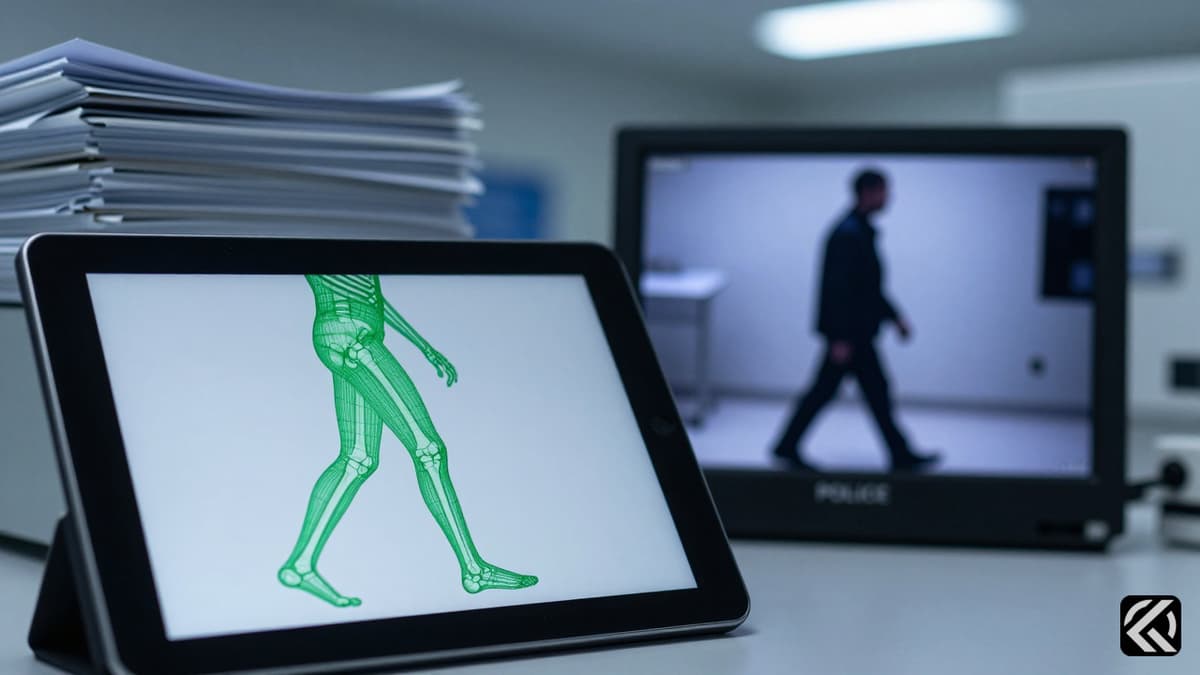
The core of this new phase in the investigation involves a detailed forensic study of Mr. Chaudhary’s gait. According to media reports, the police are employing gait analysis, a scientific technique used to identify individuals by how they walk. This method is being utilized to compare the accused's physical movement with visual evidence from the crime scene. The police argue that this specific type of analysis can help determine whether the hooded individual captured in surveillance footage at Lohagad Fort was indeed Chetan Chaudhary. This development highlights the increasing integration of scientific forensic tools in high-profile criminal investigations in India.
Gait analysis is defined as the scientific study of how a human walks or runs. It is not merely an observation of movement but a deep dive into the biomechanics of human locomotion. Walking or running is described as a highly complex activity. It requires the body to continuously coordinate the interaction between muscles, bones, and the nervous system. This coordination is what creates a unique "signature" for each individual's movement pattern.
The forensic utility of gait analysis lies in its ability to break down these continuous activities. By isolating specific phases of a walk, forensic experts can piece together the unique way a particular person walks. This breakdown allows investigators to identify individuals even when their faces are obscured, such as by a hood or mask. In the context of the current investigation, this technology is being applied to CCTV footage where the suspect's identity is not immediately visible due to coverings.
Pune court extends custody for Siya Goyal and Chetan Chaudhary. Police use gait analysis to identify a hooded figure in the Ketan Agarwal murder case.
The police strategy involves a direct comparison. They intend to measure the gait of Chetan Chaudhary while he is in custody and compare it against the gait of the person seen in the CCTV footage near the crime scene. The hypothesis is that the unique biomechanical traits of Chaudhary’s walk will match those captured in the video. This form of identification is particularly valuable in cases where traditional visual identification is compromised by poor lighting, low-resolution cameras, or the suspect wearing disguises like hoods.
The reliance on gait analysis suggests that the police are moving beyond standard witness testimonies or digital evidence. It indicates a shift toward physical evidence reconstruction. By focusing on the kinematics of the accused, investigators are attempting to bridge the gap between the suspect and the physical location of the crime. Lohagad Fort, the site of the incident, has been a focal point of the visual evidence. The presence of a hooded individual in the footage has likely complicated earlier stages of the probe, necessitating more advanced forensic techniques.
The extension of custody until July 3, 2026, underscores the gravity of these forensic procedures. Gait analysis is not an instantaneous process. It requires controlled environments, precise measurements, and expert interpretation to ensure accuracy. The court’s acquiescence to the investigators' request acknowledges that these scientific processes take time and cannot be rushed without potentially compromising the integrity of the evidence. This period will be crucial for the police to establish a definitive link between the accused and the events at the fort.
For Siya Goyal, who is also in custody, the focus on Chaudhary’s gait may seem specific, but it is part of the broader effort to reconstruct the sequence of events. If the analysis confirms that Chaudhary was the hooded figure, it strengthens the prosecution's case regarding his physical presence and actions at the critical moment. Conversely, if the analysis does not match, it would necessitate a re-evaluation of the visual evidence, potentially redirecting the investigation or raising questions about the reliability of CCTV evidence in identifying perpetrators.
The use of such advanced forensic tools in a murder case reflects the evolving landscape of criminal justice in India. As technology advances, law enforcement agencies are increasingly expected to utilize these tools to secure convictions. The public and the legal community are watching closely to see how this scientific method holds up in court. Its admissibility and accuracy will likely be scrutinized by the defense, making the rigorous documentation of the gait analysis process essential.
The extension of custody for Siya Goyal and Chetan Chaudhary until July 3, 2026, marks a significant pause in the legal battle, allowing time for the completion of the gait analysis. This decision prioritizes the thoroughness of the forensic evidence over expedited proceedings. The outcome of this analysis could be pivotal. If the police successfully match the gait patterns, it will provide irrefutable physical evidence linking Chetan Chaudhary to the crime scene at Lohagad Fort. This could lead to a stronger prosecution case, as it removes the possibility of him being merely an incidental presence. Conversely, if the evidence is inconclusive, it may delay the trial further, allowing the defense to challenge the methodology. The long-term impact of this case may also influence how similar forensic techniques are deployed in future high-profile murder investigations across the country, setting a precedent for the admissibility and scrutiny of gait analysis in Indian courts.
Aug 17, 2026 14:29 UTC
USS Abraham Lincoln Crew Faces Mental Health Crisis During Extended Deployment
Aug 17, 2026 04:30 UTC
Trump Reduces Joint Military Exercises With South Korea
Aug 17, 2026 02:52 UTC
Kushner Meets Hamas in Egypt Over Rejected Gaza Ceasefire Plan
Aug 16, 2026 20:37 UTC
Kushner Mediates Gaza Ceasefire Amidst Escalating US-Iran Conflicts
Aug 17, 2026 22:32 UTC
Hemant Soren Cancels JSSC-CGL Exam Amid Student Protests