Tamil Nadu faces a historic political shift as C. Joseph Vijay prepares to assume the Chief Minister's office, backed by a robust coalition of allies.
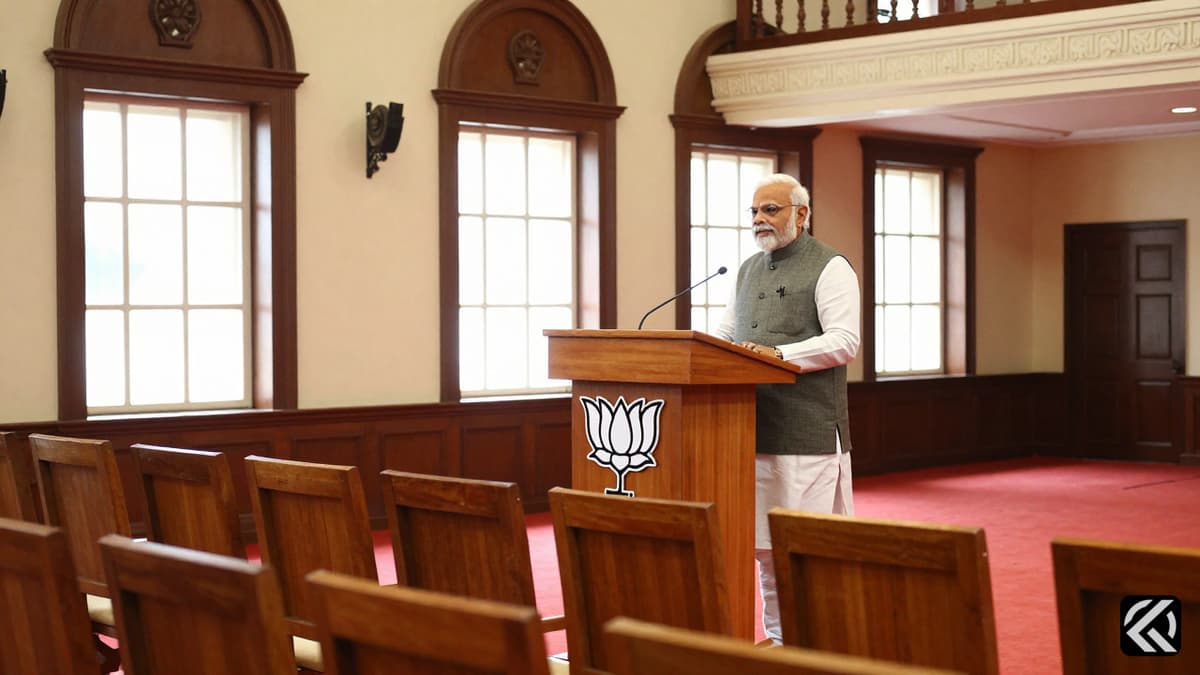
The political landscape of Tamil Nadu is set for a definitive transformation on Sunday, May 10, 2026, as Tamilaga Vettri Kazhagam (TVK) president C. Joseph Vijay prepares to take the oath as the state’s Chief Minister. The inaugural ceremony is scheduled for 10 a.m. at the Nehru Stadium in Chennai, marking the conclusion of a period defined by intense political maneuvering and uncertainty. This event signals the official beginning of a new administrative era, with Mr. Vijay transitioning from party leader to the head of the state government.
Leading up to the swearing-in, the path was cleared through strategic diplomatic meetings between political leaders and constitutional authorities. Mr. Vijay visited Lok Bhavan in Chennai to meet Governor Rajendra Vishwanath Arlekar, officially staking his claim to form the government. This visit was pivotal, as it formally ended the nail-biting political uncertainty that had plagued the state in recent days. The Governor’s interaction with Mr. Vijay was not an isolated event; it was the culmination of a series of consultations.
The foundation of this new administration rests on a solid numerical majority. Mr. Vijay commands the support of 120 MLAs-elect within the 234-member legislative house. This number is sufficient to form a government, as it exceeds the majority mark of 118 by two votes. The calculation of this support base is intricate and relies on the specific electoral dynamics of the recent polls. Mr. Vijay himself contested from two seats, a unique circumstance that influences the total count of his party’s legislative strength.
The TVK party itself won 108 seats in the elections, establishing itself as the single largest party. However, to reach the threshold for forming a government, the party had to secure additional backing from coalition partners. This was achieved through the unconditional support of two key allies: the Viduthalai Chiruthaigal Katchi (VCK) and the Indian Union Muslim League (IUML). Both parties have two MLAs-elect each, and they had previously contested as part of the DMK-led Secular Progressive Alliance.
The formalization of this support came through identically worded letters sent to the Governor. VCK president Thol. Thirumavalavan and IUML national president K.M. Kader Mohideen issued statements mirroring those sent by Left parties, explicitly extending unconditional support to the TVK under Mr. Vijay’s leadership. This diplomatic move was critical in securing the final numbers needed for stability. The support from these parties, combined with the TVK’s own seat count, created the necessary arithmetic for governance.
In addition to the VCK and IUML, the TVK had already secured the support of five Congress MLAs-elect. Furthermore, they had garnered backing from two MLAs-elect each from the Communist Party of India (CPI) and the Communist Party of India (Marxist) (CPI(M)). The presence of leaders from the Congress, VCK, CPI(M), CPI, and IUML accompanied Mr. Vijay during his crucial meeting with the Governor, demonstrating the broad coalition nature of this administration.
The meeting with the Governor marked the fourth time Mr. Vijay had visited the Raj Bhavan in just four days. This frequency of meetings underscores the urgency and importance of establishing a stable government quickly. The final meeting included leaders from all allied parties, signaling a united front in the transition of power. The Governor’s acceptance of the claim letter effectively validated the TVK-led alliance as the legitimate government of Tamil Nadu.
The composition of the Tamil Nadu government formation highlights a complex but effective alliance structure. The TVK, despite winning the most seats, did not have a solo majority. This necessitated the inclusion of smaller but significant parties like the VCK and IUML. The support of these two parties, each contributing two MLAs, was the decisive factor in reaching the 120-strong coalition. This partnership suggests a future administration that will need to balance the interests of multiple ideological groups.
The inclusion of Congress, CPI, and CPI(M) representatives adds another layer to the coalition. While these parties provided legislative support, their limited numbers compared to the TVK and its primary allies indicate a specific dynamic where the TVK remains the dominant force. The fact that Mr. Vijay contested two seats and is still the central figure of the government underscores his personal mandate alongside the party’s structural strength.
The timeline of events, from the initial electoral results to the final oath-taking, was compressed. The nail-biting uncertainty that prevailed in the state was resolved through rapid negotiations and formal letters of support. The Governor’s role in facilitating these meetings and accepting the claim was central to the swift transition. The use of identically worded letters by VCK and IUML leaders also indicates a coordinated strategic approach to legitimizing the new government’s claim to power.
Looking ahead, the swearing-in of nine ministers alongside Mr. Vijay will likely outline the initial distribution of portfolios. The diversity of the supporting parties suggests that key ministries may be allocated to ensure coalition harmony. The stability of this government will depend on the maintenance of the current support base. Any shift in allegiance among the 120 supporting MLAs-elect could impact the government’s longevity, given the narrow margin over the majority mark.
The transition at Nehru Stadium will be a historic moment for Tamil Nadu. It marks the entry of a film-turned-politician, C. Joseph Vijay, into the highest office of the state. The support from a broad spectrum of parties, ranging from Muslim League to Communist factions, indicates a pragmatic coalition built on shared political goals rather than just ideological alignment. The immediate future of Tamil Nadu will be shaped by how this diverse alliance functions in the legislative assembly.
The establishment of the TVK-led government in Tamil Nadu marks a definitive end to political speculation and the beginning of a new administrative chapter. With C. Joseph Vijay confirmed as Chief Minister and a clear majority of 120 MLAs backing his alliance, the state is poised for immediate policy implementation. The coalition’s diverse nature, including support from VCK, IUML, Congress, and Communist parties, suggests that governance will require careful negotiation and compromise among varied ideological groups.
Looking forward, the stability of this government hinges on the cohesion of its 120-member support base. The narrow margin over the 118 threshold means that maintaining unity will be critical. The inclusion of multiple allies indicates a likely distribution of ministries that reflects this balance. As the new administration takes office, the focus will shift from political maneuvering to legislative agenda-setting, with the potential for significant shifts in state policy and governance priorities under this newly formed coalition.
May 8, 2026 15:53 UTC
China Confirms Technical Aid for J-10CE Fighter Jets in Regional Conflict
May 8, 2026 03:53 UTC
Trump Asserts Ceasefire Validity After Strait of Hormuz Clashes
May 8, 2026 02:30 UTC
Trump Threatens Iran After US Ships Attacked in Hormuz
May 7, 2026 17:24 UTC
Iran Enforces New Maritime Rules for Hormuz Transit
May 9, 2026 15:20 UTC
Omaha Democrats Clash Over Blue Dot Fate