Section
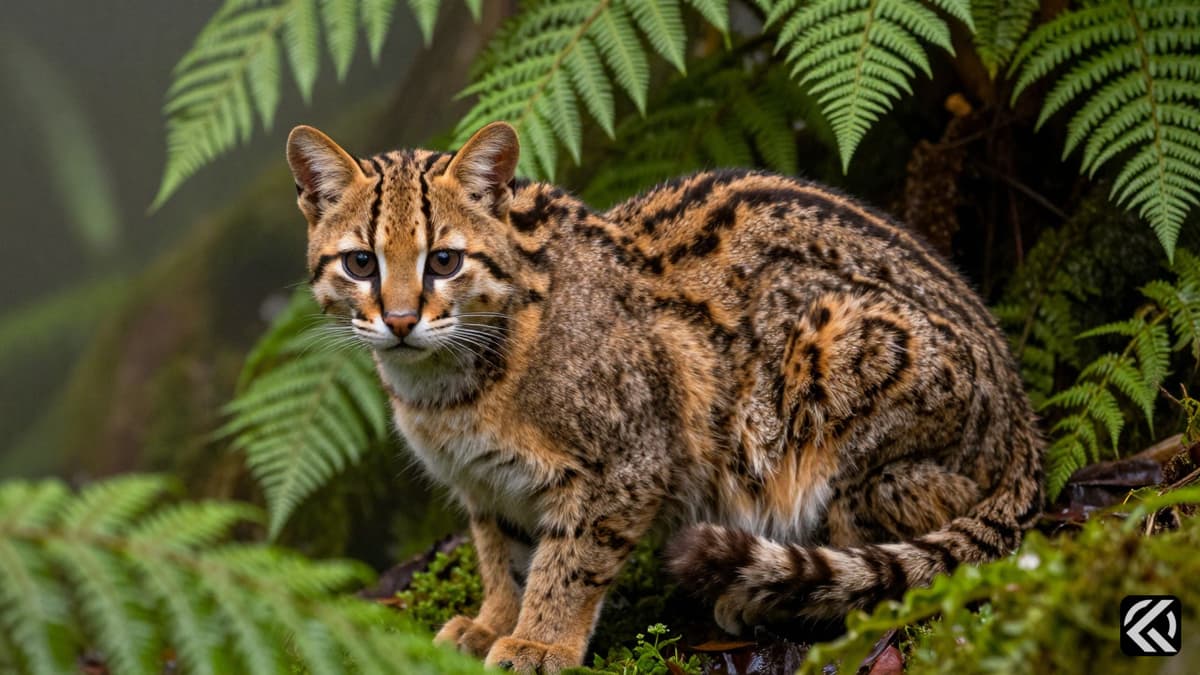
A tiny wild cat living in Bolivia’s cloud forests has been confirmed as a new species, breaking a 100-year gap in feline discoveries.
In a landmark discovery for zoology, scientists have formally identified a previously unknown wild cat in Bolivia, marking the first time in more than 100 years that a new living feline species has been described and named.
The tiny wild cat, found in the lush cloud forests of Bolivia, has been classified as a distinct species rather than a subspecies of the existing tiger cat group. This identification resolves long-standing questions among evolutionary biologists about the diversity of felines in South America.
The species was discovered in the Yungas forest, a mountainous region characterized by high humidity and forests frequently covered in clouds. Local communities have referred to the animal as "tilcayo" for generations, but scientific confirmation has only just been achieved.
Given the scientific name Leopardus tilcayo, the cat is notably small, measuring approximately 46cm (18 inches) in length and weighing about 1.4kg (3 pounds). This makes it smaller than an average domestic cat, fitting the profile of the tiger cat group found across much of South America.
Paola Nogales-Ascarrunz, a National Geographic Explorer and lead author of the study published on Thursday in the journal Current Biology, described the physical characteristics of the animal. Its fur is light brown with irregularly shaped rosettes across its body. However, appearance alone was not enough to classify the cat, as tiger cats are cryptic species that cannot easily be distinguished merely by visual inspection.
The discovery began when researchers observed the Bolivian cat and noticed its characteristics did not match existing descriptions, which were mostly based on Brazilian cats. This discrepancy prompted the team to investigate the genetic lineage of the Bolivian tiger cat.
To answer the question of which tiger cat resides in Bolivia, the research team analyzed DNA from 38 cats sampled across several South American countries, including eight museum specimens. The comprehensive genetic analysis revealed that tiger cats are not a single uniform group but are actually five genetically distinct species.
“We never expected this Bolivian tiger cat to be a separate species, and no one had ever proposed it as a different animal, subspecies or otherwise,” said Jonas Lescroart of the University of Antwerp in Belgium, who co-led the study.
The genetic data suggests that the lineage of newly discovered feline species known as Leopardus tilcayo separated from other tiger cats approximately 1.4 million years ago. This significant evolutionary timeline underscores the deep historical isolation of the population in the Yungas region.
Little is currently known about the biology and lifestyle of the cat, but early evidence points to specific behaviors. Remains of small rodents found in scat samples suggest that rodents form part of its diet. Additionally, camera-trap evidence indicates that the cat could be more active at night, although further study is required to confirm its full behavioral profile.
The study also identified a new tiger cat subspecies in Peru’s Yungas region. Named Leopardus tigrinus antisuyo, the subspecies is named after Antisuyu, the region of the old Inca Empire that includes the area it inhabits. This discovery highlights the rich biodiversity of the Yungas forests, which span across borders and host distinct evolutionary paths for wildlife.
The identification of the Bolivian tiger cat adds a significant piece to the puzzle of South American feline evolution. It challenges previous assumptions based largely on Brazilian specimens and emphasizes the need for broader genetic sampling across the continent to fully understand the diversity of wild cats.
The confirmation of Leopardus tilcayo as a distinct species highlights the critical importance of Bolivia’s Yungas cloud forests as a sanctuary for unique biodiversity. As deforestation and habitat fragmentation pose ongoing threats to South American ecosystems, this discovery underscores the urgency of conservation efforts in these mountainous regions. The genetic separation observed over 1.4 million years suggests that these populations have evolved in isolation, making them particularly vulnerable to environmental changes. Future conservation strategies must prioritize the protection of these specific cloud forest habitats to ensure the survival of this newly recognized species and the other distinct tiger cat lineages identified in the study. Without targeted protection, these genetically unique lineages could face extinction before their full ecological roles are understood.
Oct 3, 2026 04:08 UTC
FlyDubai Co-Pilot Banned in Oman Over Extremism Concerns
Oct 3, 2026 00:50 UTC
Israel-Mumbai Campaign Honors Captain Smit After Flydubai Incident
Oct 2, 2026 18:13 UTC
Captain Smit Machchhar’s Courage Saves Flydubai Flight FZ1073 From Disaster
Oct 2, 2026 16:45 UTC
Captain Smit Machchhar Saves Plane Mid-Fall
Sep 12, 2026 16:20 UTC
El Niño Halts Atlantic Hurricane Season With Record Calm