Section
Karnataka CM highlights metro cost disparities while PM inaugurates the COSMOS Planetarium, boosting India’s scientific capabilities.
Prime Minister Narendra Modi inaugurated the state-of-the-art COSMOS Planetarium in Mysuru on November 13, 2026, marking a significant milestone in India’s scientific and educational infrastructure. During the event, he highlighted India’s growing prowess in space and clean energy sectors while addressing infrastructure challenges.
PM Modi emphasized that the advanced instruments and technology available today were absent during the eras of ancient astronomers like Aryabhata, Varahamihira, Bhaskaracharya, and Nilakantha Somayaji. Despite these limitations, these historical figures made major discoveries and executed difficult calculations. The newly inaugurated facility aims to carry forward this legacy by promoting astronomy education and public outreach.
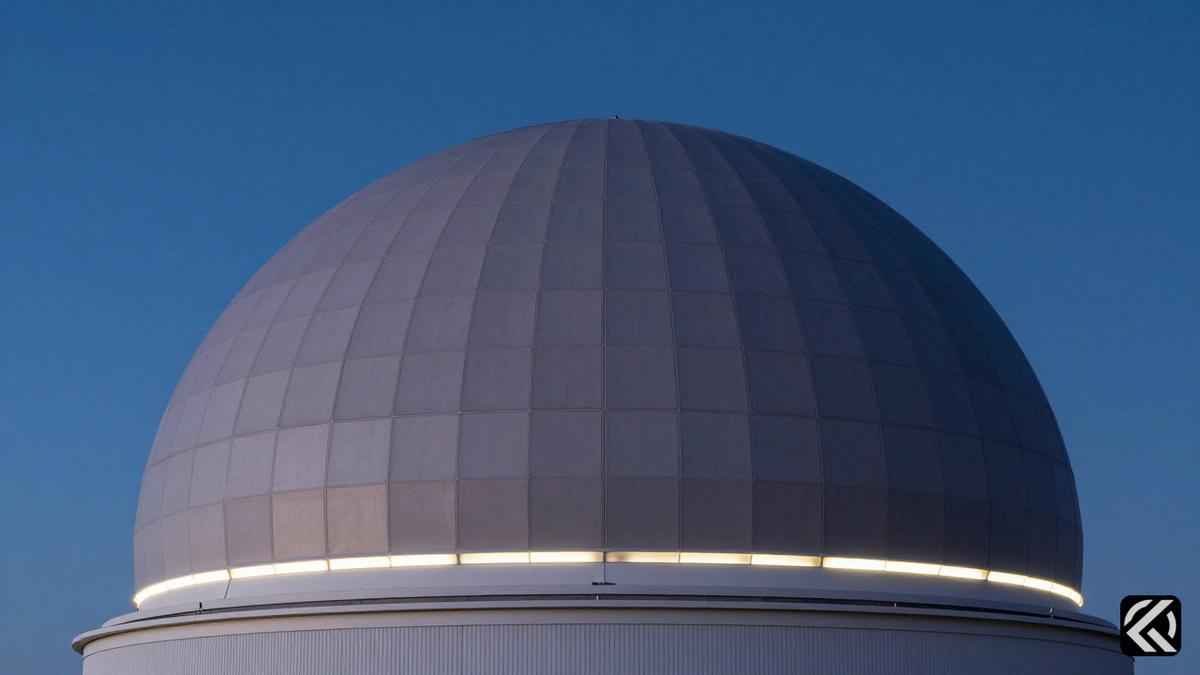
The facility features a 15-metre tilted dome comprising around 6,150 panels and 4.2 crore individual LEDs. It includes a Sky Theatre, exhibition halls, an astronomy museum, and training facilities. Modi noted that as India achieves one scientific breakthrough after another, Mysuru is adding a new chapter to India’s scientific journey with this development.
Modi also highlighted the government’s efforts to open up the space sector, creating new opportunities for the private sector and allowing Indian startups to showcase their potential. He pointed to Karnataka’s historic contribution to the nation’s space program, citing the state’s role from the Aryabhata satellite to the Chandrayaan, Aditya-L1, and Gaganyaan missions.
During his address, Chief Minister D.K. Shivakumar underscored the state’s contributions but also used the platform to raise critical economic and infrastructure issues. A primary focus of his memorandum submitted to the Prime Minister was the financial disparity in the Bengaluru Metro projects. Shivakumar stated that Karnataka bears more than 80% of the financial burden, despite the stipulated 50:50 partnership between the Centre and the state.
He argued that the state’s burden includes land acquisition costs, state taxes, and loan repayments, which exceed the agreed ratio. Shivakumar sought a share of operational losses and protection against foreign exchange risks on external loans. He further urged for faster project clearances, noting that the proposed Red Line (Phase 3A) connecting Sarjapur and Hebbal had been pending for two years.
Shivakumar also requested permission to construct double-decker infrastructure along Metro corridors where technically feasible, with Karnataka willing to bear the additional costs. He highlighted that expanding the Bengaluru Metro to 500 km could help address 50% of the city’s traffic problems, contingent upon Centre support.
In contrast to the financial disputes, PM Modi outlined several positive developments in energy and transport. He flagged off three energy projects in Karnataka, including an expanded LPG bottling plant, a marketing terminal, and a Compressed Biogas (CBG) plant in Bengaluru. The CBG plant at the Karnataka Compost Development Corporation (KCDC) premises is expected to produce around 13 tonnes of biogas daily, aiding waste management and reducing natural gas imports.
Modi noted that India’s renewable energy capacity has crossed 300 GW. He highlighted the PM Surya Ghar Muft Bijli Yojana, under which over 40,000 households in Karnataka have installed rooftop solar systems, receiving assistance of around ₹80,000 per household. Additionally, under the PM-KUSUM scheme, more than eight lakh solar pumps are supporting irrigation in the state.
On the transportation front, Modi announced that the railway budget for Karnataka has increased ninefold over the past decade. He announced four additional Amrit Bharat Stations and two projects for railway track doubling and electrification. He also mentioned the recent arrival of a new Vande Bharat service connecting Karnataka with Goa, offering a semi-high-speed travel experience for passengers in Bengaluru and coastal regions.
PM Modi drew an engaging comparison between India’s cultural achievements and infrastructure growth. He noted that India now has 100 chess Grandmasters, stating, “We are continuously scoring centuries.” He linked this growth to the expansion of the Bengaluru Metro, which grew from just 17 km in 2014 to more than 100 km, making Bengaluru the third city after Delhi-NCR and Mumbai to cross this mark.
Describing Bengaluru as India’s Silicon Valley, Modi emphasized the Centre’s priority on the region’s development and modern public infrastructure. He described the Metro expansion as a reflection of the government’s commitment to improving the ease of living and travel for middle-class families.
Shivakumar, meanwhile, reiterated concerns over the Kasturirangan Committee report on the Western Ghats, seeking reconsideration of the notification identifying 20,668 sq km as Ecologically Sensitive Areas. He also urged the Centre to address sugarcane farmers’ pricing demands and drought relief, with 226 taluks declared drought-affected and estimated losses of ₹62,482 crore. He requested the early release of ₹22,400.58 crore in NDRF assistance and advised aligning corporate CSR initiatives with Karnataka’s guidelines to upgrade 1,000 government schools.
The inauguration of the COSMOS Planetarium and the ongoing debates over the Bengaluru Metro highlight a dual trajectory for Karnataka’s development. The push for fairer financial sharing and expedited approvals for the metro’s Red Line and future phases suggests a potential acceleration in public transit infrastructure if the Centre responds to the state’s demands. Simultaneously, the increased focus on renewable energy and biogas production indicates a sustained shift toward sustainable urban growth. If the financial burden on the state is balanced, the projected expansion of the metro network could significantly alleviate traffic congestion and support Bengaluru’s status as a major economic engine, while the scientific facilities established will likely boost the region’s educational and research sectors further.
Nov 17, 2026 16:45 UTC
US Intel Warns of Iran Dirty Bomb Plot in DC
Nov 17, 2026 12:48 UTC
Quad Summit Manila: Modi, Trump Focus on Indo-Pacific Security
Nov 17, 2026 10:43 UTC
Ukraine Strike Collapses Crimean Bridge Ahead of Diplomatic Talks
Nov 16, 2026 16:25 UTC
Beijing Claims Historic Significance for Trilateral Talks in Shenzhen
Nov 17, 2026 16:58 UTC
PM Modi Urges Global Stability at Asean-India Summit