Section
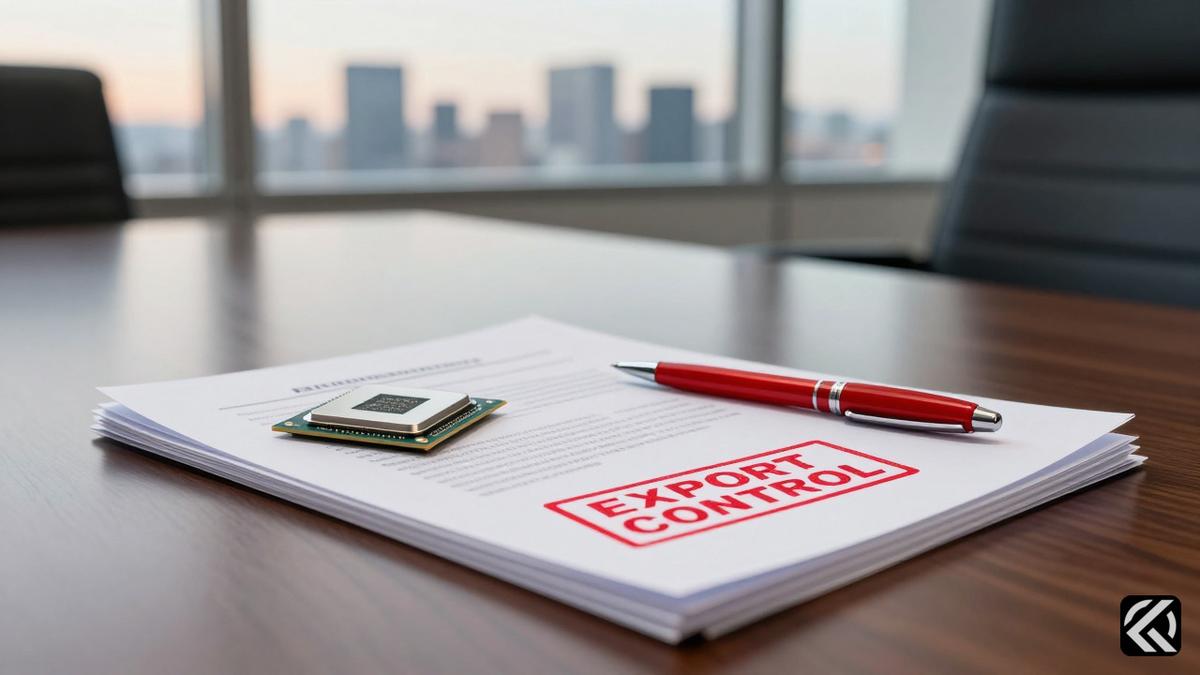
US Treasury Secretary Scott Bessent accuses Nvidia of failing to monitor chip exports for espionage risks, following CEO Jensen Huang’s sudden resignation amid a scandal involving alleged spying.
US Treasury Secretary Scott Bessent has launched a scathing critique of Nvidia and Commerce Secretary Howard Lutnick, accusing the technology giant of failing to implement robust controls to identify potential espionage activities within its supply chain. During a Friday interview on CNBC’s "Squawk Box," Bessent stated that there is a "lot of leakage" in the current chip export system, signaling that the Trump administration is actively working to plug these critical security gaps. The comments come in the wake of a escalating scandal involving former Megaspeed executive Alice Huang, who US authorities suspect of spying for China, and reports that Nvidia CEO Jensen Huang had an affair with her. Bessent emphasized that his department had supported placing Megaspeed on the US entity list for months, noting that while the Office of Foreign Assets Control (OFAC) lacks direct control over such export decisions, the Bureau of Industry and Security (BIS) holds that authority, with possible action from the Federal Trade Commission (FTC).
The political and corporate fallout intensified this week as Jensen Huang resigned as president, chief executive officer, and board member, effective immediately. Nvidia’s official statement confirmed that the board met on Wednesday to consider his removal, a decision triggered by reports alleging Huang was involved in an extramarital affair with a senior company executive who reported directly to him, in addition to the previously reported relationship with Alice Huang. According to the board, Chief Financial Officer Colette Kress will assume the role of interim CEO while the company searches for a permanent successor. Huang, who co-founded Nvidia and remains its fourth-largest investor with approximately 3.61% of the company's stock, will also step down from the board.
The core of Bessent’s criticism focuses on Nvidia’s internal compliance mechanisms rather than just the individuals involved. Bessent argued that the primary issue lies in whether the company knew its clients and whether it made a robust effort to ensure no leakage occurred, specifically regarding sales to "obviously pass-through shell companies." He stressed that accountability must be applied to anyone at the company responsible for these failures. "It's important that anyone at the company there be held accountable for that," Bessent told CNBC, highlighting the administration's frustration with the oversight capabilities of major tech firms involved in the global semiconductor trade.
Lawmakers have responded to the scandal by calling for stricter restrictions on China's access to advanced AI chips. The incident has threatened to implicate senior Trump administration members, including Commerce Secretary Howard Lutnick, due to growing questions about the oversight of chip sales to Chinese entities. Bessent addressed the role of Congress in this crisis, asserting that the executive branch possesses all necessary authorities to act but requires effective implementation. "We have all the authorities that we need. They just need to be implemented," Bessent said, suggesting that legislative gaps are less of an issue than operational enforcement.
The involvement of Megaspeed in this controversy has placed the company in the spotlight. While OFAC does not control export lists directly, Bessent noted that the BIS decision is crucial, and the FTC could potentially take action by placing restrictions on the entity. This regulatory pressure aligns with broader geopolitical tensions surrounding US-China chip export controls, as the administration seeks to prevent sensitive technologies from falling into the hands of suspected foreign spies. The scandal underscores the vulnerabilities in the current export framework, where shell companies may be used to mask the true end-users of advanced hardware.
Nvidia’s leadership transition marks a significant moment for the semiconductor industry. The abrupt resignation of Huang, who has been central to the company's rise as one of the most consequential technology companies globally, leaves the firm in a period of uncertainty. The board’s rapid response to install Colette Kress as interim CEO signals an attempt to stabilize operations while maintaining corporate governance standards. However, the reputational damage from the espionage allegations may linger, particularly as investigations into the company’s client vetting processes continue.
The administration’s stance, as articulated by Bessent, indicates a hardening of policy regarding tech exports. By publicly criticizing both the private sector leader and a key commerce official, the Treasury Secretary is signaling that compliance with national security interests is non-negotiable. The mention of potential FTC action adds another layer of regulatory risk for companies like Nvidia, which must now navigate a more hostile enforcement environment. As Congress considers tougher restrictions, the industry faces increased scrutiny over how it manages relationships with entities in China, forcing a re-evaluation of due diligence practices across the supply chain.
The resignation of Jensen Huang and the public criticism by Treasury Secretary Bessent highlight the escalating tensions in US-China chip export controls. As the administration moves to plug identified leakage in the export system, Nvidia and other semiconductor firms may face stricter compliance audits and potential legal actions from multiple agencies, including the BIS and FTC. The installation of Colette Kress as interim CEO suggests a period of internal restructuring focused on governance rather than growth, potentially slowing innovation timelines. Furthermore, the spotlight on Megaspeed and the alleged espionage ties indicates that future corporate partnerships with Chinese entities will be subjected to intense scrutiny, likely resulting in reduced sales volumes in the region as companies prioritize regulatory safety over market expansion.
Nov 17, 2026 16:45 UTC
US Intel Warns of Iran Dirty Bomb Plot in DC
Nov 17, 2026 12:48 UTC
Quad Summit Manila: Modi, Trump Focus on Indo-Pacific Security
Nov 17, 2026 10:43 UTC
Ukraine Strike Collapses Crimean Bridge Ahead of Diplomatic Talks
Nov 16, 2026 16:25 UTC
Beijing Claims Historic Significance for Trilateral Talks in Shenzhen
Nov 17, 2026 14:43 UTC
Howard Lutnick’s Tenure Tested by Internal Discord and Scandals