Section
Tensions flare as Treasury Secretary Scott Bessent publicly blames Commerce Secretary Howard Lutnick for delays in restricting Nvidia chip exports to China.
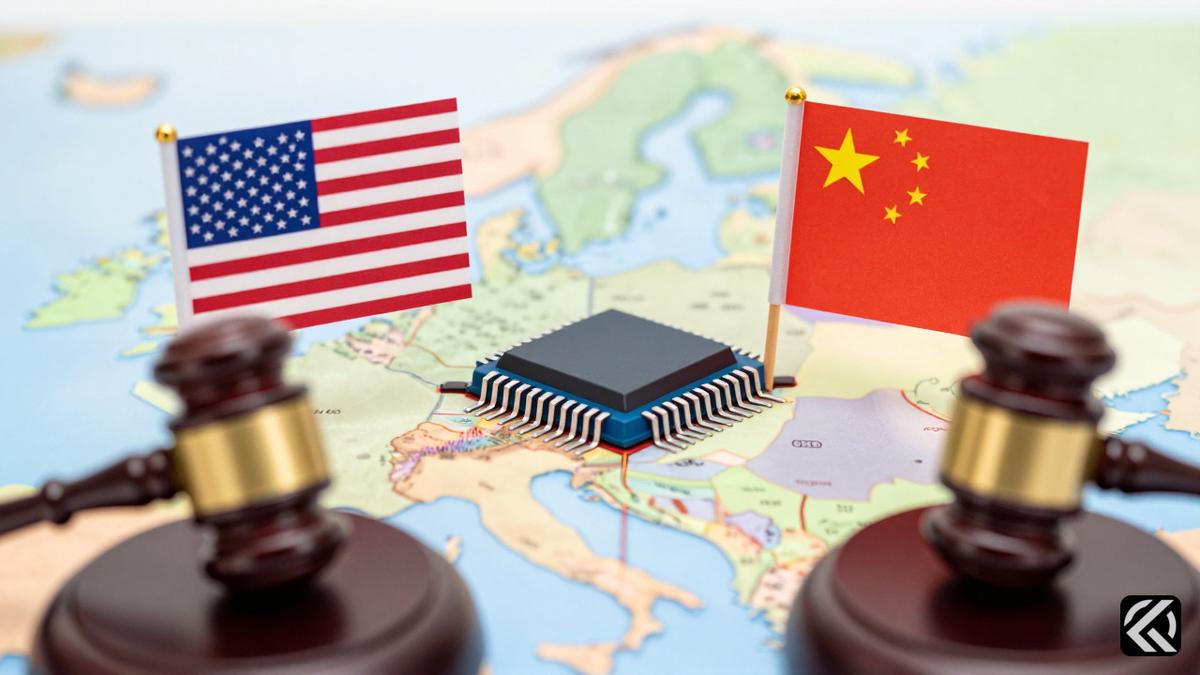
The fallout from the Nvidia scandal has intensified, with US Treasury Secretary Scott Bessent publicly blaming Commerce Secretary Howard Lutnick’s department for failing to adequately oversee the export of high-specification AI chips. The controversy has expanded into President Donald Trump’s cabinet, placing Lutnick under intense pressure from across the political spectrum to explain his department’s actions. Jensen Huang, formerly the CEO of Nvidia, was ousted following revelations of an affair with a businesswoman alleged to be a Chinese spy. This woman worked for Megaspeed, a firm currently under investigation by US government agencies for suspected smuggling of Nvidia chips into China.
Despite suspicions, Megaspeed is not currently on the list of firms prohibited from US business. Bessent stated to CNBC that several agencies had favored adding Megaspeed to the export control list for months but noted that "Commerce has the pen," directing questions about internal processes to Lutnick’s department. This public disagreement marks a rare instance of internal administration debate spilling into view, following reported past tensions between Bessent and Lutnick over tariff policies and roles.
Lutnick is scheduled to testify before the Senate Banking Committee next month regarding the Commerce Department’s role in permitting Nvidia to export advanced chips. Additionally, Huang has been summoned to address his alleged affair with the former Megaspeed executive. Senate Banking Committee Chairman Tim Scott cited serious concerns regarding national security and the protection of sensitive US technology. Democratic lawmakers, including Richard E Neal and Ron Wyden, are initiating investigations into how Nvidia was allowed to sell advanced H200 chips to Chinese firms via a tariff workaround.
The scrutiny extends beyond the Senate Banking Committee. Other congressional committees have mandated that Lutnick and his department retain all records related to the decision to allow Nvidia to sell its advanced AI chips to Chinese entities. This includes all communications concerning Nvidia and Jensen Huang. The focus of this legislative interest is the method by which Nvidia’s H200 chips reached Chinese markets. According to reports from Neal and Wyden, these chips could be sold to Chinese firms if they were first imported from Taiwan into the US for inspection.
During this inspection phase, a 25% tariff was imposed on the chips under a section of the Trade Act designed to allow presidential action against imports risking national security. Bessent expressed frustration with the delays in listing Megaspeed and the leakage of AI chips into China. He emphasized that President Trump clearly stated China should not receive Nvidia chips above the H100 model. Bessent argued that such leakage harms American companies in the AI race by granting China a competitive advantage.
Bessent also directed attention toward Nvidia itself, challenging the narrative that the issue was solely Jensen Huang’s personal conduct. He questioned whether Nvidia knew its client and if there was a robust effort to prevent leakage through "obviously pass-through shell companies." He stressed that accountability is necessary for anyone at the company involved in these sales. The New York Times previously reported that the Commerce Department investigated Megaspeed last year regarding these smuggling suspicions. Megaspeed has been contacted for comment but has not yet responded.
The Commerce Secretary Lutnick now faces a multi-pronged inquiry. The Senate Banking Committee’s summons for both Huang and Lutnick underscores the severity of the administration’s concern. The investigation aims to determine how advanced technology bypassed existing restrictions. The role of the tariff mechanism remains a central point of debate among lawmakers. Critics argue that the inspection loophole allowed sensitive technology to reach prohibited destinations despite regulatory intent.
The intersection of tariff policy and national security has come under sharp review as lawmakers investigate how Nvidia’s H200 chips reached China via Taiwan. The 25% tariff applied during US inspections appears to have been exploited as a conduit for technology transfer. As congressional investigations into Nvidia’s sales practices and the Commerce Department’s oversight deepen, the administration faces mounting pressure to close regulatory gaps. The upcoming testimony of both Lutnick and Huang will be critical in determining whether systemic failures or deliberate evasion occurred. If the leakage of AI technology is confirmed as widespread, stricter export controls and enhanced tariff enforcement may follow to protect US technological dominance.
Nov 17, 2026 16:45 UTC
US Intel Warns of Iran Dirty Bomb Plot in DC
Nov 17, 2026 12:48 UTC
Quad Summit Manila: Modi, Trump Focus on Indo-Pacific Security
Nov 17, 2026 10:43 UTC
Ukraine Strike Collapses Crimean Bridge Ahead of Diplomatic Talks
Nov 16, 2026 16:25 UTC
Beijing Claims Historic Significance for Trilateral Talks in Shenzhen
Nov 17, 2026 14:43 UTC
Howard Lutnick’s Tenure Tested by Internal Discord and Scandals