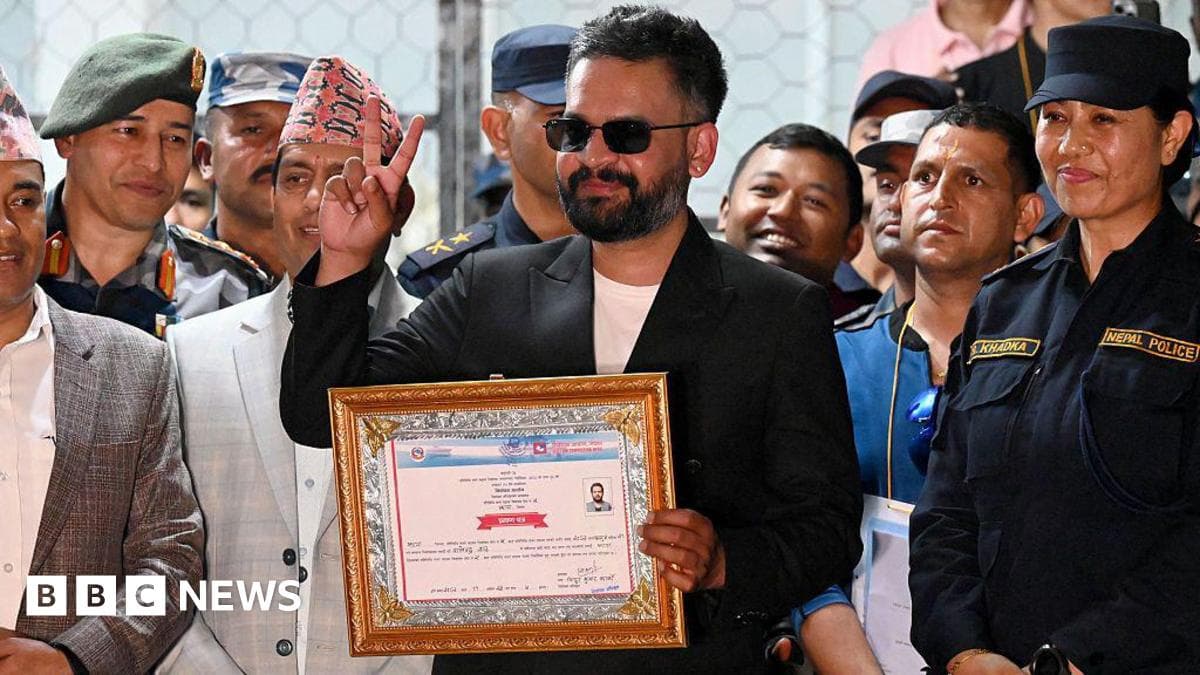
A rapper-turned-politician leads a landslide victory, marking a generational shift in South Asian governance following historic Gen Z protests.
The atmosphere surrounding the Nepal election results of 2026 is defined by a striking contrast between the magnitude of the political shift and the solemnity of the celebration. As counting resumes on March 9, 2026, the capital city remains eerily quiet for such a historic moment. While jubilant crowds are gathering across the country, the headquarters of the Rastriya Swatantra Party (RSP) is practically empty. The party leadership has explicitly requested no celebrations or big parades to mark their apparent landslide victory. This decision honors the memory of the 77 people who died during Gen Z protests in September, many of whom were young protesters shot by police. Instead of festivity, there is a solemn start to what analysts describe as a new political era.
The election results point toward an unprecedented outcome in Nepal’s recent history. The Rastriya Swatantra Party, led by rapper-turned-politician Balendra Shah, is on course to secure a two-thirds majority in parliament. This feat would mark the first time in decades that a single party has achieved such dominance.
Current data indicates the RSP has won 125 of the 165 seats decided by direct voting. Additionally, they have secured 58 of the 110 seats allocated through proportional representation, where parliamentary seats correspond to total votes for each party. Combined, these figures suggest the party is just one seat short of reaching the two-thirds threshold required for such a mandate. In contrast, the Communist Party of Nepal (UML), led by former Prime Minister KP Sharma Oli, won only eight direct-vote seats and 16 proportional representation seats at the time of writing. This sweeping verdict comes despite Oli’s party being a traditional powerhouse in the region.
The political earthquake in Kathmandu has immediately rippled across borders, prompting high-level diplomatic engagement. Indian Prime Minister Narendra Modi took to Monday to congratulate RSP leaders on their electoral victories. According to official statements, Modi held warm telephone conversations with both Balendra Shah and RSP chairman Rabi Lamichhane.
Modi specifically acknowledged the "resounding success" of the RSP in the Nepal elections. These interactions highlight the significant regional implications of a government led by a figure who was once a popular rapper before becoming the ex-Kathmandu mayor. The timing of these calls underscores the importance India places on the stability and direction of its neighbor as it navigates this transition.
The defeat represents a significant blow to the political establishment, particularly regarding KP Sharma Oli. The 74-year-old leader has been a key political figure in Nepal since 1990, serving as prime minister four times. Until recently, he had expressed intentions to remain active in politics for another two decades. However, his unseating in the Jhapa 5 constituency and his party’s worst performance in parliamentary elections have raised serious questions over his leadership.
Senior leaders within the UML have indicated they would conduct a "brutal review" to assess what went wrong. While some are ready to reorganize the party leadership, political analyst Rajendra Maharjan suggests that voluntary resignation is unlikely from Oli. The consensus among observers is that for the UML to revive itself, a serious transformation is needed under new stewardship, as the current leadership may not be sufficient to regain trust following this rejection at the ballot box.
Despite the optimism surrounding the RSP victory, voter sentiment remains nuanced. Raghunath Neupane, a 40-year-old voter, expressed feeling very optimistic about the result. He believes Balendra Shah is capable of eradicating corruption and moving the economy forward, offering hope for a more stable government compared to the fragile coalitions of the past.
However, concerns linger regarding specific tactics employed during Shah’s tenure as mayor. Rights groups have criticized Shah for using police against street vendors in a heavy-handed manner to keep roads clear. Neupane noted that while he is hopeful, he wants to see Balen "control the aggression" in these alleged tactics and offer a public explanation. This highlights the challenge ahead: balancing the mandate for change with the need for accountable governance practices.
Amidst the political upheaval, logistical challenges persist regarding the venue of governance. Nepal’s new parliament building is still under construction, though officials remain hopeful it will host House sessions by the end of March. Ananta Prasad Koirala, assistant spokesperson of the Parliament Secretariat, confirmed that nearly 90% of the construction has been completed.
The Ministry of Urban Development and the construction team have committed to handing over a multipurpose hall and an assembly hall by March 28. Currently, routine work is being carried out in rooms at the nearby parliament secretariat premise at Singhadurbar. The new building, which started construction seven years ago, was expected to be completed three years prior but faced delays due to the pandemic and other factors. The previous parliament building, a hired Chinese-built convention centre, was burnt down by angry protesters during the Gen Z protests last September, necessitating this new infrastructure to host both bicameral legislatures.
The Nepal election of 2026 marks a definitive turning point in the nation's democratic trajectory. With Balendra Shah’s RSP poised for a dominant position and the traditional political establishment reeling from defeat, the country stands at a crossroads between protest-driven change and stable governance. As India looks on with diplomatic engagement and Nepal prepares to move into its new parliamentary home, the focus now shifts to how this new leadership will address the frustrations of a populace that demanded reform through Gen Z protests. The path forward requires not just legislative power, but a commitment to healing the political divide while managing the expectations of a generation that has already proven it is willing to fight for its voice.
Jun 8, 2026 22:55 UTC
Netanyahu Vows Forceful Response to Future Iran Attacks
Join 50,000+ readers getting the global briefing every morning.
No spam. Unsubscribe anytime.
Jun 8, 2026 20:56 UTC
Netanyahu Halts Iran Fighting, Vows Future Force
Jun 8, 2026 20:54 UTC
Justice Department Moves to Strip Citizenship from 17 Individuals
Jun 8, 2026 18:37 UTC
Trump Denied War Pledge Despite Clear Campaign Records
Jun 8, 2026 18:27 UTC
INDIA Bloc Unanimously Demands Education Minister’s Resignation