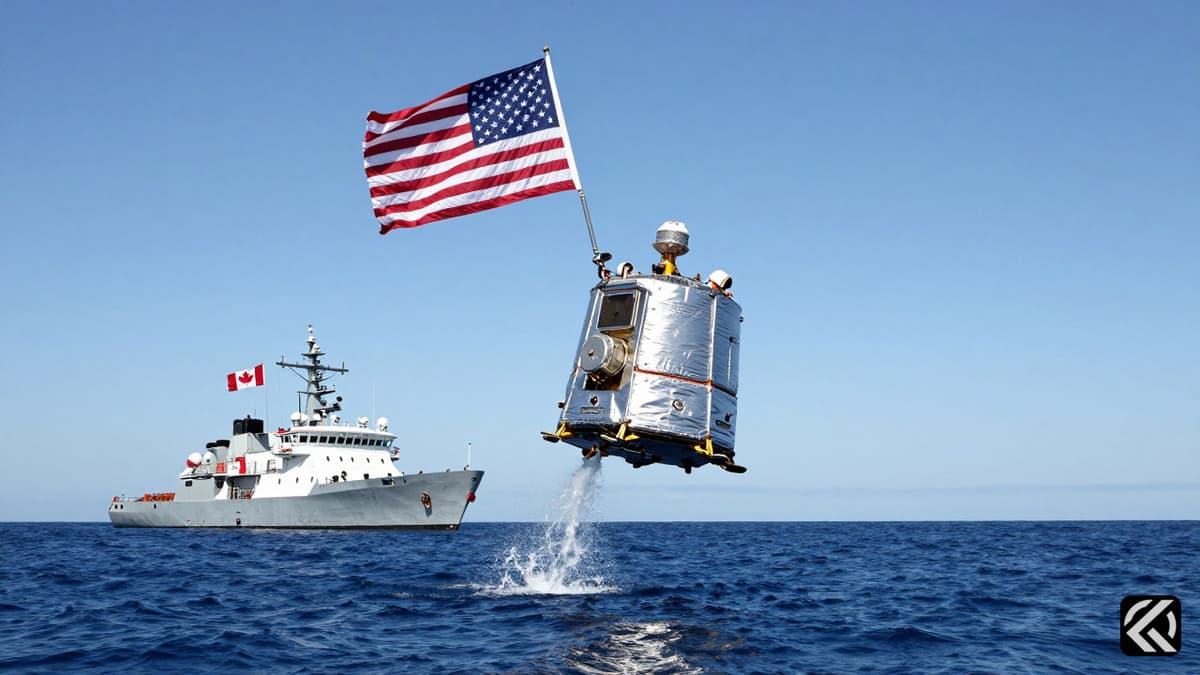
After a groundbreaking journey taking humans further than ever before, the Artemis II crew awaits the critical moment of their mission as they prepare to return to Earth.
The Artemis II astronauts have successfully completed the most critical leg of their journey, conducting a historic lunar flyby that allowed them to gather invaluable data and witness the Moon like never before. However, for the four crew members-Reid Wiseman, Victor Glover, Christina Koch, and Jeremy Hansen-the ultimate test of their 10-day mission remains ahead. The crew is currently girded for the most crucial moment of the expedition: the planned splashdown on Friday, April 10, 2026.
Earlier this week, the international team voyaged further from Earth than any humans have before, marking a definitive turning point in space exploration history. This specific mission is widely considered a key stepping stone towards eventual crewed lunar landings, paving the way for future deep space endeavors. The successful completion of the flyby phase has validated the spacecraft's systems in the harsh environment of deep space, providing the necessary confidence for the return journey.
The mission profile involved a complex series of maneuvers designed to test the Orion spacecraft's heat shield and life support systems under the unique thermal loads of a lunar return trajectory. As the crew orbited the Moon, they collected the unprecedented data required to refine the architecture for future Artemis missions. The presence of a Canadian astronaut, Jeremy Hansen, alongside American astronauts Wiseman, Glover, and Koch, underscores the international cooperation driving this next chapter of human spaceflight.
As the spacecraft approaches the end of its 10-day voyage, the focus shifts entirely to the recovery operations. The splashdown event is not merely a conclusion but a critical test of the landing systems that have carried the astronauts out of low Earth orbit, around the Moon, and back towards the planet. The recovery teams are standing by to retrieve the module once it impacts the ocean surface. This phase is integral to ensuring the safety of the astronauts who have spent the last week traversing the void between the Earth and its natural satellite.

The data collected during the flyby is expected to be instrumental in refining the systems required for the subsequent Artemis III mission, which aims to land humans on the lunar surface. The experience gained from this flight provides a unique dataset regarding the radiation environment, the structural integrity of the spacecraft, and the physiological effects on the crew during a prolonged stay in deep space. Every piece of telemetry gathered during the lunar flyby contributes to the robust engineering required for the ultimate goal of establishing a sustainable human presence on the Moon.
The successful navigation of the crew away from Earth and back again demonstrates the capabilities of the current generation of spacecraft. The mission serves as a vital proof-of-concept for the long-term exploration strategies being developed by space agencies. The fact that the crew has gathered such extensive information from a distance previously unattainable by human beings solidifies the importance of the upcoming splashdown.
The atmosphere surrounding the mission has been one of careful anticipation. The crew members have faced the rigors of spaceflight with professional competence, managing the demands of living in a small spacecraft for ten days. The transition from the active exploration phase of the flyby to the passive preparation for re-entry requires a different kind of focus, one centered on safety protocols and recovery coordination. The anticipation builds as the clock ticks down to the moment the capsule will break the surface of the ocean, bringing the journey home.
The completion of this historic flight confirms that the technical and operational hurdles for deep space exploration are surmountable. The data gathered from the lunar flyby will directly inform the engineering decisions for future missions, reducing the risks associated with crewed landings on the Moon. As the world watches the scheduled splashdown, the focus remains on the long-term trajectory of human spaceflight, where this mission stands as the foundational step toward a permanent lunar presence. The success of the return will mark the beginning of a new era in exploration, where the Moon is no longer a distant destination but a reachable stepping stone for the solar system.
Jun 8, 2026 02:17 UTC
Magnitude 7.8 Quake Shakes Philippines, Urging Immediate Evacuations
Join 50,000+ readers getting the global briefing every morning.
No spam. Unsubscribe anytime.
Jun 8, 2026 02:17 UTC
Magnitude 7.8 Quake Shakes Philippines, Urging Immediate Evacuations
Jun 8, 2026 00:51 UTC
Trump Claims Iran Nuclear Deal Imminent Despite Diplomatic Fractures
Jun 8, 2026 00:47 UTC
Iran Fires Missiles at Israel After Beirut Strike
Jun 7, 2026 22:38 UTC
Congress Party Claims Unity for INDIA Bloc Delhi Meeting