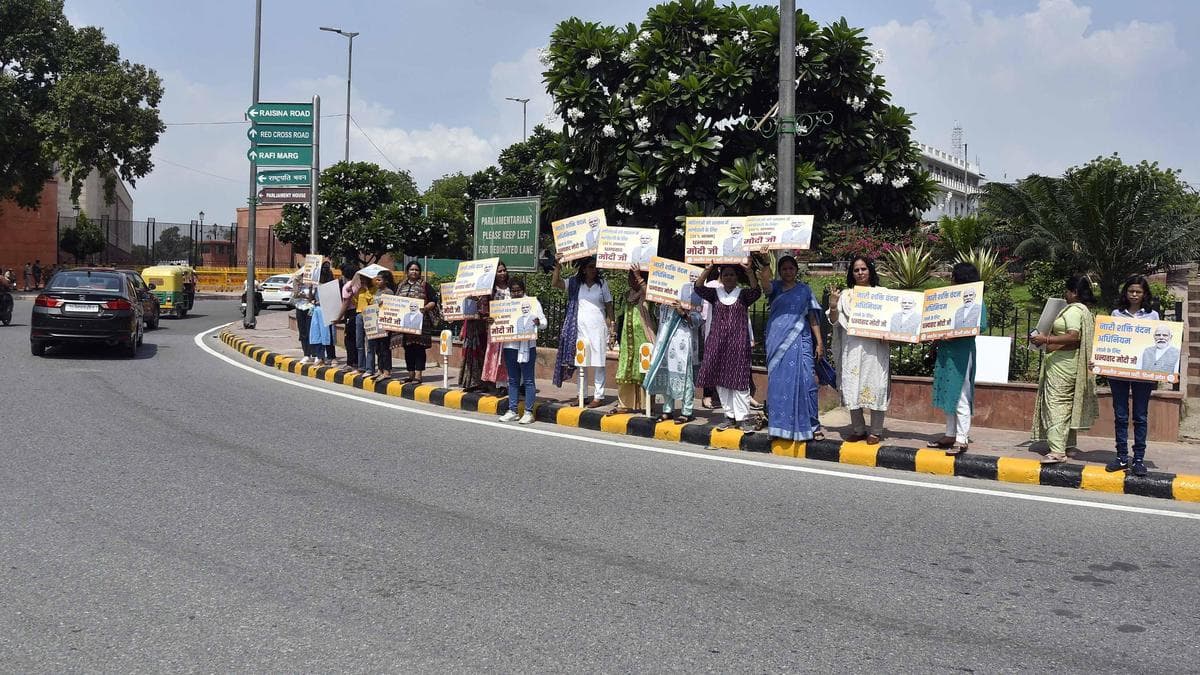
Home Minister Amit Shah signals a potential shift in electoral strategy by accelerating the Women’s Reservation Bill before the 2027 assembly elections, aiming to reshape political landscapes.
The political landscape is shifting as top government officials signal a move to fast-track significant constitutional amendments. Early this month, Parliamentary Affairs Minister Kiren Rijiju engaged in preliminary discussions with leaders from several opposition parties. During these interactions, he conveyed that Home Minister Amit Shah wished to meet them, though the specific agenda remained undisclosed initially. These high-level meetings mark a critical juncture, particularly as the government seeks to accelerate the implementation of the Constitution (One Hundred and Sixth Amendment) Act, widely recognized as the Women’s Reservation Bill or Nari Shakti Vandan Adhiniyam.
This strategic maneuvering comes at a pivotal time for Indian democracy. With just one year remaining before the Uttar Pradesh Assembly polls, the administration is moving to lift specific limitations imposed by Section 5 of the Act. Currently, the bill stipulates that reservation for women will activate only after a delimitation exercise and census data are processed. By proposing to remove these hurdles, the government hopes to break a three-decade-old impasse regarding women’s representation in legislative bodies.
The timing of this proposal is deeply significant given the upcoming electoral calendar. In 2027, seven States are scheduled to go to polls, with four currently ruled by the BJP. Among these, Uttar Pradesh stands out as a prized catch and a critical battleground. The BJP is set to defend its government in the State for a third consecutive term, yet recent trends suggest a challenging environment.
Historical data indicates that while the party powered two emphatic victories in the Lok Sabha, the Assembly trajectory has shown volatility. In 2017, the BJP won an unprecedented 312 seats, but this tally fell to 255 in 2022. When extrapolating the 2024 Lok Sabha results to the Assembly segments within the State, the opposition appears to hold a numerical advantage. The Samajwadi Party is currently projected to be ahead in 178 seats. When combined with its ally, the Congress, the alliance comfortably crosses the majority mark of 202 required in the 403-member Assembly.
Beyond external electoral arithmetic, the BJP is navigating internal tensions that could influence how this bill is perceived by its base. The party is grappling with fissures among caste groups. Brahmins, a core component of the vote base, have expressed grievances regarding marginalisation under the Yogi Adityanath government, where Thakurs often enjoy prominence. While these protests are vocal, the leadership is increasingly concerned about losing support from Other Backward Classes (OBCs).
Evidence from the 2024 Lok Sabha election suggests an OBC shift away from the BJP, contributing to a steep fall in their tally from 62 seats in 2019 to 33 in 2024. A senior Samajwadi Party leader expressed doubt that women’s reservation can effectively paper over these deep-seated caste grievances, noting that women candidates do not exist in a casteless vacuum. Furthermore, internal dissent is visible; in January, a BJP legislator from Charkhari led a protest against State Water Minister Swatantra Singh, highlighting cracks within the party ranks.
The path to this bill has been fraught with historical delays. India’s Constituent Assembly began with only 15 women members. Early leaders like Renuka Ray opposed reservation in 1947, arguing that opportunities should depend on ability alone rather than quotas. This view persisted for decades until the 81st Constitutional Amendment Bill of 1996 sought 33% reservation, which lapsed multiple times between 1998 and 2003. Subsequent attempts by the UPA government in 2008 and a revival in 2023 also faced delays linked to Census and delimitation, conditions Congress President Mallikarjun Kharge warned could turn the Bill into a "jumla."
Currently, women’s representation remains low. The UP Assembly has only 51 women MLAs, constituting 12.6% of its strength, while the Lok Sabha stands at 14%. Of the 51 women in the UP House, 30 belong to the BJP and 15 to the Samajwadi Party. A senior SP leader acknowledged that the BJP is currently better placed in finding women candidates due to a larger internal rank of women members.
The move to mobilise women voters appears to be a key objective. Women have been a dependable support base for the BJP-led NDA across several States, including Maharashtra and Bihar. Consolidating this support through actual reservation could further strengthen their position. While evidence is mixed regarding whether women prefer voting for female candidates, the political effort aims to deliver tangible results that resonate with the electorate. If the government accelerates implementation, it offers a surprise element to opposition parties who must wait for notified seats before finalising candidates.
The push to fast-track the Women’s Reservation Bill represents a complex political strategy designed to reshape the 2027 electoral map while addressing internal party challenges. By lifting conditions that have delayed the Act for years, the administration hopes to consolidate women voters and counter opposition gains in key States like Uttar Pradesh. However, questions remain regarding whether this legislative change can effectively mitigate deep-seated caste grievances within the ruling coalition.
Jun 8, 2026 22:55 UTC
Netanyahu Vows Forceful Response to Future Iran Attacks
Join 50,000+ readers getting the global briefing every morning.
No spam. Unsubscribe anytime.
Jun 8, 2026 20:56 UTC
Netanyahu Halts Iran Fighting, Vows Future Force
Jun 8, 2026 20:54 UTC
Justice Department Moves to Strip Citizenship from 17 Individuals
Jun 8, 2026 18:37 UTC
Trump Denied War Pledge Despite Clear Campaign Records
Jun 8, 2026 18:27 UTC
INDIA Bloc Unanimously Demands Education Minister’s Resignation