The 2026 Nepal elections mark a seismic shift as Gen Z candidates secure parliamentary seats and the Rastriya Swatantra Party approaches a two-thirds majority.
The political landscape of Nepal has undergone a dramatic transformation following the conclusion of the 2026 general elections. As of March 9, 2026, the results indicate a decisive break from the past, characterized by a significant influx of young leaders into the House of Representatives and a potential landslide victory for the Rastriya Swatantra Party (RSP). This election represents more than just a change in personnel; it signals a fundamental shift in how Nepali citizens engage with their democracy and demand accountability from their leadership.
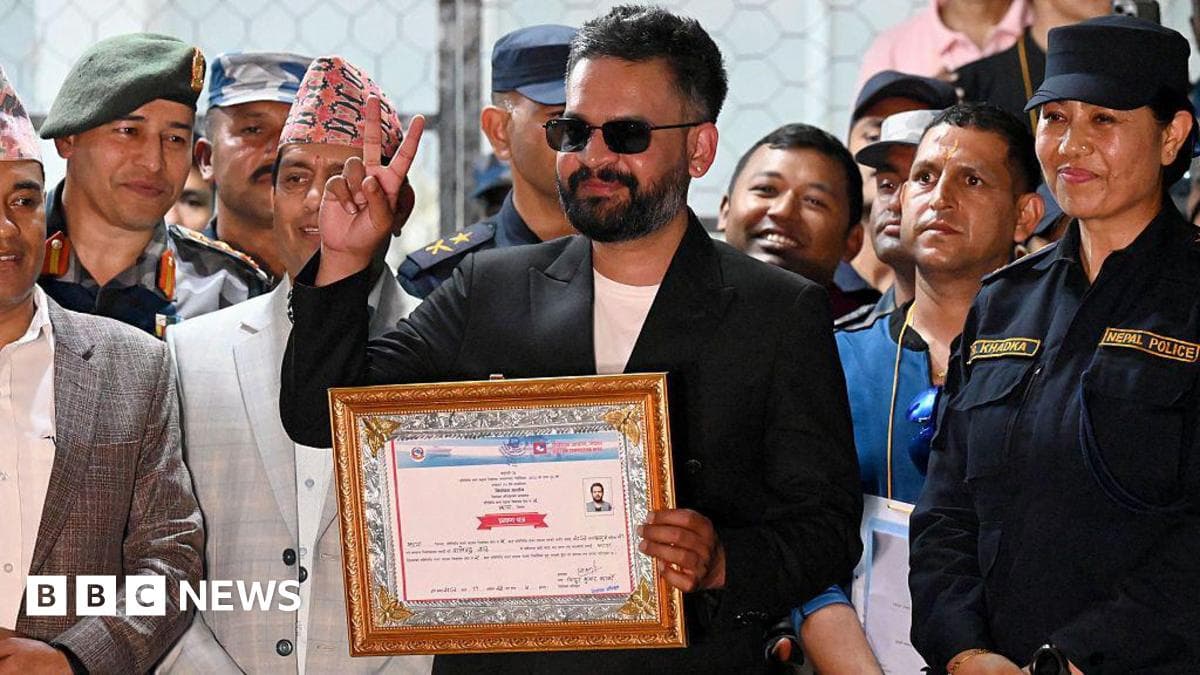
The most striking development is the emergence of young candidates who have successfully secured seats through the first-past-the-post system. In total, 12 candidates aged 30 and below have won parliamentary seats. The RSP dominates this demographic shift, accounting for 11 of these young MPs, while the newly formed Shram Sanskriti Party claims one seat. Among them stands Prashanta Uprety, a 25-year-old who has become the youngest member of the newly elected House. This surge in youth participation is viewed as a direct response to recent Gen Z protests, validating the decision-making power of younger voters who have mobilized against corruption and for political reform.
Beyond age, the election has highlighted the resilience and growing influence of women and former activists within the legislative body. Two prominent women, Nisha Dangi and Shovita Gautam, both aged 29, have successfully transitioned from party-nominated seats to direct public mandates. Their re-election through direct votes solidifies their grassroots support and demonstrates a voter preference for leaders with established community connections.
The election also produced notable "giant-killers" who defeated veteran politicians. Sulabh Kharel, aged 28, defeated veteran CPN-UML leader and former minister Bishnu Paudel by a wide margin. He is joined in this achievement by Bablu Gupta, also 28, who made the significant decision to resign from the interim government specifically to contest these elections. Other victors include Ranju Neupane, Shivashankar Yadav, and Ramjee Yadav, all aged 30.
Ranju Neupane’s journey is particularly symbolic in this context. She managed to balance her campaign with new motherhood, highlighting the changing dynamics of political participation. Neupane first gained national prominence as a college student in 2017 during her run for mayor of Kathmandu with Bibeksheel Nepali, an activist group that pioneered youth socio-political awareness in the country. Her success suggests that the youth surge is expected to expand further once the final proportional representation results for the remaining seats are declared, with additional young leaders from the RSP anticipated to join the legislature.
The electoral performance of the Rastriya Swatantra Party has set the stage for what could be a historic governance period. Of the 275 parliamentary seats up for grabs in this election, 184 are required to secure a two-thirds majority. As of the latest updates, Balendra Shah’s RSP has won 124 of the 165 seats decided by direct voting, as well as 58 of the 110 seats allocated through proportional representation. This tally means the party is now just two seats short of that threshold.
If the RSP manages to secure the remaining seats required for this feat, it will mark the first time in decades that a single party has achieved such a mandate. Nepal’s dual voting system typically makes it difficult for any one party to win a simple majority, let alone a two-thirds one. This consolidation of power suggests a potential end to the fragile coalitions that have dominated politics in Nepal for years. Balendra Shah, known as Balen, is set to become Nepal's youngest ever prime minister, leading a party that is only four years old. He has already beaten Nepal’s former leader KP Sharma Oli, a veteran politician who was ousted by protesters, in his traditional stronghold of Jhapa 5.
While the RSP dominates the party landscape, there was also a notable independent victory. Of the over 3,400 candidates in this poll, more than a third were independent. However, while there were five independent MPs in the previous parliament, this time only one independent candidate has won. Mahabir Pun, who recently served as the minister for Education, Science, and Technology in the interim government, clinched a dominant victory with 22,850 votes in the Myagdi-1 constituency, according to the Election Commission. He received support from the RSP, although the party's own candidate had not formally withdrawn from the race.
The election results are deeply intertwined with the country’s economic realities. Raju Kumar Lamichhane, a 33-year-old from the Makwanpur district, spoke at the Tribhuvan International Airport as he was leaving to work in South Korea after participating in the recent election. His sentiment reflects a broader national mood: “Everyone feels like they wish they could work in their own country; it's not just me.” Driven by a lack of domestic jobs, around 2,000 people migrate daily from Nepal, and remittances make up over a quarter of Nepal's GDP. Lamichhane hopes the new government will open up closed factories and create new employment opportunities so that no one from the lower economic class has to leave the country just for basic needs like food, shelter, and clothing.
The sweeping verdict translates into high expectations from the incoming government. The Nepali people, particularly the youth, are exhausted, and reforms are essential both politically and economically. While a majority means the RSP will be able to translate their promises into policy, the absence of a strong opposition means vigilance will also be required on the methods and goals of such reforms.
There is great pressure to release the Karki Commission’s report on the September protests and prosecute those guilty for the killings on 8 September, as well as to begin investigating the old political class for corruption. Additionally, the new leadership faces immediate external challenges, including the US-Israel war with Iran, the safety of the large number of Nepali diaspora in West Asia, and managing the economic fallout of the war.
The results are "unexpected" according to Pradeep Gyawali from the CPN-UML, the party of former prime minister KP Sharma Oli. Balen Shah beat the former prime minister in his traditional stronghold Jhapa 5. Gyawali stated that right now, the only wish is that democracy is strengthened and there are no compromises on national interests, noting that decisions should not be made on impulse at a time when geopolitical situations are becoming sensitive.
Nepali Communist Party leader Agni Sapkot described the initial results as "thought-provoking." The party's senior leader Prachanda was one of the only members of the old guard to withstand the Balen Shah wave, defeating the RSP candidate in his constituency. He cautioned against underestimating the election results. Congress Vice President Bishwa Prakash Sharma emphasized that they must move forward by accepting the results that Nepali voters have given them, noting that their PM bet, Gagan Thapa, lost to the RSP candidate like Oli.
Regarding the speed of the process, Nepal’s acting chief election commissioner Ram Prasad Bhandari attributed the faster-than-usual vote count to better deployment of staff and good preparation. He told the BBC that management, deployment of staff, and good preparation are the reasons for the early results. All results were expected to be out by the following evening. During the last election in 2022, it took nearly two weeks for results to be released due to challenges in collecting ballot boxes in mountainous terrain. As of Monday, the counting for the first-past-the-post system was almost complete, with only three constituencies remaining to be held. However, the final declaration for the district of Dhanusa was on hold pending a court decision expected later on Monday.
The 2026 Nepal election results signal a seismic shock for the country's old guard and offer hope to protesters who marched for an end to corruption. With voters signaling readiness for a new political era led by Balendra Shah, the focus now shifts to translating these promises into policy amidst high expectations. The challenge lies in managing economic reforms, addressing migration pressures, and navigating complex geopolitical situations while ensuring that democracy is strengthened without compromising national interests.
Jun 8, 2026 22:55 UTC
Netanyahu Vows Forceful Response to Future Iran Attacks
Join 50,000+ readers getting the global briefing every morning.
No spam. Unsubscribe anytime.
Jun 8, 2026 20:56 UTC
Netanyahu Halts Iran Fighting, Vows Future Force
Jun 8, 2026 20:54 UTC
Justice Department Moves to Strip Citizenship from 17 Individuals
Jun 8, 2026 18:37 UTC
Trump Denied War Pledge Despite Clear Campaign Records
Jun 8, 2026 18:27 UTC
INDIA Bloc Unanimously Demands Education Minister’s Resignation