Section
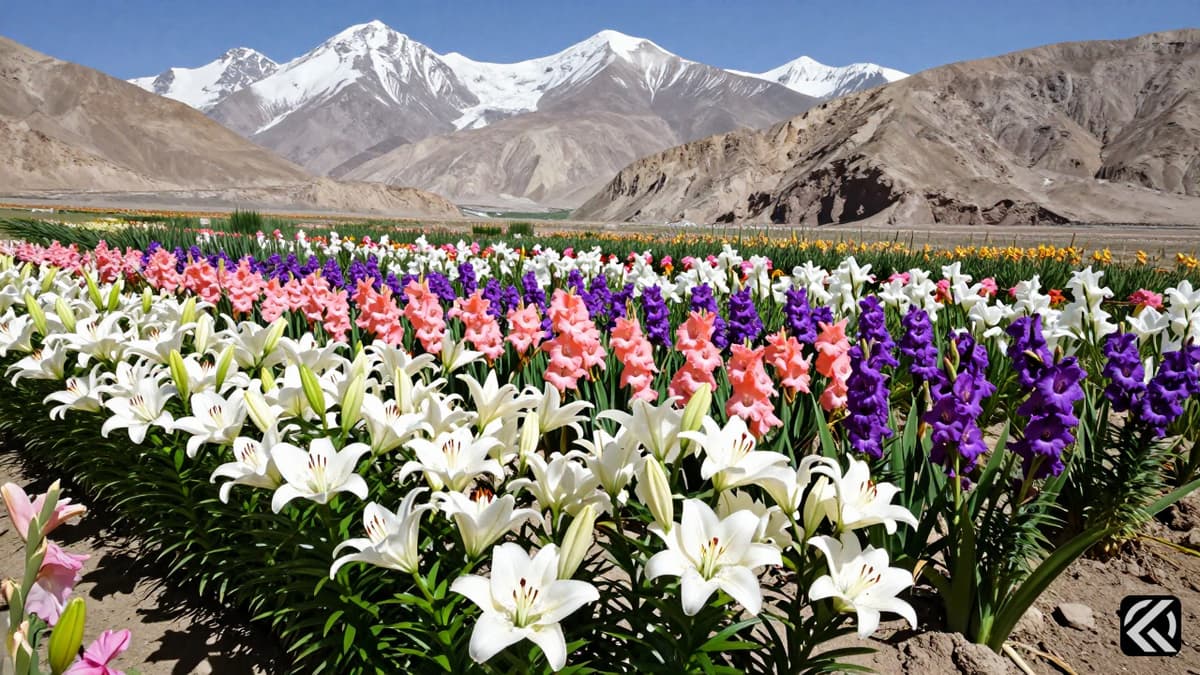
Unveiled at 10,600ft, these gardens span 40 acres and house 25 lakh high-value blooms, marking a significant milestone for Ladakh’s agricultural diversification.
On the occasion of Prime Minister Narendra Modi’s 76th birthday, the Ladakh Union Territory witnessed a historic agricultural milestone. Ladakh Lieutenant Governor Vinai Kumar Saxena officially inaugurated the world’s highest and India’s largest twin flower fields in Leh on Thursday. Situated at a staggering altitude of 10,600ft, this ambitious project represents a strategic shift in the region’s approach to economic development and agricultural diversity.
The inauguration marks the successful completion of a rapid development timeline. The Choglamsar field was constructed in just two months, with plantation activities commencing on July 16. The first blooms emerged in the first week of September, demonstrating the feasibility of high-altitude floriculture in this challenging climate. Simultaneously, the Stakna site saw nearly 1.4 lakh lilies planted in August, with initial blooms expected by the end of October. These twin fields collectively cover 40 acres and are designed to house more than 25 lakh high-value flowers.
The specific composition of the gardens highlights a focus on premium ornamental crops. The inventory includes 24 lakh Lilium flowers and 1 lakh Gladiolus plants. According to officials, this represents the first experiment of its size and nature at such a high altitude in Leh. Lieutenant Governor Saxena emphasized that the successful execution of this initiative could pave the way for replication in other parts of Ladakh, suggesting a scalable model for regional agriculture.
Ladakh twin flower fields serve a dual purpose: they are both a recreational attraction for the public and a functional training center for the local community. Starting September 18, the gardens will be open to the public, charging an entry fee of Rs 25 for adults and Rs 10 for children. This structure is designed to make the experience accessible while generating some revenue for maintenance. Beyond tourism, the Choglamsar flower park is explicitly designated to serve as a training, demonstration, and model floriculture center.
The strategic intent behind this project goes beyond aesthetic beauty. Officials view floriculture as a high-value agricultural activity that can complement traditional farming methods. The goal is to increase cultivators’ incomes and create substantial opportunities for employment and entrepreneurship. By shifting focus to Lilium cultivation and other ornamental varieties, the administration aims to tap into national and international markets, thereby integrating Ladakh into broader economic networks.
Saxena outlined the educational framework of the project. He noted that the facility will provide exposure to modern cultivation techniques, scientific farming practices, and improved post-harvest management. This knowledge transfer is critical for enabling farmers to acquire the skills required to take up floriculture at both farm and village levels. The initiative is not merely about growing flowers but about building human capital and technical expertise within the region.
The broader vision involves creating a supportive ecosystem for local enterprise. Saxena described the site as a place where not only flowers but also knowledge, skills, and enterprises can grow. By functioning as a recreational and educational space for residents and tourists, the garden aims to foster a culture of innovation and agricultural entrepreneurship. This aligns with the administration’s broader efforts to diversify agriculture and build sustainable livelihoods in the Union Territory.
The successful operation of these fields suggests a transformative potential for Ladakh’s rural economy. If the current models in Choglamsar and Stakna remain profitable and scalable, they could encourage widespread adoption of high-value crops among local farmers. The emphasis on scientific farming and post-harvest management indicates a move toward professionalizing the agricultural sector. Future effects may include reduced reliance on traditional, less lucrative crops and the emergence of a new agritech industry in the region. Furthermore, the integration of tourism with agriculture could create a sustainable revenue stream, reinforcing Ladakh’s position as a leader in innovative high-altitude agriculture.
Oct 6, 2026 02:48 UTC
Yemen Forces Recapture Mocha in Major Counteroffensive
Oct 6, 2026 00:07 UTC
Teen Loses Hand in French School Protest Clashes Amid Escalating Violence
Oct 5, 2026 22:36 UTC
UAE Shares FlyDubai Crew Data After Pilot Seize Control Attempt
Oct 5, 2026 22:00 UTC
US Withdraws Heavy Bombers From UK Base Amidst Rising Tensions With Iran
Oct 4, 2026 08:39 UTC
Trump Defiant Amid Ohio Midterm Challenges and Data Centre Debate