Section
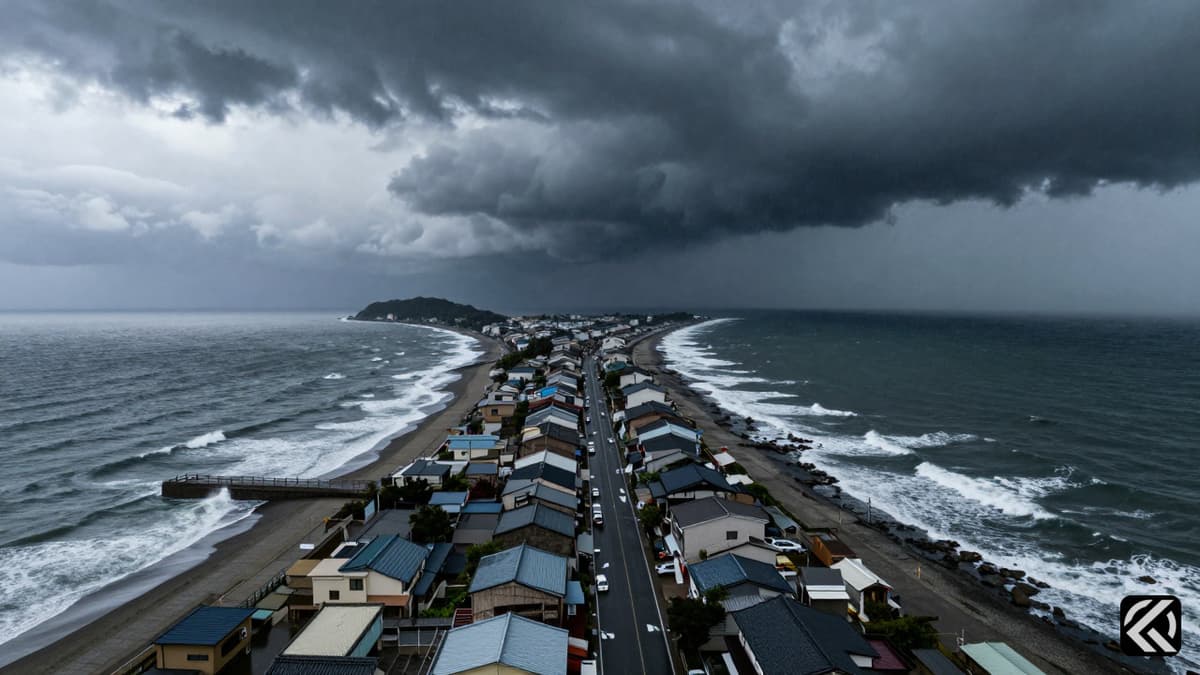
Millions in Japan confront the destructive force of Typhoon Dujuan as evacuation orders sweep across prefectures, driven by intense winds and heavy rains amplified by El Niño.
The storm system known as Typhoon Dujuan has unleashed severe conditions across Japan, compelling authorities to issue urgent Japan evacuation orders to almost two million people. This massive mobilization affects multiple prefectures as the nation braces for the direct impact of one of the strongest storms to hit the region this year. The Japan Meteorological Agency initially warned of an "imminent threat to life," signaling the critical nature of the situation. While some warnings have subsequently been downgraded, the highest level of danger to life remains in effect specifically for Oshima Town, where risks have not abated.
Immediate consequences of the storm’s arrival include significant infrastructure failures and transportation shutdowns. Strong winds generated by the typhoon have caused power cuts for more than 50,000 residents, disrupting daily life and emergency services. Transportation networks have largely ground to a halt, with hundreds of flights canceled and rail services suspended across affected regions. The storm itself is characterized by sustained winds of 130 km/h (80.8 mph) and gusts reaching 194 km/h, creating hazardous conditions for both residents and emergency responders.
The meteorological context of this disaster is heavily influenced by climatic patterns. Dujuan is Japan’s 25th typhoon of the year, making its arrival particularly notable during an active storm season. Experts note that the current wave of storms is made more intense by the "super El Niño," a natural weather phenomenon that has warmed the tropical Pacific ocean. This warming fuels the formation of more powerful storms. While climate change is not thought to increase the global frequency of these storms, rising temperatures mean that typhoons that do form are likely to become more intense on average. Additionally, a warmer atmosphere holds more moisture, leading to heavier rainfall during these events.
Political and diplomatic ramifications have already begun to emerge from the crisis. Japan’s Prime Minister Sanae Takaichi reportedly delayed her scheduled trip to the United States to monitor the effects of the typhoon. Her itinerary had included a meeting with US President Donald Trump in New York on Tuesday and a speech at the UN General Assembly. The decision to stay and manage the domestic crisis underscores the severity of the situation and the government's prioritization of public safety over international diplomacy.
Emergency services have reported specific incidents resulting from the storm's fury. The Yokosuka City Fire Department informed the BBC that a woman in her 60s, who lived in a house affected by the storm, may have been swept away and is believed to be buried alive. In a separate incident, the Sodegaura City Fire Department in Chiba prefecture rescued a man in his 50s who became trapped while clearing debris at a landslide site. The worker had fallen into a bamboo thicket along with heavy machinery and was subsequently hospitalized. Furthermore, firefighters in Kanagawa prefecture responded to calls from a man reporting that his house had been crushed by a landslide.
The disruption extends to public gatherings and cultural events. Dujuan’s arrival coincides with a five-day holiday period, which typically sees high volumes of travel and tourism. Consequently, several events have been canceled. Concerts scheduled for Monday at the Rock in Japan music festival were called off, and the Tokyo Game Show, a major video game convention, canceled its Monday program. These cancellations reflect the broad impact on civilian life and the economy.
Historical data suggests that Japan has become more exposed to destructive storms. Research indicates that while the overall number of global storms may not be increasing due to climate change, the ones that form are becoming more violent. The current "super El Niño" acts as a catalyst, exacerbating the intensity of these weather systems. As ocean temperatures rise, the potential for further devastation remains high, with heavier rainfall and stronger winds being the primary dangers.
The interaction between natural phenomena like El Niño and climate change creates a volatile environment for Japan. As global temperatures rise, the atmosphere's capacity to hold moisture increases, directly translating to heavier rainfall during typhoons. While the frequency of storms may not necessarily grow, their destructive power is expected to intensify on average. This suggests that future typhoons like Dujuan could cause even greater infrastructure damage and require more extensive evacuation protocols, challenging Japan's ability to mitigate long-term risks from increasingly severe weather patterns.
Oct 3, 2026 04:08 UTC
FlyDubai Co-Pilot Banned in Oman Over Extremism Concerns
Oct 3, 2026 00:50 UTC
Israel-Mumbai Campaign Honors Captain Smit After Flydubai Incident
Oct 2, 2026 18:13 UTC
Captain Smit Machchhar’s Courage Saves Flydubai Flight FZ1073 From Disaster
Oct 2, 2026 16:45 UTC
Captain Smit Machchhar Saves Plane Mid-Fall
Oct 3, 2026 10:04 UTC
UAE Official: Flydubai Co-Pilot’s Attack Was Terror Act