Section
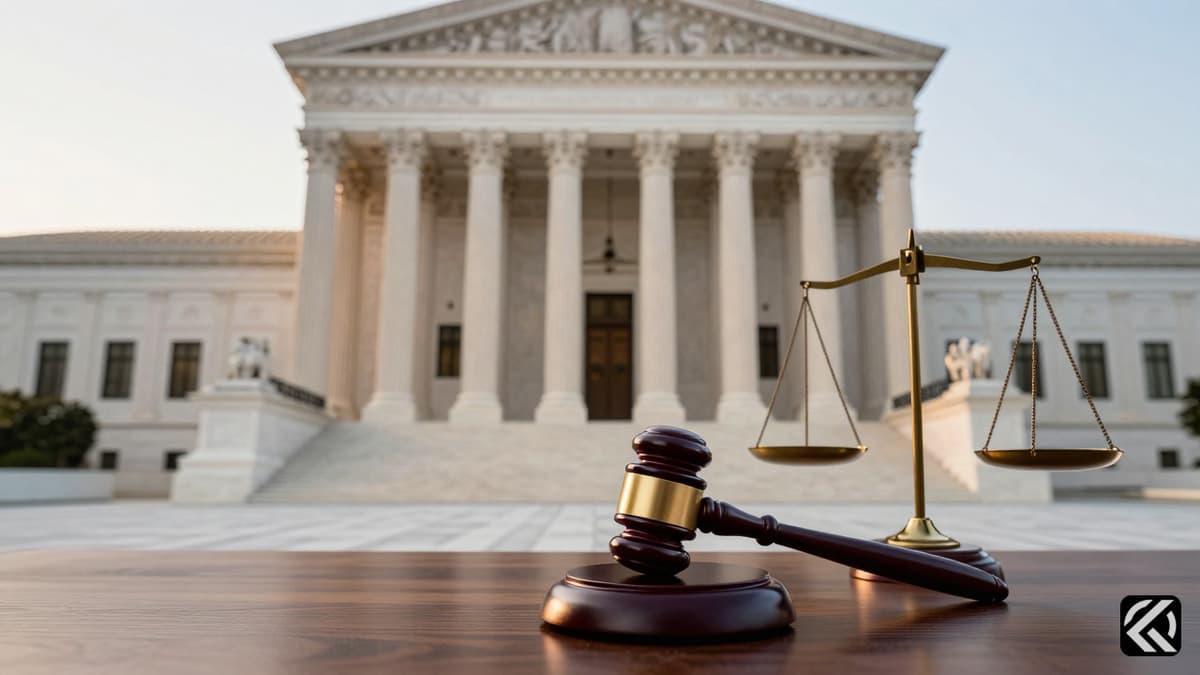
The Supreme Court opens its latest term with pivotal rulings expected on gun control, voter identification laws, and federal power, reshaping American rights.
The Supreme Court begins its latest term on Monday with a docket defined by high-stakes legal battles touching on the most contentious issues in American politics. This docket includes critical examinations of gun control laws, voting rights regulations, and the scope of federal power over climate change litigation. This marks the second full term for the nation's highest court since President Trump returned to the White House, following a previous term packed with landmark rulings on tariffs and birthright citizenship. The justices are poised to address a slate of pivotal cases that will likely influence the legal landscape for years to come.
A major focus of this term involves the Second Amendment, as the court considers whether laws banning certain semiautomatic rifles, such as the AR-15, violate constitutional protections. Gun rights groups argue that singling out these specific firearms for bans is unconstitutional, especially since a similar national ban expired in 2004. Approximately a dozen states currently maintain such bans, but lower court rulings suggest these restrictions may not withstand scrutiny under expanded Second Amendment precedents set over the past two decades.
Voting rights remain a central theme, with the court reviewing a challenge to Arizona’s proof-of-citizenship law in Republican National Committee v. Mi Familia Vota. A dozen states currently require voters to show proof of citizenship, such as a birth certificate or passport, when registering. A federal circuit court previously blocked parts of Arizona’s law, calling them unlawful voter suppression measures, but Republicans seek to overturn that decision. The potential impact is massive, as some researchers estimate that up to 21 million people lack the necessary documents to vote under such requirements, creating significant hurdles for eligible citizens.
While non-citizen voting is rare and existing laws already ensure only citizen ballots are counted, the push for stricter proof requirements continues. Trump’s proposed SAVE America Act aims to apply these nationwide, while ballot measures on the issue appear in six states this November. The court’s decision will determine whether states can maintain these registration barriers or if they constitute unlawful suppression, a ruling that could alter the mechanics of voter registration across the country.
The court is also set to rule on three significant immigration cases, directly impacting the agenda of the Trump administration. The headline case involves the legality of mandatory detention for undocumented immigrants. Historically, migrants could apply for release while awaiting court decisions, but policy changes have caused tens of thousands to remain detained indefinitely. Lower courts are split on whether denying bond hearings is legal, and the Supreme Court’s final say will determine the scope of executive power in immigration enforcement.
A second case addresses the indefinite detention of immigrants with criminal histories, including lawful permanent residents who argue their detention has been unreasonably prolonged. This issue has intensified amid reports of unsafe conditions and increased deaths in detention centers. A third case concerns immigrants whose asylum status was revoked and whether they can apply for green cards, a question the government argues is limited to those with active asylum protection. These rulings will define the boundaries of immigration policy during this political era.
Beyond guns and immigration, the Supreme Court will evaluate whether municipalities can sue oil and gas companies for their role in climate change. Lawmakers in Boulder, Colorado, initiated this suit, but companies argue that only the federal government has the jurisdiction to seek such damages due to the global nature of the issue. The Trump administration agrees with the companies, supporting the argument that local lawsuits should be blocked. If the court rules in favor of the fossil fuel industry, it could invalidate similar suits filed by other cities and states, effectively closing another pathway for local climate action.
This case follows a trend of the Supreme Court narrowing the government's power to regulate greenhouse emissions. The outcome will determine whether local governments retain the ability to hold the fossil fuel industry accountable through litigation or if that authority rests exclusively with federal agencies.
The cases before the court also include matters of transgender rights and religious freedom. In a case similar to a recent ruling favoring parents regarding school notifications, the court will weigh whether a Washington law allowing emergency shelters to withhold information about runaway transgender youth violates parental rights. Additionally, the court reviews a Colorado dispute where Catholic preschools sued for denied state funding due to their refusal to enroll LGBTQ students, testing the limits of religious exemptions in public programs.
The implications of these decisions extend far beyond the immediate parties involved. Expansive Second Amendment rulings could reshape gun laws nationwide, while voting rights decisions could either solidify or dismantle proof-of-citizenship requirements in multiple states. The immigration rulings will dictate the treatment of millions of residents and applicants, and the climate decision could shield major industries from local liability.
These impending rulings highlight the Supreme Court's role as the ultimate arbiter of contentious political and social issues. The court’s decisions on gun rights, voter ID laws, and federal preemption in climate litigation will likely set precedent for decades. As the Supreme Court navigates these complex legal waters, the outcomes will not only define the current political climate but also establish the framework for future debates on individual rights, state power, and federal authority. The coming months will determine whether the judiciary moves toward greater deregulation and executive power in specific domains or maintains the status quo of legal checks and balances.
Oct 3, 2026 04:08 UTC
FlyDubai Co-Pilot Banned in Oman Over Extremism Concerns
Oct 3, 2026 00:50 UTC
Israel-Mumbai Campaign Honors Captain Smit After Flydubai Incident
Oct 2, 2026 18:13 UTC
Captain Smit Machchhar’s Courage Saves Flydubai Flight FZ1073 From Disaster
Oct 2, 2026 16:45 UTC
Captain Smit Machchhar Saves Plane Mid-Fall
Oct 3, 2026 02:00 UTC
Protesters Demand Gyanesh Kumar Resignation at Mumbai Demonstration