Section
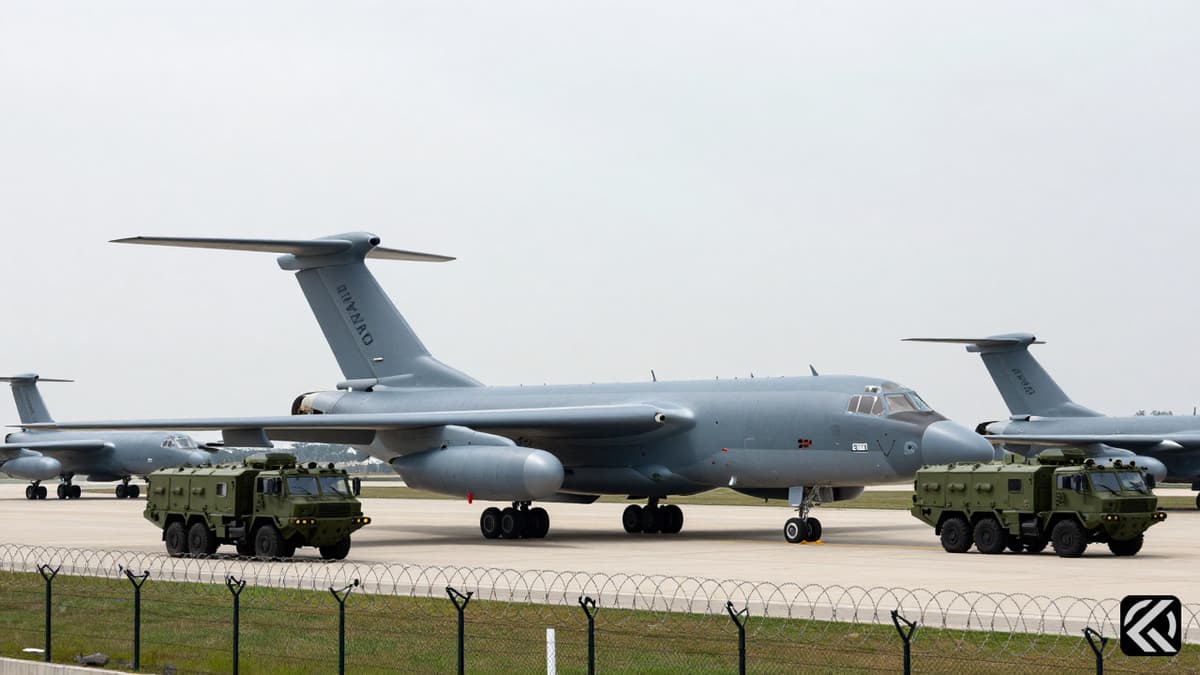
America's heavy bombers departed RAF Fairford in an urgent rush, citing an 'abundance of caution' regarding escalating tensions and potential threats from Iran.
The sudden mass withdrawal of American heavy bombers from a key UK airbase has sparked intense speculation regarding the underlying causes of this unexpected retreat. US Vice-President JD Vance attributed the decision to an "abundance of caution," stating that Washington perceived Iran as continuing its long-standing pattern of engaging in acts of terrorism against the US and other nations. This justification, however, contrasts sharply with the "abundance of panic" suggested by observers who note the chaotic nature of the evacuation.
The abrupt departure occurred on a Sunday, marking a significant operational shift after seven months of continuous strikes against Iranian missile launch sites from the facility. The timing is particularly sensitive, coming shortly after a major incident on September 27 when five British men were arrested and later bailed for acting suspiciously with white vans near the airbase perimeter in the dead of night. Additionally, a UK-Iranian dual national was recently arrested on suspicion of preparing terrorist acts, further complicating the security landscape.
The urgency of the situation was evident in the logistical chaos reported during the evacuation. Twelve B-1 Lancer bombers left en masse so quickly that reports indicate air-to-air refueling tankers were still being fueled while bomber crews were scrambling to take off. This rush suggests that US leadership considered the threat to be both urgent and dangerous. President Donald Trump confirmed that the removal was due to "some threats" to the base, noting that the US moved the planes "around a little bit" rather than tempting the enemy.
Despite the official narrative of caution, the context suggests deeper geopolitical friction. While the UK is not officially at war with Iran, the US is, a distinction Tehran has publicly challenged. The Islamic Revolution Guards Corps views Britain as a participant in America's war, implying that any US asset in the UK is a legitimate target. This reality was underscored by Iran's previous threats in July, warning that any country providing facilities to the US would be considered a "legitimate target."
British officials declined to reveal specific intelligence details but acknowledged a "high tempo of threat from Iran to the UK," noting that it is logical for US airbases to be high on any targeting list. However, Iran has denied any connection to events at the base, and US Secretary of State Marco Rubio has played down any link between the evacuation and the September arrests, asserting confidence in the security of all bases and praising UK authorities for their cooperation.
The financial implications of this incident are substantial. Each B-1 Lancer bomber costs approximately $330 million. The US has already suffered heavy financial losses from Iranian strikes on bases in the Middle East, including the destruction of an E-3 Sentry AWACS early warning plane at Prince Sultan Air Base in Saudi Arabia in late March, which cost over half a billion dollars. General Sir Richard Barrons commented on these vulnerabilities, stating that a £1,000 drone could wreck such an aircraft. He suggested that removing them to Texas was the most prudent action given that they were not currently conducting significant operations.
This raises critical questions about Washington's confidence in the ability of the UK to keep the base secure. Although Britain remains an incredibly close ally, with hundreds of American servicemen stationed at RAF Fairford, Mildenhall, and Lakenheath, the abrupt nature of the withdrawal is viewed by some as an embarrassing episode for the UK. It highlights the difficulty of securing high-value assets in a theater where the enemy views British soil as part of the battlefield.
As UK counter-terrorism police continue to investigate the incidents surrounding the airbase, the long-term implications for US-UK military cooperation become increasingly clear. The withdrawal underscores the fragile nature of base security in an era where asymmetric threats, such as drones, pose significant risks to expensive military hardware. Future operations at RAF Fairford will likely involve secret reviews of security measures on both sides of the perimeter fence. While official statements maintain confidence in the partnership, the physical removal of strategic assets signals a pragmatic response to escalating geopolitical tensions. The incident serves as a stark reminder that even allied nations must constantly adapt their defensive postures when caught in the crossfire of broader international conflicts, potentially leading to more rigid security protocols and reduced visibility of US military operations in the UK in the immediate future.
Oct 6, 2026 02:48 UTC
Yemen Forces Recapture Mocha in Major Counteroffensive
Oct 6, 2026 00:07 UTC
Teen Loses Hand in French School Protest Clashes Amid Escalating Violence
Oct 5, 2026 22:36 UTC
UAE Shares FlyDubai Crew Data After Pilot Seize Control Attempt
Oct 5, 2026 22:00 UTC
US Withdraws Heavy Bombers From UK Base Amidst Rising Tensions With Iran
Nov 5, 2026 20:16 UTC
Pia Dandiya Claims Landmark Florida Win in 2026 Midterms