Section
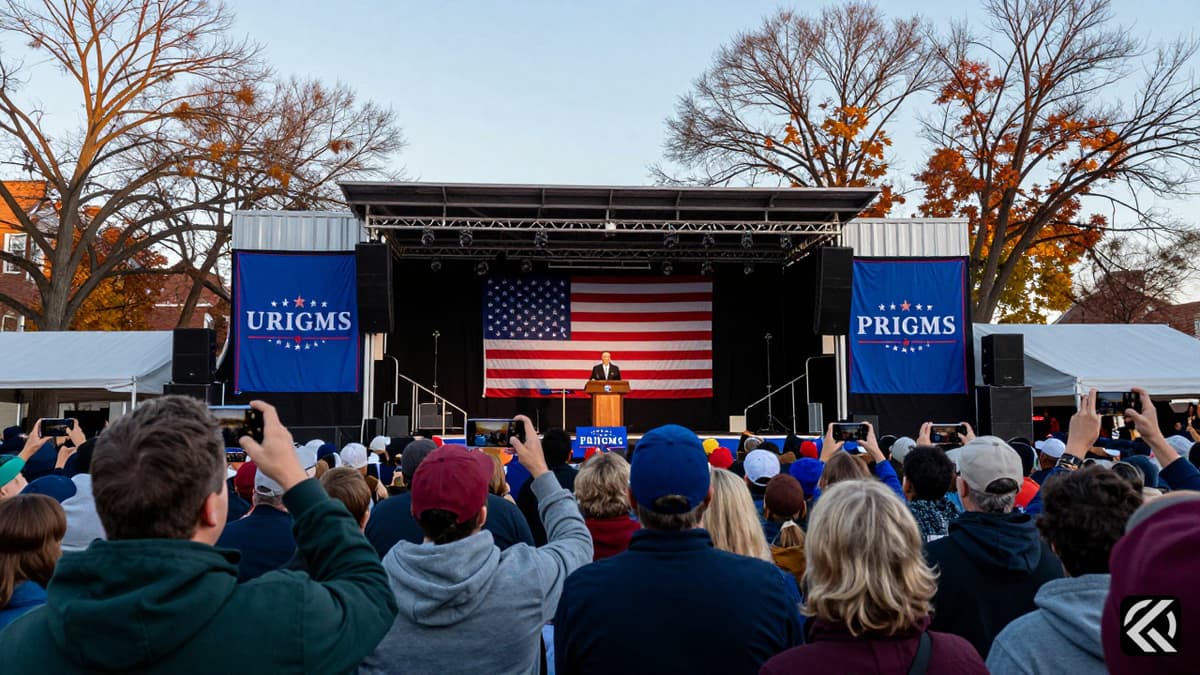
President Donald Trump rallies in Vandalia, dismissing negative polling ahead of the Ohio midterm elections while highlighting economic gains from new data centres and trade policies to energize Republican voters.
President Donald Trump continued his campaign efforts in Ohio, rallying for Republican candidates and projecting confidence despite unfavorable polls for his party in the upcoming November 3 elections.
During a rally in Vandalia, Ohio, the President addressed the crowd’s concerns, dismissing current polling data that suggests Democratic gains. He urged supporters to turn out in large numbers, claiming that voter participation would lead to a decisive Republican victory and a “big surprise” for his opponents.
The Ohio Political Landscape and Economic Headwinds
Trump’s presence in the Midwest comes at a critical juncture for the Republican Party. Multiple incumbent Republican senators nationwide face difficult political conditions, exacerbated by Trump’s declining popularity in recent months. This drop in approval is largely attributed to persistent high costs for petrol and other staples, issues intensified by the ongoing US-Israel war involving Iran. Despite this, Trump remains defiant, insisting that Republicans will outperform critics’ expectations if they mobilize their base.
“You get out and vote,” Trump told the crowd, listing key figures he is supporting, including US Senator Jon Husted and gubernatorial candidate Vivek Ramaswamy. “If you do that, we’re going to win, and we’re going to win big.”
While Trump secured more than 55 percent of the Ohio vote in the 2024 presidential election, economic anxieties have shifted the political landscape. According to data compiled by the American Automobile Association (AAA), Ohio petrol prices have risen 35 percent over the past year, averaging $4.16 per gallon. Furthermore, Trump’s trade policies with Canada have triggered retaliatory tariffs affecting approximately $3 billion worth of Ohio exports, based on 2025 figures reported by Canadian broadcaster CBC. These economic pressures have given opponents ammunition, particularly in competitive races.
The Battle Over Data Centres and Energy Costs
A central theme of Trump’s address was the administration’s promotion of data centres, specifically those built for artificial intelligence. He argued that these facilities are vital for Ohio’s economy and warned that blocking them would simply push the industry to China. “Look, there’s so much money to be made for Ohio. You can’t just turn them off. They’ll go to China,” Trump stated, praising Senator Husted for his efforts in this sector, despite Husted’s previous legislative attempts on the issue being unsuccessful.
However, data centres have become a polarizing political issue across the country, drawing bipartisan opposition from voters concerned about their impact on electricity prices, farmland, and water supplies. In Ohio, the issue has been particularly acute for Senator Husted. As former lieutenant governor, Husted has faced repeated criticism for attracting these facilities to the state, which his opponent, Democrat Sherrod Brown, argues places a financial burden on residents.
Brown attacked Husted on social media platform X just before Trump’s visit, writing, “Senator Jon Husted gave billions in tax breaks to Big Tech to make sure they would build their data centres in Ohio. Now, he’s making Ohioans foot the bill.”
Legislative Conflicts and Voter Mobilization
The tension over energy consumption was highlighted last week when the Republican-controlled Senate attempted to advance Husted-sponsored legislation. The bill aimed to have utility regulators charge large power users more, helping consumers cope with high energy costs. However, the measure was blocked by nearly all Democratic senators.
Husted remains focused on mobilizing voters who might otherwise skip the midterms. Speaking to reporters before the rally, he emphasized the need to win the Iran war “on our terms” while simultaneously demonstrating that he is “fighting for lower prices.” His campaign strategy relies heavily on Trump’s ability to energize the Republican base, hoping to offset the negative impact of rising living costs and trade disputes.
As the Ohio midterm elections approach, the dynamic between economic grievances and political mobilization will likely determine the outcome. With high petrol prices and trade tensions affecting local exports, the stakes for both parties are high. Trump’s campaign is betting that enthusiasm and turnout can overcome broader economic dissatisfaction, particularly if he can frame the data centre debate as a win for state revenue and infrastructure rather than a burden on utilities.
The intersection of high petrol costs, retaliatory trade tariffs, and the energy demands of AI infrastructure creates a complex challenge for Ohio voters. If Republican candidates fail to deliver on promises of lower prices, the economic discontent highlighted by AAA data could suppress turnout. Conversely, if Trump’s narrative on trade and foreign policy resonates, it may bolster support despite local economic pain. The future of the state’s energy grid and its attractiveness to tech investments will likely remain a defining factor in regional politics for years to come.
Oct 6, 2026 02:48 UTC
Yemen Forces Recapture Mocha in Major Counteroffensive
Oct 6, 2026 00:07 UTC
Teen Loses Hand in French School Protest Clashes Amid Escalating Violence
Oct 5, 2026 22:36 UTC
UAE Shares FlyDubai Crew Data After Pilot Seize Control Attempt
Oct 5, 2026 22:00 UTC
US Withdraws Heavy Bombers From UK Base Amidst Rising Tensions With Iran
Nov 5, 2026 20:16 UTC
Pia Dandiya Claims Landmark Florida Win in 2026 Midterms