Section
Arab-led parties have thrown their support behind Gadi Eisenkot, offering a path to a new government as President Herzog opens consultations.
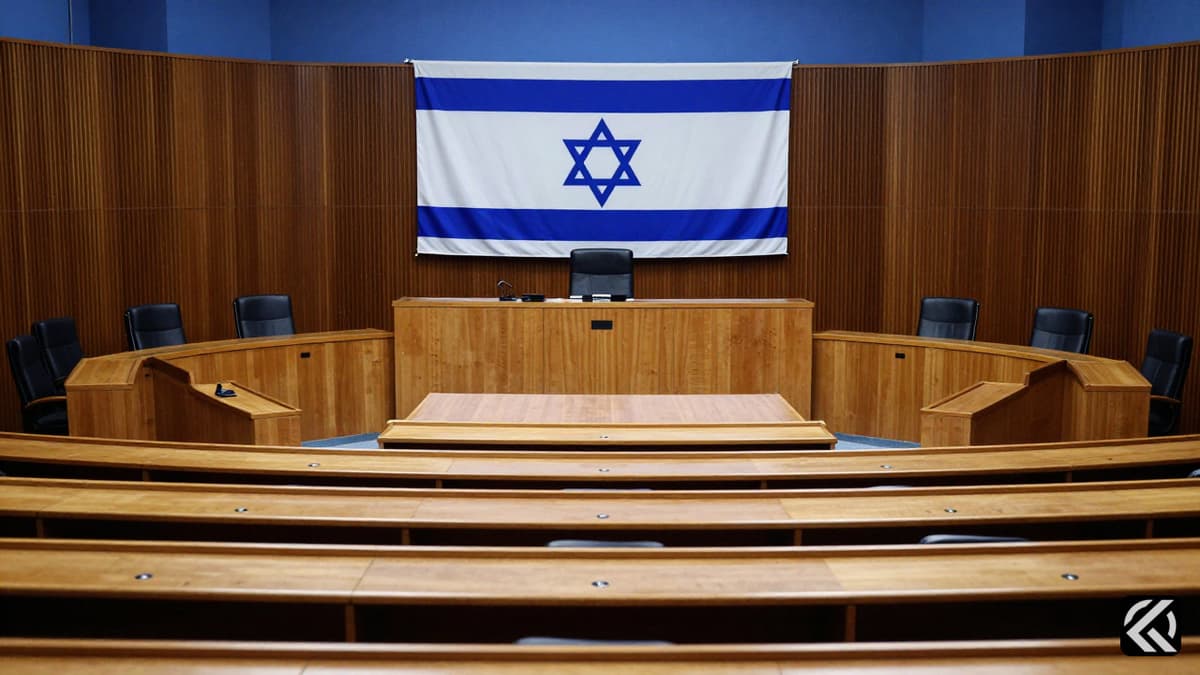
The Joint List alliance of Arab-led parties announced its decision to back Israeli opposition leader Gadi Eisenkot to form a new government following last week’s general election. In a formal statement released on Thursday, the alliance declared it would inform President Isaac Herzog of its recommendation to task Eisenkot with government formation.
This strategic move significantly impacts the post-election landscape, as the Joint List’s 11 lawmakers are crucial for any coalition seeking to exceed the 61-seat majority threshold in the 120-seat parliament. Their support, combined with Ra’am, which also recommended Eisenkot, provides the opposition leader with the formal backing of 67 lawmakers. This alliance represents a pivotal shift, as the Arab-led parties secured a record 19 seats in the recent election, granting them considerable leverage in determining the country's political future.
The path to forming a government has become increasingly complex for Prime Minister Benjamin Netanyahu, whose bloc holds 53 seats. However, those seats may not translate into 53 endorsements, as Degel HaTorah, part of United Torah Judaism, explicitly stated it would recommend neither candidate. The ultra-Orthodox faction broke with Netanyahu due to the coalition’s failure to pass legislation exempting Haredi men from military service. Simultaneously, Netanyahu has repeatedly and without evidence claimed that Arab parties committed fraud with foreign backing, citing the arrests of three activists alleged to have bribed voters. The Central Elections Committee certified the results on Wednesday, finding no evidence of fraud.
President Herzog has accepted the election results and begun consultations with various party leaders. He recently met with representatives from Religious Zionism, Zehut, Shas, and Yisrael Beytenu, receiving their recommendations on who should form the government. While warning against smearing voters, Herzog condemned recent racist expressions, emphasizing his respect for the Palestinian minority, which comprises about 20 percent of the population.
As consultations continue, the focus remains on whether Eisenkot can assemble a viable coalition. He currently has the support of 67 lawmakers, surpassing the necessary majority. However, analysts note that he must navigate the delicate politics of partnering with Arab-led parties, whom his previous political stance often opposed.
The dynamics of the current political crisis highlight the fragility of traditional coalitions and the rising influence of the Arab-led bloc. By formally recommending Eisenkot, the Joint List has effectively placed the burden of government formation on the opposition leader, challenging Netanyahu’s ability to rally a stable right-wing coalition. The defection of Degel HaTorah underscores deep ideological fractures within the ultra-Orthodox community regarding military service, a long-standing point of contention in Israeli politics.
Netanyahu’s Likud party has attempted to discredit the opposition by suggesting that any collaboration between Zionist parties and the Arab bloc would be “dangerous to Israel.” Yet, the Central Elections Committee’s certification of the results and Herzog’s insistence on respecting Palestinian citizens counter these narratives. President Herzog’s recent remarks condemn the “coarseness” of recent political discourse, signaling a desire to stabilize the political environment amidst heightened tensions.
The process now rests with Herzog, who has several days to announce his final choice between Netanyahu and Eisenkot. The nominee will then have 28 days, potentially extended by 14, to form a government. If neither succeeds, Israel faces another election early next year. This deadline creates immense pressure on Eisenkot to maintain the unity of his broad coalition, which includes parties he previously opposed. The success of this endeavor will depend on his ability to bridge ideological divides and secure the necessary parliamentary support to govern effectively.
The current political deadlock suggests a significant turning point in Israeli governance, where traditional ideological lines may blur out of necessity. If Eisenkot succeeds, it could mark the end of Netanyahu’s long-standing influence and the beginning of a new chapter involving unprecedented cooperation between secular-Zionist and Arab-led parties. Conversely, a failed attempt could lead to early elections, deepening political instability and economic uncertainty. The reliance on Arab-led support may also force long-term structural changes in coalition building, potentially normalizing the political participation of Arab parties in central government roles. This shift could redefine the political landscape, making future administrations more diverse but also potentially more fragile as they navigate the complex demands of a broader coalition base.
Oct 6, 2026 02:48 UTC
Yemen Forces Recapture Mocha in Major Counteroffensive
Oct 6, 2026 00:07 UTC
Teen Loses Hand in French School Protest Clashes Amid Escalating Violence
Oct 5, 2026 22:36 UTC
UAE Shares FlyDubai Crew Data After Pilot Seize Control Attempt
Oct 5, 2026 22:00 UTC
US Withdraws Heavy Bombers From UK Base Amidst Rising Tensions With Iran
Nov 5, 2026 20:16 UTC
Pia Dandiya Claims Landmark Florida Win in 2026 Midterms