Section
With the United Democratic Front securing a decisive victory, V.D. Satheesan is set to lead Kerala’s new government, marking a significant shift in the state’s political landscape.
In the wake of the United Democratic Front’s (UDF) electoral victory, V.D. Satheesan has emerged as the Chief Minister-designate of Kerala, signaling the start of a critical phase in state politics. Following intense negotiations and internal party discussions, Satheesan is now preparing to finalize the composition of his new government. The transition period is characterized by efforts to unify coalition partners and address longstanding political equations that have shaped Kerala’s governance structure for decades.
The appointment of Satheesan reflects a strategic alignment between the Congress party and its key ally, the Indian Union Muslim League (IUML). This partnership was solidified despite initial speculation regarding senior leaders like Ramesh Chennithala and K.C. Venugopal. KPCC President Sunny Joseph confirmed that discussions regarding ministerial berths are progressing satisfactorily, stating that the issue of dissent over the Chief Minister’s post has been fully resolved. “Everything is resolved,” Joseph asserted, emphasizing unity within the Congress unit as they prepare for the upcoming swearing-in ceremony.
A central pillar of this political transition is the relationship between the Congress and the IUML. IUML state president Sayyid Sadiq Ali Shihab Thangal indicated that while the party has not staked formal claims, it expects to receive five ministerial positions. This expectation mirrors the allocation during the 2011-2016 Oommen Chandy government, suggesting a desire for continuity in power-sharing arrangements. Thangal expressed hope that all aspects would be considered in the final decision, highlighting the delicate balance required to maintain coalition stability.
Meanwhile, other constituents of the UDF are also positioning themselves for influence. Office bearers of the Kerala Pradesh School Teachers Association (KPSTA), linked to the Congress, met with Satheesan to request that the education portfolio remain with their party. They cited historical precedents where the education ministry was allocated to allies despite Congress leadership, aiming to rectify what they perceive as past imbalances. Similarly, the Kerala ASHA Health Workers’ Association (KAHWA) has urged the new administration to honor pre-poll promises regarding wage resolutions, bringing grassroots labor demands into the spotlight of cabinet planning.
The selection of Satheesan itself was influenced by political continuity and public sentiment. Analysts note that his tenure as Leader of the Opposition helped the UDF navigate difficult phases following electoral setbacks. The IUML’s firm support for Satheesan, overlooking stronger contenders, underscores a pragmatic approach to governance that prioritizes stability and proven leadership over internal hierarchy. This decision has been widely interpreted as a move to consolidate the coalition’s gains and ensure effective administration in the state.
Beyond administrative allocations, Satheesan has taken a firm stance on ideological matters. He issued a stern warning against communal polarization, asserting that his government would not compromise on attempts to disrupt Kerala’s secular fabric. Speaking at Cantonment House, he condemned hate campaigns that attempt to portray the IUML as non-secular, describing such efforts as calculated political maneuvers. He emphasized the party’s long-standing contribution to the UDF’s electoral victory, reinforcing the importance of coalition unity in defending democratic values.
As the swearing-in ceremony approaches on May 18, international and national attention is focused on Kerala. BJP Chief Minister Rajeev Chandrasekhar confirmed that he was invited to the ceremony, indicating a level of diplomatic engagement even between political rivals. The BJP’s presence, along with MLAs and leaders from the NDA, suggests a protocol of acknowledging the new government’s legitimacy. This gesture contrasts with the internal turbulence that preceded the announcement, highlighting the eventual consolidation of power.
Speculation remains intense regarding the representation of Satheesan’s home district, Ernakulam, in the Kerala Cabinet formation. Historically, the Congress did not have a minister from this district in the previous UDF government, relying instead on allies like the IUML and Kerala Congress (J). Insiders suggest that Satheesan may aim to increase Congress representation from the region, with names like Aluva MLA Anvar Sadath and T.J. Vinod emerging as potential candidates. This local political calculus adds another layer of complexity to the ongoing negotiations.
Former CPI(M) leader G Sudhakaran, now an independent supported by the UDF, has adopted a neutral posture regarding his own future. He stated that he will not seek a ministerial berth but would accept one if offered, reflecting a willingness to serve without exerting pressure. His stance contrasts with the more active lobbying seen from other allied groups, illustrating the diverse strategies employed within the broad coalition framework.
The coming days will be crucial in determining the final shape of the new government. AICC General Secretary K.C. Venugopal has assured that differences among senior leaders will be resolved smoothly, emphasizing the importance of a strong team. The detailed decisions on cabinet positions are expected to be announced soon, bringing clarity to the political landscape. As Satheesan prepares to assume office, the focus remains on delivering on the UDF’s mandate while managing the intricate web of alliance expectations and public demands.
Satheesan’s leadership marks a definitive end to the period of uncertainty and internal debate within the UDF. By prioritizing coalition unity and addressing secular concerns, he has established a clear initial direction for the state. The resolution of senior leadership disputes and the inclusion of diverse allies suggest a stable foundation for governance. As the cabinet is finalized, the administration will likely face immediate pressures from allied parties and grassroots movements, testing its ability to balance political commitments with public service. The success of this new government will depend on its capacity to deliver on promised reforms while maintaining the delicate social and political equilibrium that defines Kerala politics.
Jun 11, 2026 17:21 UTC
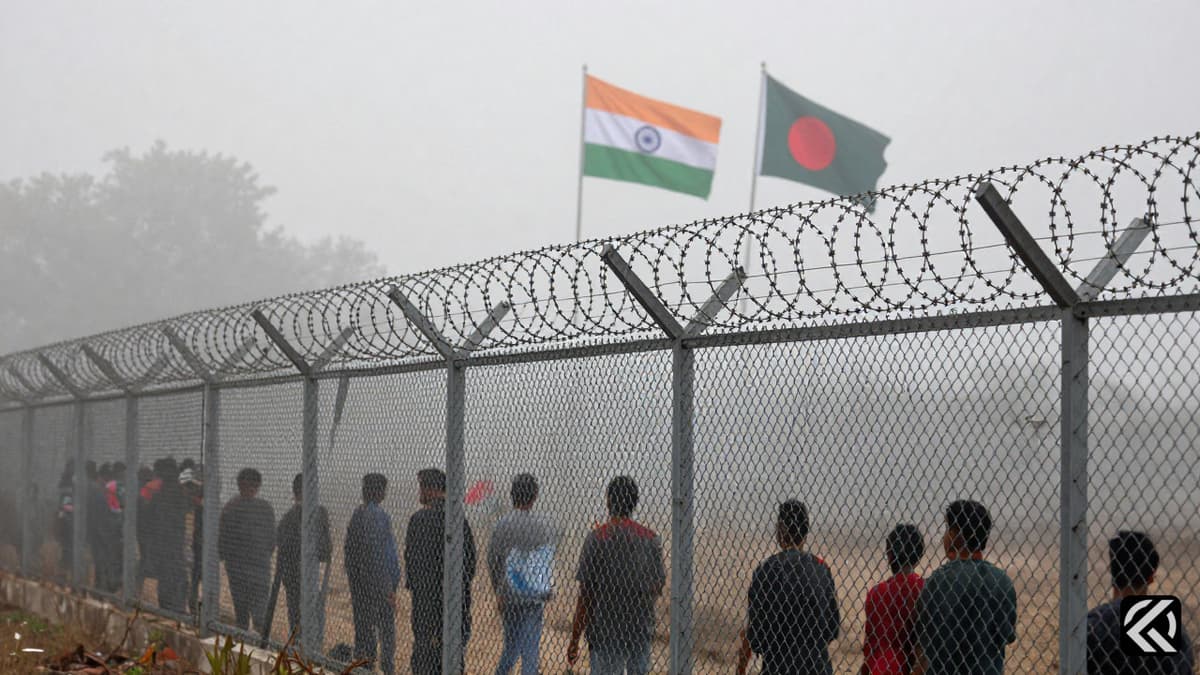
Bangladesh Opposition Mobilizes Against India-Bangladesh Border Push-Ins and BSF Killings
Join 50,000+ readers getting the global briefing every morning.
No spam. Unsubscribe anytime.
Jun 11, 2026 17:40 UTC
Boelter Pleads Guilty in Minnesota Political Assassinations
Jun 11, 2026 17:21 UTC
Bangladesh Opposition Mobilizes Against India-Bangladesh Border Push-Ins and BSF Killings
Jun 11, 2026 17:21 UTC
John Healey Quits as UK Defence Secretary Over Funding Dispute
Jun 11, 2026 16:19 UTC
UK Defence Secretary John Healey Quits Over Funding Dispute