Section
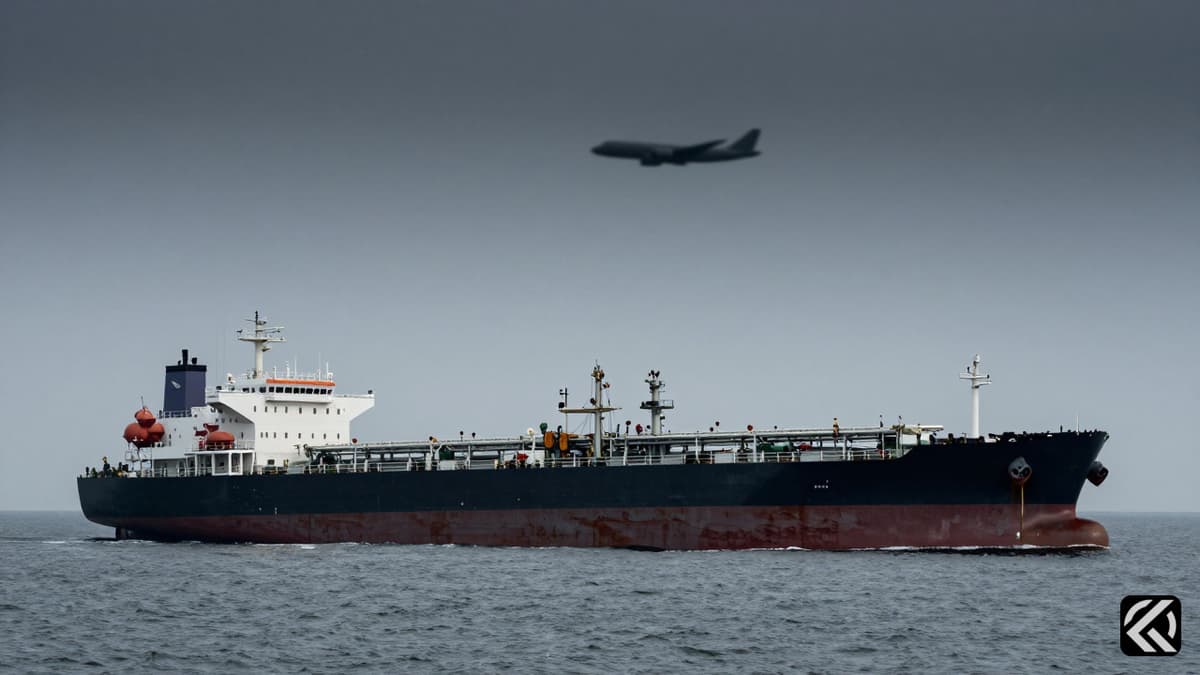
Three Indian sailors are dead and India has lodged strong protests after US military strikes targeted tankers in the Gulf of Oman.
In a severe escalation of geopolitical tensions in the Middle East, three Indian sailors have been confirmed killed after the US military struck a tanker in the Gulf of Oman. The incident occurred on Wednesday, marking a tragic turn in the ongoing regional conflict that has seen multiple commercial vessels targeted.
The attack took place on the MT Settebello, a Palau-flagged oil tanker, while it was navigating waters near the Strait of Hormuz. At the time of the strike, there were 24 Indian crew members on board. While 21 of the sailors were successfully rescued, the remaining three lost their lives in the assault. This event is part of a broader pattern of aggression, as the US has now struck three ships in the Gulf this week, all of which carried Indian crew members.
The identities of the deceased sailors have been confirmed by India's Ministry of Ports, Shipping and Waterways. The victims are Aditya Sharma, a cadet; Shivanand Chaurashiya, a fitter; and Patnala Suresh, a chief engineer. The shipping minister, Sarbananda Sonowal, announced on the social media platform X that the bodies of these three men would be repatriated to India soon. However, for the families, the wait for closure is agonizing. Rajesh Sharma, the father of cadet Aditya Sharma, told the BBC that his family is still waiting for his son’s body. He revealed that Aditya was scheduled to return home in May, but his duty was extended, and he last spoke to his son on Sunday.
The circumstances surrounding the deaths have sparked outrage and questions regarding maritime safety and command decisions. Rajesh Sharma questioned why the captain of the tanker chose to navigate near the Strait of Hormuz, a known danger zone, and called for a thorough inquiry. "Who is responsible for the deaths? The circumstances that led to the deaths must be investigated," he stated. His concerns reflect the broader anxiety among the maritime community regarding the safety of commercial shipping in the region.
The US military justified the strikes by accusing the tankers of violating its blockade on Iranian ports. The US blocked access to Iran's ports after Tehran effectively closed the Strait of Hormuz, a critical chokepoint through which approximately 20% of the world's oil and gas supplies are transported. According to US Central Command (Centcom), one of its aircraft fired "precision munitions" into the engine room of the Settebello "after the crew repeatedly failed" to follow directions. Centcom further claimed that US forces had disabled eight vessels and redirected 134 others since initiating the blockade on April 13.
This is not an isolated incident. On Monday, US forces hit another Palau-flagged oil tanker, the Marivex, in the Gulf of Oman for failing to comply with US instructions. All 24 crew members on the Marivex were rescued by the Omani military. Then, on Thursday, a third vessel, the Guinea-Bissau-flagged MT Jalveer, came under attack in the vicinity of Shinas port in Oman. Initially, there was confusion regarding the status of the Jalveer's crew, but Delhi confirmed that all 20 crew members on board were safe. Centcom confirmed its involvement in striking both the Settebello and the Marivex, highlighting a systematic approach to enforcing the blockade.
Despite the foreign registration of these vessels, a majority of their crew members are Indian, making the crew's safety a paramount concern for New Delhi. The Indian government has maintained a firm stance that "targeting of commercial shipping and civilian infrastructure in the region must end." Ministry of External Affairs spokesperson Randhir Jaiswal stated that India "lodged a strong protest" with the US when the Settebello was struck. "We called in the American CDA [chargé d'affaires] and informed them of our deepest concerns about the ongoing incidents of attacks," Jaiswal added.
The diplomatic fallout has been immediate. While India has expressed its deepest concerns, the maritime union leaders have also voiced their frustration. Manoj Yadav, general secretary of the Forward Seamen's Union of India (FSUI), told The Economic Times that he "refused to believe" that the US lacked information regarding the nationalities of the people on board those ships. Yadav argued that if the ships failed to heed instructions, "detaining them was a viable alternative" rather than resorting to lethal force. He has begun reaching out to the families of the sailors to inform them of the tragic developments.
The human cost of this conflict is increasingly evident in the personal stories of the victims' families. Rajesh Sharma’s account of his son’s extended duty underscores the unpredictability faced by seafarers in volatile regions. The uncertainty regarding the repatriation of the bodies adds to the trauma, as families like the Sharmas are left in limbo, questioning the decisions that led to the deaths of their loved ones. The call for an inquiry is not just a demand for accountability but a plea for preventive measures to protect future crews.
The strategic context of these strikes is complex. The US military’s actions are part of a broader containment strategy against Iran, aimed at cutting off its port access. However, the reliance on commercial tankers and the subsequent targeting of vessels with foreign flags have drawn international criticism. The high number of Indian nationals involved highlights the global nature of maritime labor and the vulnerabilities it creates in times of war. With 562 Indian seafarers currently on Indian-flagged vessels, including 329 in the Gulf region west of Hormuz and 233 in the Gulf of Oman east of Hormuz, the risk to Indian nationals remains high. Additional Secretary Mukesh Mangal noted that there are more than 18,000 Indian seafarers in total in the whole Gulf region, emphasizing the scale of the potential impact.
The current situation in the Gulf of Oman is characterized by heightened hostility and diplomatic strain. The US military strikes, part of the Gulf of Oman blockade, have not only resulted in the tragic loss of life but have also tested the resilience of international diplomacy. India’s strong protests and the subsequent calls for inquiry highlight the growing friction between the need for national security and the protection of commercial interests and civilian lives. As both countries exchange strikes for a second consecutive day, the fragile ceasefire arrived upon in April is under severe strain. The ongoing conflict poses significant risks to global energy supplies and maritime safety, with the potential for further escalation. The fate of the remaining Indian sailors and the outcome of India’s diplomatic efforts will be critical in determining the future stability of the region and the safety of its seafarers.
Jun 11, 2026 17:21 UTC
Bangladesh Opposition Mobilizes Against India-Bangladesh Border Push-Ins and BSF Killings
Join 50,000+ readers getting the global briefing every morning.
No spam. Unsubscribe anytime.
Jun 11, 2026 17:40 UTC
Boelter Pleads Guilty in Minnesota Political Assassinations
Jun 11, 2026 17:21 UTC
Bangladesh Opposition Mobilizes Against India-Bangladesh Border Push-Ins and BSF Killings
Jun 11, 2026 17:21 UTC
John Healey Quits as UK Defence Secretary Over Funding Dispute
Jun 11, 2026 16:19 UTC
UK Defence Secretary John Healey Quits Over Funding Dispute