
Section
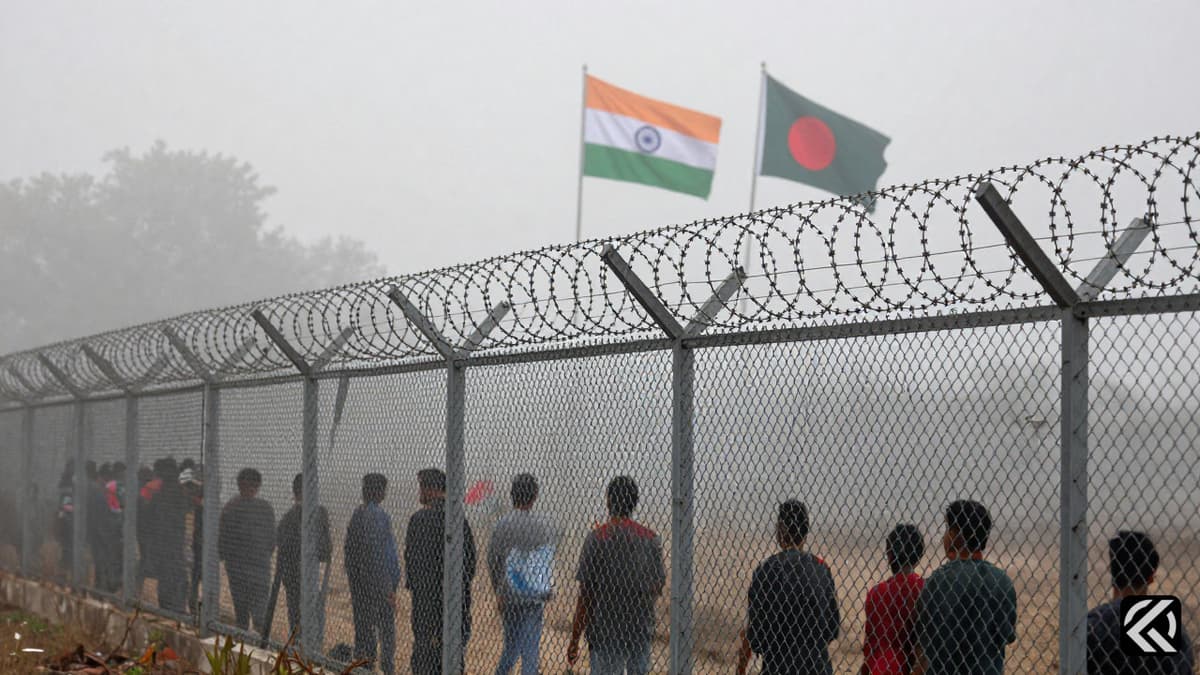
Bangladesh’s opposition coalition announces major border protests alleging illegal Indian cross-border actions, raising urgent questions about regional security.
Bangladesh’s Jamaat-e-Islami and a coalition of 11 opposition parties, including the National Citizen Party (NCP), have announced a two-day protest program along the India-Bangladesh border push-ins to demand an end to alleged cross-border violations. The coalition cites reported killings and illegal entries as primary drivers for this mobilization.
The protests address serious allegations that the Border Security Force (BSF) has engaged in violent crackdowns and unlawful repatriation efforts. Hamidur Rahman Azad, coordinator of the 11-party alliance, stated that direct killings violate human rights and sovereignty, urging the government to take stronger diplomatic action.
The 11-party alliance has unveiled a detailed protest programme, demanding immediate cessation of these alleged actions. Hamidur Rahman Azad, who also serves as assistant secretary general of Jamaat-e-Islami, emphasized that no legal provision exists for killing individuals at the border, regardless of alleged crimes. He argued that arrest procedures must be followed, asserting that direct shootings constitute a clear violation of human rights and an attack on Bangladesh’s sovereignty. Azad noted that while border killings have long been a concern, the situation has intensified under the current government.
Referencing reports from national newspapers, Azad alleged that attempts to push people into Bangladesh occurred at more than 50 locations between March and May this year, involving 2,479 individuals. He further claimed that 19 Bangladeshis were killed and 24 injured by BSF firing during the first 100 days of the current government. Azad accused the government of failing to respond effectively and highlighted that 83 people had been detained or abducted by the BSF and Myanmar’s Arakan Army.
Nasiruddin Patwary, Chief Coordinator of the NCP, joined the press conference to highlight the humanitarian crisis facing those living near the zero line. He stated that these communities urgently require food and water, calling for tighter border surveillance. Patwary urged that the Border Guard Bangladesh (BGB) must be strengthened to prevent push-ins, suggesting that residents form a human shield to deter terrorists, smugglers, or criminals from entering Bangladesh.
Critically, Patwary condemned remarks by India’s home minister and other officials who dismissed the issue as an internal matter for India. He asserted that the lives, security, and sovereignty of Bangladeshis are directly involved, refuting India’s claim that the situation is purely domestic. This political tension follows a recent standoff between the BSF and BGB at four locations in West Bengal. The confrontation, particularly near Pillar No. 134 in Panishala, Cooch Behar’s Mekhliganj, ended with dozens of stranded Bangladeshi nationals leaving the area by Saturday morning.
At the most significant point of conflict near Pillar No. 134, 10 people remained stranded after the BGB refused to accept them, alleging they were being illegally pushed back from India. The BSF reported that the BGB declined a proposed flag meeting, but after several hours of discussions and an altercation on Saturday morning, the situation eased, allowing the stranded individuals to return to Bangladesh.
India’s Ministry of External Affairs (MEA) has responded by urging Bangladesh to expedite the verification of suspected Bangladeshi nationals residing illegally in India. MEA spokesperson Randhir Jaiswal explained that a bilateral mechanism exists for such cases, where India refers individuals to Bangladesh for nationality verification. Once verified, deportation processes are initiated. Jaiswal noted that India has made several requests to Dhaka to speed up this process, hoping for smooth and efficient deportations of those illegally staying in the country.
The escalation of protests and diplomatic friction underscores a critical juncture in India-Bangladesh relations. The opposition’s demand for a human shield and the government’s perceived inaction highlight deep public anxiety over border security. If the current government fails to address these allegations effectively, political pressure may intensify, potentially straining bilateral ties further. India’s insistence on faster deportations suggests continued diplomatic friction until verification processes are aligned. Future stability depends on transparent communication and mutual respect for sovereignty, as unresolved tensions could lead to more frequent standoffs and humanitarian crises along the frontier.
Jun 11, 2026 12:59 UTC
US Strike on Settebello Kills Indian Sailors Amid Strait of Hormuz Tensions
Jun 11, 2026 12:49 UTC
Air India Flight 171 Crash Sparks Debate Over Boeing 787 Dreamliner Faults
Jun 11, 2026 08:51 UTC
US-Iran Conflict: Indian Seafarers Killed in Gulf Strike
Jun 11, 2026 18:04 UTC
Healey Quits Government Over Defence Spending Dispute


