Section
Anxiety over the upcoming election hits the White House as Trump polls guests on potential successors, sparking speculation about VP Vance and Secretary Rubio.
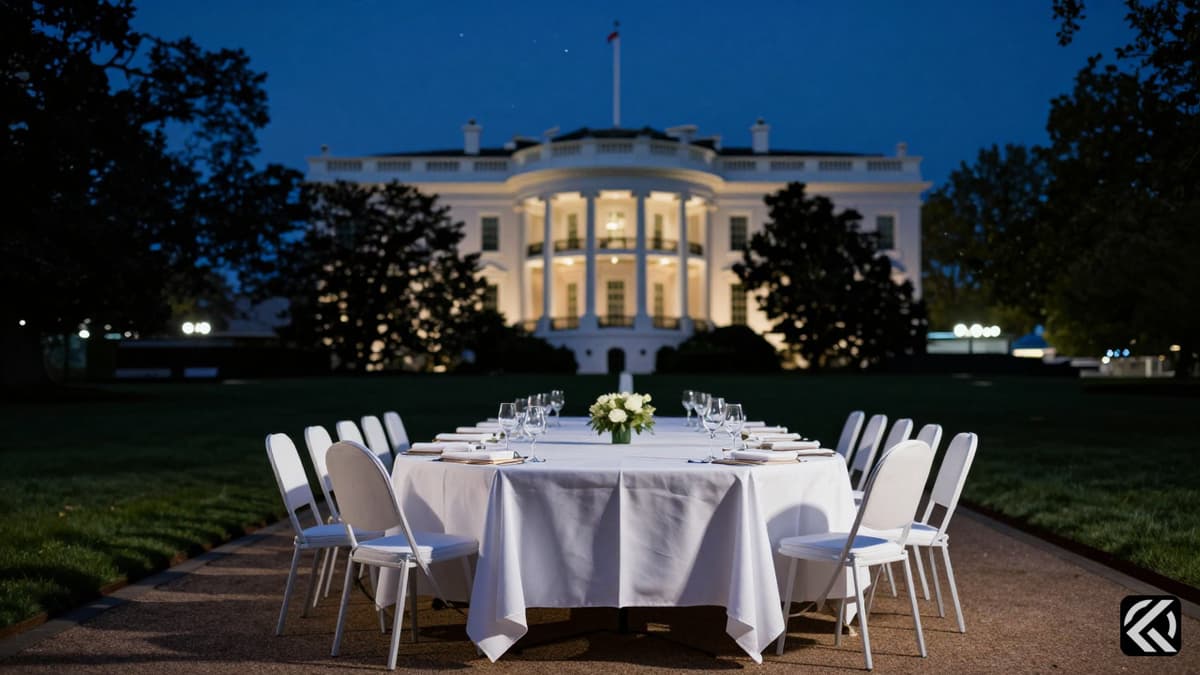
The anxiety regarding the 2028 presidential election and the future Republican ticket has officially reached the White House. This concern became apparent on Monday night when President Trump informally polled guests at a Rose Garden dinner regarding their preferred candidate. During the event, the president asked, "Who likes JD Vance? Who likes Marco Rubio?" before suggesting that a Vance-Rubio ticket would constitute a "dream team."
This moment of levity masked the serious behind-the-scenes reality that White House aides have been confronting the difficult, albeit distant, question of who will become the Republican nominee. Sources familiar with the matter tell WIRED that the president has conducted several snap polls in recent weeks to gauge support. The results from these informal surveys have been notably divided, revealing distinct factions within the political establishment.
When Trump polled donors at Mar-a-Lago, the preference leaned toward Marco Rubio. However, a different picture emerged when the president recently polled a group of law enforcement officers, whom the White House believes are perhaps more representative of regular voters. This specific group favored JD Vance. Despite these varying levels of support, White House sources indicate that Vance remains the presumptive nominee for the Republican ticket.
Vance has not been taking his position for granted. His team recently held a strategic retreat to discuss their path forward. To bolster his political machine ahead of potentially bruising midterms, Vance has initiated changes to his staff. The Republican Party faces significant challenges, including the politically toxic fallout from the Iran war and a House GOP spending package that earmarks $1 billion for Trump’s ballroom project.
In January, Vance began discussing changes to his team, including the addition of Cliff Sims as his new national security adviser. Sims is widely regarded in Washington as a ruthless political operator with extensive experience in Trumpworld. He also holds close relationships with top administration officials, particularly CIA Director John Ratcliffe, for whom Sims has served as an external adviser. These connections are expected to increase Vance’s influence on national security policy.
Sims is also likely to shape Vance’s political messaging, given his previous role as a White House press aide. However, an administration official clarified after the initial reporting that Sims would focus on national security matters rather than political work. Meanwhile, Marco Rubio heads the National Security Council as Secretary of State, holding the additional title of Trump’s national security adviser.
Rubio’s potential as a candidate was highlighted last week when he filled in for press secretary Karoline Leavitt to brief reporters on the Iran war. This appearance reignited news stories about his presidential ambitions. A Rubio ally stated there was no secret plan to make him president, noting the briefing was at the White House’s behest. Nevertheless, Rubio’s team has been pleased with the positive coverage.
The White House amplified Rubio’s visibility by posting a clip of him describing his vision for America on X, which resembled a stump speech. Spokesperson Olivia Wales praised both Vance and Rubio as invaluable members of the President’s team. This strategic visibility underscores the intense competition brewing behind the scenes.
The political landscape is further complicated by recent events surrounding the 2028 presidential election. Trump traveled to a summit in Beijing with notable guests, including Elon Musk and Fox News host Sean Hannity. Nvidia CEO Jensen Huang also joined the flight after a last-minute invitation, having been spotted on the tarmac as Air Force One refueled. Rubio accompanied the president on this trip, notably changing into a grey Nike tracksuit similar to one worn by Venezuelan President Nicolas Maduro during his capture.
Meanwhile, the administration faces congressional oversight. The Justice Department paid millions to settle misconduct claims from suspended FBI agents, including one who allegedly lied about being at the Capitol on January 6. In the Pentagon, officials testified that the Iran war has cost at least $29 billion, up from previous estimates. This financial burden adds to the political pressure on the administration.
FBI Director Kash Patel faced scrutiny during a Senate budget hearing regarding allegations of excessive drinking. He responded by accusing Senator Chris Van Hollen of inappropriate behavior. These tensions highlight the fragile nature of the current political environment. The scramble for the 2028 presidential election ticket is not just about future ambitions but also reflects the current instability within the Republican Party.
As the administration grapples with these internal and external challenges, the race for the nomination intensifies. The divergent preferences among donors and law enforcement suggest a fractured base. Vance’s strategic moves to secure key advisers like Cliff Sims indicate a long-term play for power. Conversely, Rubio’s high-profile briefings and media appearances show his active pursuit of visibility.
The upcoming midterms will serve as a critical test for the Republican Party. The toxic fallout from the Iran war and controversial spending packages may sway voter sentiment. Both Vance and Rubio must navigate these pitfalls carefully. The White House’s current polling strategies reveal the uncertainty surrounding the future leadership of the party.
Predictions for the future hinge on how the administration handles these crises. If the Iran war continues to cost billions, public support may wane. Vance’s ability to leverage his national security ties could prove decisive if Rubio’s visibility does not translate into broad voter support. The inner circle’s scrambling suggests that no outcome is guaranteed, and the 2028 presidential election remains an open contest.
Jun 11, 2026 17:21 UTC
Bangladesh Opposition Mobilizes Against India-Bangladesh Border Push-Ins and BSF Killings
Join 50,000+ readers getting the global briefing every morning.
No spam. Unsubscribe anytime.
Jun 11, 2026 17:40 UTC
Boelter Pleads Guilty in Minnesota Political Assassinations
Jun 11, 2026 17:21 UTC
Bangladesh Opposition Mobilizes Against India-Bangladesh Border Push-Ins and BSF Killings
Jun 11, 2026 17:21 UTC
John Healey Quits as UK Defence Secretary Over Funding Dispute
Jun 11, 2026 16:19 UTC
UK Defence Secretary John Healey Quits Over Funding Dispute