
Section
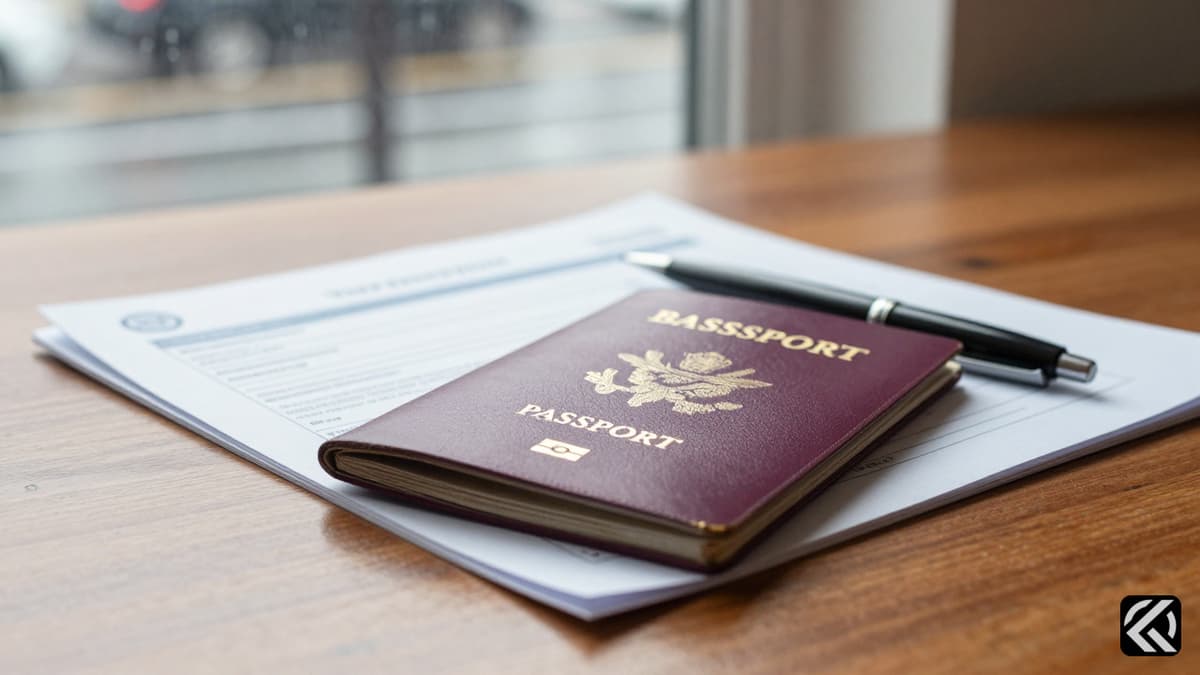
A sweeping new USCIS directive forces individuals awaiting Green Cards to exit the United States, fundamentally altering the path to permanent residency for millions.
In a significant shift in immigration policy, the US Citizenship and Immigration Services (USCIS) has issued new guidance requiring individuals waiting for their Green Cards to depart the United States. This directive, effective as part of the ongoing administrative changes under the current administration, mandates that applicants for lawful permanent residency typically must return to their home countries to complete the necessary screening procedures. The agency aims to enforce a strict separation between temporary admission and permanent residence, ensuring that the transition period occurs abroad rather than within US borders.
The target of this new rule is not illegal aliens but rather those who enter on temporary visas such as B1/B2, F1/M1, J1, H-1B, and O-1. These visas are designed for tourists, students, and workers who arrive with non-immigrant intent, meaning they come to the US for specific purposes without the initial goal of staying permanently. However, many individuals on these visas later apply for permanent residence, leading to long processing times depending on their country of origin. For example, applicants from India often face substantial waiting periods, during which they may renew their temporary visas to remain in the country. The new guidance seeks to end this practice, requiring these individuals to complete the final stages of their Green Card application while physically present in their home nations.
Joseph Edlow, the director of USCIS, stated that the agency is ensuring a clear distinction between temporary admission and permanent residence. He emphasized that the period between these statuses should be spent in one’s own country. "Under President Trump, USCIS is returning to the original intent of the law and reinforcing the proper distinction between temporary admission and permanent residence," Edlow said. "Aliens who come to the United States temporarily and later seek permanent residency should pursue an immigrant visa through the proper channels in their home countries before being admitted as immigrants." This statement clarifies that the policy is not a blanket ban on all applicants but a procedural requirement for most.
The new USCIS guidance indicates that individuals seeking lawful permanent residency would typically be required to return to their home country, complete screening procedures, and obtain an immigrant visa through the US Department of State before reentering the US as immigrants. Immigrant visas can be employment-based, family-based, or for investors, but they require applicants to clarify their intent to live in the US before entering. This process ensures that the individual is admitted as an immigrant rather than adjusting status from within. The policy effectively closes the loophole that allowed many temporary visa holders to remain in the US indefinitely while their permanent residency applications were processed.
While the general rule requires departure, the document acknowledges that there are exceptions. Individuals should only be allowed to remain in the United States and complete the adjustment of status process domestically in “extraordinary circumstances.” These exceptions are not automatic and require rigorous vetting conducted by USCIS officers rather than following the standard immigrant visa process abroad. This vetting process is designed to ensure that only those with compelling reasons to remain in the US during their application can avoid the requirement to travel home. For the vast majority of applicants, however, the requirement to leave and apply for an immigrant visa from abroad will be mandatory.
This shift has significant implications for the millions of individuals currently in the US on temporary visas who have filed for permanent residency. For those from countries with high demand and long waiting times, such as India and China, this means facing a potential disruption in their lives. They may have to leave their jobs, families, and homes in the US to return to their home countries for an indefinite period. The waiting time for an immigrant visa varies by country of origin, and for some, this could mean years of separation from their lives in the US. The policy aims to reduce the backlog of applications within the US and ensure that only those with a clear intent to reside permanently enter the country as immigrants.
The Trump administration’s plan to send these people back to their home countries as they wait for their Green Card marks a stark contrast to previous practices. Historically, many individuals on H-1B or other temporary visas have remained in the US for years, even decades, while waiting for their priority dates to become current. This new guidance removes that possibility, forcing a hard stop to the practice of extending temporary status indefinitely while awaiting permanent residency. The policy is part of a broader effort to enforce immigration laws more strictly and to align administrative practices with the statutory intent of the Immigration and Nationality Act.
The implementation of this policy will likely lead to a surge in demand for immigrant visas processed through US embassies and consulates abroad. This could strain the capacity of the US Department of State to handle the increased volume of visa interviews and processing. Additionally, it may result in a decrease in the number of individuals on temporary visas who are eligible to adjust status, potentially impacting the labor market and educational institutions that rely on foreign students and workers. Employers may face challenges in retaining foreign talent if the requirement to leave the US for visa processing creates uncertainty and instability in employment.
Furthermore, the policy may have geopolitical implications, as it forces individuals to return to their home countries, potentially disrupting their professional and personal lives. For some, this may lead to a decision to abandon their Green Card applications altogether, resulting in a loss of time and resources invested in the process. The long-term impact on the US immigration system could be a more streamlined process for those seeking to enter as immigrants, but also a potential barrier for those currently in the US who hope to transition to permanent residency. The effectiveness of this policy will depend on how strictly it is enforced and how individuals and employers adapt to the new requirements.
The new directive represents a fundamental change in how the US handles the transition from temporary to permanent residency. By requiring applicants to leave the country, USCIS aims to prevent the abuse of temporary visas and ensure that only those with a clear intent to reside permanently enter as immigrants. While this policy may cause short-term disruption for many individuals, it aligns with the administration’s goal of enforcing immigration laws strictly. The long-term effects will depend on the willingness of applicants to comply and the capacity of the US government to process the increased volume of overseas visa applications.
Jun 11, 2026 17:21 UTC
Bangladesh Opposition Mobilizes Against India-Bangladesh Border Push-Ins and BSF Killings
Join 50,000+ readers getting the global briefing every morning.
No spam. Unsubscribe anytime.
Jun 11, 2026 17:40 UTC
Boelter Pleads Guilty in Minnesota Political Assassinations
Jun 11, 2026 17:21 UTC
Bangladesh Opposition Mobilizes Against India-Bangladesh Border Push-Ins and BSF Killings
Jun 11, 2026 17:21 UTC
John Healey Quits as UK Defence Secretary Over Funding Dispute
Jun 11, 2026 16:19 UTC
UK Defence Secretary John Healey Quits Over Funding Dispute


