
Section
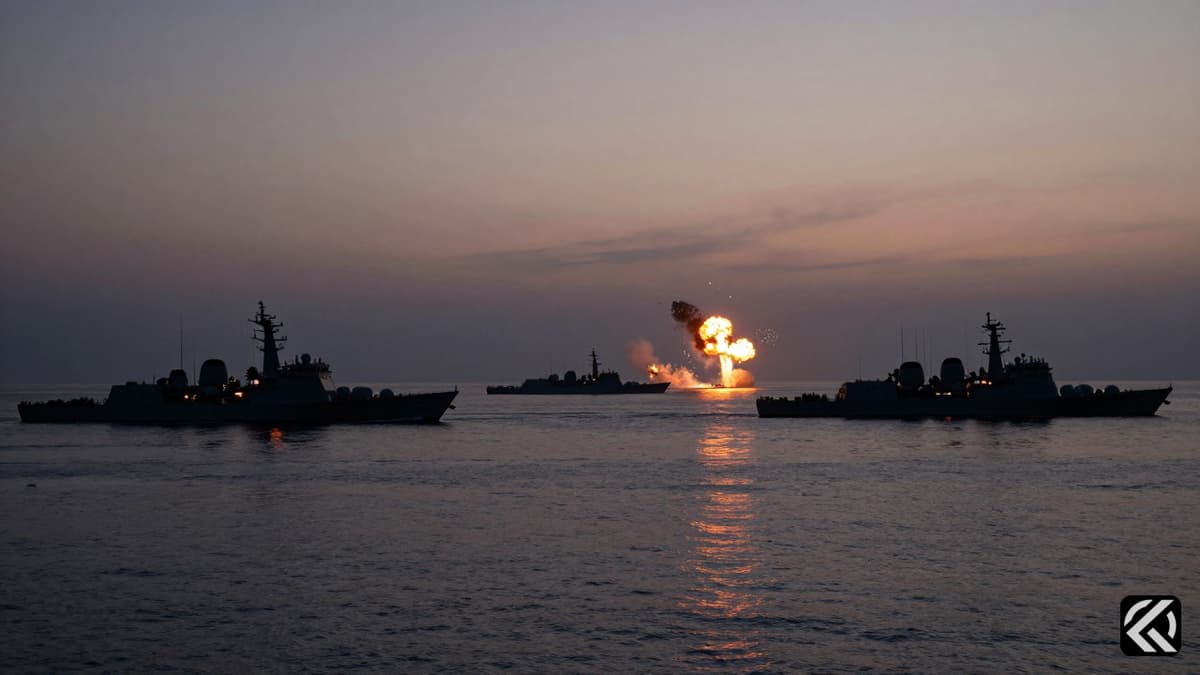
US forces launch fresh strikes on Bandar Abbas as fragile ceasefire crumbles. Trump warns Iran is "negotiating on fumes" while Tehran vows retaliation.
The US military has launched new strikes on an Iranian military site in the strategic port city of Bandar Abbas, marking the second offensive against Iran in just three days. This escalation occurred amidst a fragile ceasefire and ongoing negotiations to end the three-month conflict that has severely disrupted traffic in the Strait of Hormuz and driven up global energy prices.
US Central Command (Centcom) reported that its forces not only targeted the site but also shot down four Iranian one-way attack drones that posed a threat around the Strait of Hormuz. The specific target in Bandar Abbas was hit as it was preparing to launch a fifth drone, according to Centcom. Iranian media confirmed the activity, reporting that explosions were heard to the east of the city. These renewed hostilities directly threaten the existing ceasefire, with Centcom describing the actions as "measured, purely defensive, and intended to maintain the ceasefire."
Earlier this week, Centcom confirmed a previous round of "self-defence" strikes on southern Iran on Monday. Those operations targeted Iranian missile sites and boats attempting to lay mines in the Strait, an area where thousands of commercial tanker ships have been stranded due to the conflict. Centcom stated those earlier strikes were designed "to protect our troops from threats posed by Iranian forces."
Iran has strongly condemned the latest strikes, calling them "a grave violation of the ceasefire" and vowing that the Iranian government "will not leave any act of hostility unanswered." Iran's Islamic Revolutionary Guard Corps (IRGC) added that it had downed a US drone and fired at a fighter jet and another drone that entered Iranian airspace, though it did not specify when these intercepts occurred.
During a cabinet meeting on Wednesday, US President Donald Trump addressed the situation, asserting that Iran is "negotiating on fumes." He insisted that his war strategy would not be impacted by November's US midterm elections. "Maybe we have to go back and finish it, maybe we don't," Trump said. During the same meeting, the president urged Gulf nations to sign on to the Abraham Accords to normalize relations with Israel.
Israel launched the war against Iran alongside the US on February 28 and is simultaneously engaged in a war with Iranian-backed Hezbollah in Lebanon. President Trump has previously threatened to resume a large-scale bombing campaign if Iran does not agree to his terms. While Trump struck an optimistic note over the weekend, claiming a peace deal had been "largely negotiated," by Wednesday's cabinet meeting, he stated that the US is "not satisfied."
He said Tehran was "very much intent" on reaching an agreement to end the conflict but added that "so far they haven't gotten there," repeating Washington's willingness to resume strikes if one is not reached. His remarks followed Iranian state TV reporting details of a draft agreement, which included reopening the Strait of Hormuz and the withdrawal of US forces from the region. The White House branded this text a "complete fabrication."
Both sides had signaled that progress was made towards a deal late last week, prompting speculation that an announcement was close. However, Tehran soon cautioned that a deal was "not imminent," while Trump said he had instructed his negotiators "not to rush into" one. Speaking to reporters at the cabinet meeting, Trump said: "They just want to make a deal - I don't think they have a choice."
The recent US strikes on Bandar Abbas and the broader context of the Strait of Hormuz illustrate the precarious nature of current diplomatic efforts. The conflict, which began with US and Israeli operations in late February, has choked maritime traffic and elevated global energy costs, creating significant economic pressure. As both the White House and Iranian officials exchange conflicting narratives regarding a potential peace deal-ranging from "largely negotiated" to "complete fabrication"-the region remains on a knife-edge. The continued stranding of commercial tankers and the exchange of drone attacks suggest that without a verified agreement, the ceasefire is likely to deteriorate further, potentially leading to broader regional instability. The upcoming US midterm elections may also influence the administration's strategic patience, as Trump balances domestic political concerns with the urgent need to resolve the standoff in the Middle East.
Jun 11, 2026 17:21 UTC
Bangladesh Opposition Mobilizes Against India-Bangladesh Border Push-Ins and BSF Killings
Join 50,000+ readers getting the global briefing every morning.
No spam. Unsubscribe anytime.
Jun 11, 2026 17:40 UTC
Boelter Pleads Guilty in Minnesota Political Assassinations
Jun 11, 2026 17:21 UTC
Bangladesh Opposition Mobilizes Against India-Bangladesh Border Push-Ins and BSF Killings
Jun 11, 2026 17:21 UTC
John Healey Quits as UK Defence Secretary Over Funding Dispute
Jun 11, 2026 16:19 UTC
UK Defence Secretary John Healey Quits Over Funding Dispute


