
Section
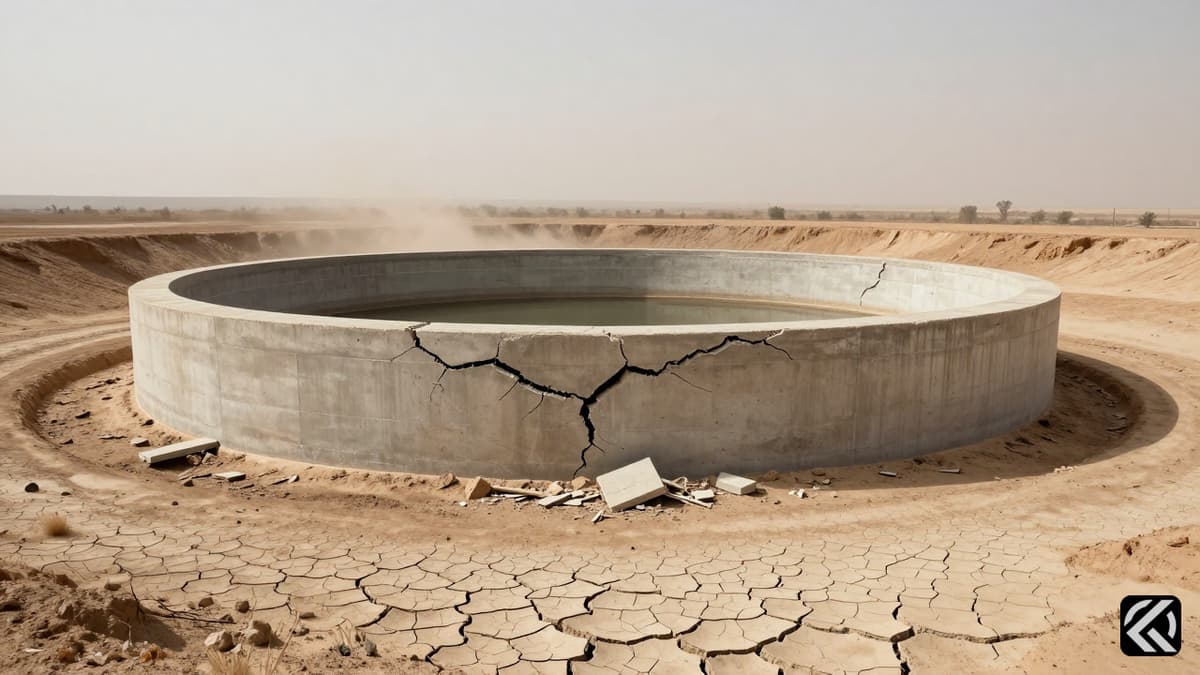
As the US-Israeli war on Iran escalates, US strikes have damaged critical water reservoirs. Iran condemns the attack as a war crime amid a severe drought crisis.
The United States and Iran have engaged in intense fighting since a temporary ceasefire was halted, with the US launching strikes that damaged civilian water infrastructure in southern Iran. This escalation occurs as both nations exchange proposals for a peace agreement following the downing of a US Apache helicopter near the Strait of Hormuz.
In a development that has drawn sharp condemnation from Tehran, the US military stated it targeted communications and radar facilities. However, Iranian officials confirmed that two concrete water reservoirs in the Sirik County of Hormozgan Province were also hit. This incident marks the first reported strike on civilian infrastructure in Iran in several weeks, hitting facilities that provide drinking water to over 20,000 residents in Kouhestak and ten surrounding villages. The damage is estimated at between $780,000 and $830,000.
While the US described the operations as proportional self-defense after President Donald Trump blamed Iran for shooting down a patrol helicopter, the consequences extend far beyond military targets. The destruction of these reservoirs hits a nation already grappling with a severe multiyear drought. Iran’s baseline water stress is classified as "extremely high" by the World Resources Institute, meaning the country utilizes more than 80 percent of its renewable water resources annually. This latest incident adds to a growing crisis where 19 major dams have run dry, and Tehran’s Amir Kabir Dam held only 8 percent of its capacity last November.
Iran’s Islamic Revolutionary Guard Corps (IRGC) reported that the attacks destroyed the reservoirs and damaged a telecommunications tower in Sirik. The IRGC also claimed retaliation by hitting US military bases in Bahrain, Kuwait, and Jordan. The US military confirmed waves of attacks starting late Tuesday, targeting locations including Sirik, Jask, Minab, Qeshm Island, and the port of Bandar Abbas.
Isa Bozorgzadeh, spokesman for Iran’s water industry, has claimed the US strike on the water reservoirs is a war crime Iran water infrastructure attack. Under international humanitarian law, drinking water installations, treatment plants, and pipelines are classified as civilian property and are not deemed legitimate targets during war. The Berlin Rules on Water Resources, adopted in 2004, further prohibit countries at war from destroying water installations if such actions would cause disproportionate suffering to civilians.
The significance of this strike is magnified by historical context. During the broader US-Israeli war on Iran, US forces previously struck a desalination plant on Qeshm Island in March. That attack reportedly cut off water supplies to 30 villages, a move Iranian Foreign Minister Abbas Araghchi condemned as setting a dangerous precedent. Attacking desalination plants or reservoirs in regions where freshwater is scarce is viewed as particularly grave due to the essential nature of these resources for survival, irrigation, and industrial use.
The current conflict follows a period of intense hostilities that were paused by a Pakistan-mediated ceasefire on April 8. Despite efforts to negotiate a comprehensive peace agreement, a series of smaller escalations have reignited fighting. The downing of the Apache helicopter serves as the immediate trigger for the recent US response, with Trump asserting on social media that Iran deliberately shot it down while patrolling the Strait of Hormuz. He stated that both pilots were safe but emphasized the necessity of a US response to "unjustified Iranian aggression."
An official US inquiry into the cause of the helicopter crash is still underway. However, the confirmation of civilian infrastructure damage complicates the narrative of proportional self-defense. Iran’s West Asia News Agency (WANA) cited available reports confirming that the concrete storage reservoirs in the Bamani district were hit. The location, approximately 1,012 kilometers from Tehran, suggests the reach and intensity of the US aerial campaign.
As water supplies dwindle and diplomatic channels struggle to produce a lasting peace, the targeting of critical civilian resources raises urgent questions about the rules of engagement in modern warfare. The combination of deliberate military strikes and the destruction of essential life-support infrastructure underscores the humanitarian toll of the ongoing regional conflict. The international community watches closely as the fallout from these US strikes Iran water reservoirs events continues to unfold, with potential long-term consequences for regional stability and civilian safety.
The targeting of water infrastructure exacerbates Iran’s severe drought conditions, which have persisted for five consecutive years. With main water supplies, including rivers and groundwater reserves, already running dry due to poor agricultural practices and mismanagement, the loss of additional storage capacity threatens further destabilization. As the war continues, the lack of a peace agreement and the ongoing cycle of retaliation risk deepening the humanitarian crisis. Future impacts may include increased reliance on international aid, potential migration from affected regions, and heightened tensions in the Gulf region as access to critical resources remains a focal point of the conflict.
Jun 11, 2026 17:21 UTC
Bangladesh Opposition Mobilizes Against India-Bangladesh Border Push-Ins and BSF Killings
Join 50,000+ readers getting the global briefing every morning.
No spam. Unsubscribe anytime.
Jun 11, 2026 17:40 UTC
Boelter Pleads Guilty in Minnesota Political Assassinations
Jun 11, 2026 17:21 UTC
Bangladesh Opposition Mobilizes Against India-Bangladesh Border Push-Ins and BSF Killings
Jun 11, 2026 17:21 UTC
John Healey Quits as UK Defence Secretary Over Funding Dispute
Jun 11, 2026 16:19 UTC
UK Defence Secretary John Healey Quits Over Funding Dispute


