
Section
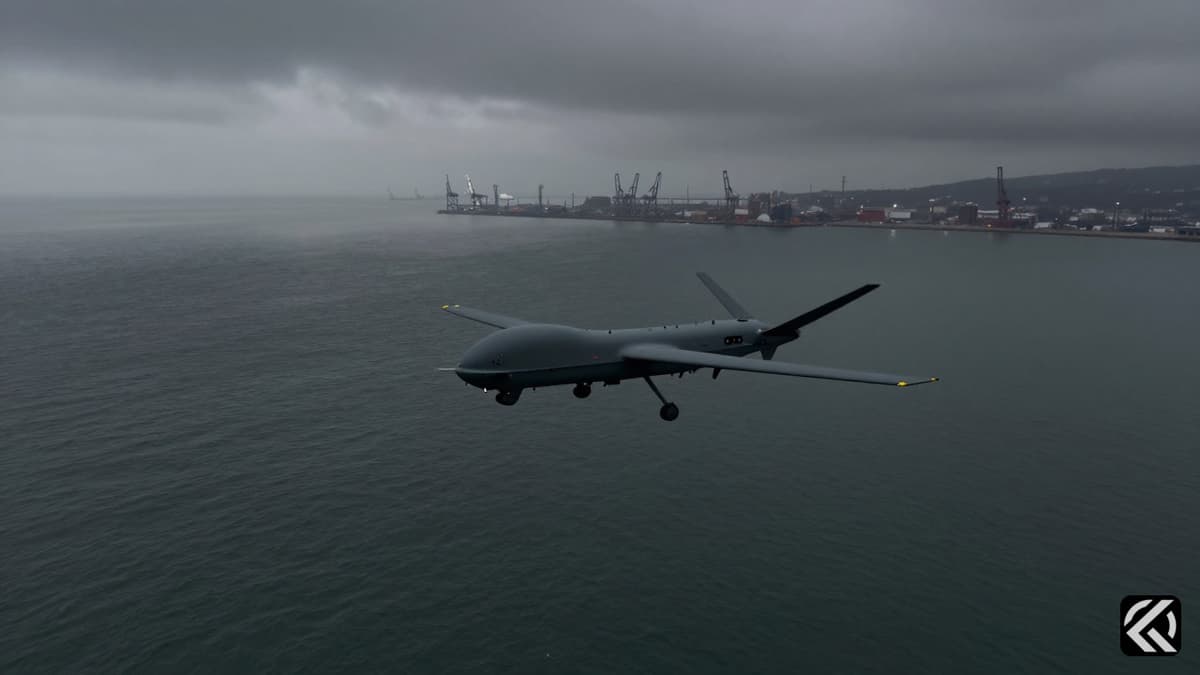
Tensions spike as US forces strike Iranian military sites in Bandar Abbas, marking the second attack in three days and threatening the fragile diplomatic truce.
The US military has carried out new strikes on Iran, targeting a military site in Bandar Abbas, a strategic port city. This escalation marks the second time in three days that Washington has launched attacks, citing self-defense amidst ongoing diplomatic efforts.
US Central Command (Centcom) reported that its forces also intercepted and shot down four Iranian one-way attack drones that posed a threat around the Strait of Hormuz. The strikes on the Bandar Abbas site occurred just as the facility was about to launch a fifth drone, according to Centcom. Iranian media outlets have confirmed reports of explosions heard to the east of the city, signaling the immediate impact of the offensive.
These military actions occur during a period of fragile ceasefire negotiations between the US and Iran. The ongoing conflict has already choked traffic in the Strait of Hormuz, a critical global shipping lane, and has caused significant spikes in global energy prices. The renewed hostilities have introduced fresh uncertainty into the protracted negotiations aimed at ending the three-month war.
Centcom has characterized the recent actions as "measured, purely defensive, and intended to maintain the ceasefire." The Command emphasized that the strikes were necessary "to protect our troops from threats posed by Iranian forces." This justification follows a previous round of "self-defence" strikes earlier in the week, which targeted Iranian missile sites and boats attempting to lay mines in the Strait. Those earlier attacks left thousands of commercial tanker ships stranded, highlighting the severe disruption to maritime commerce caused by the conflict.
Iran has strongly condemned the latest strikes, labeling them "a grave violation of the ceasefire." The Iranian government vowed that it "will not leave any act of hostility unanswered," signaling a potentially severe diplomatic and military response. In addition, Iran's Islamic Revolutionary Guard Corps (IRGC) announced on Tuesday that it had downed a US drone and fired at a fighter jet and another drone that entered Iranian airspace, though it did not specify the timing of these defensive measures.
During a cabinet meeting on Wednesday, US President Donald Trump commented on the state of diplomacy, stating that Iran is "negotiating on fumes." He insisted that his war strategy would remain unaffected by the upcoming November US midterm elections. When addressing the possibility of concluding the conflict, Trump remarked, "Maybe we have to go back and finish it, maybe we don't."
The geopolitical landscape is further complicated by Israel, which launched the war against Iran alongside the US on 28 February. Israel is simultaneously engaged in a conflict with Iranian-backed Hezbollah in Lebanon. President Trump has previously threatened to resume a large-scale bombing campaign if Tehran does not agree to his terms, underscoring the high stakes of the current negotiations.
While Trump struck an optimistic note over the weekend, suggesting that a peace deal with Iran had been "largely negotiated," his tone shifted during Wednesday's cabinet meeting. He declared that the US is "not satisfied" with the current progress. Trump noted that while Tehran is "very much intent" on reaching an agreement to end the conflict, they "so far they haven't gotten there." He reiterated Washington's willingness to resume strikes if a satisfactory agreement is not reached.
The US president's remarks followed reports from Iranian state TV, which detailed a draft agreement that included reopening the Strait of Hormuz and the withdrawal of US forces from the region. The White House dismissed this text as a "complete fabrication," highlighting the deep mistrust between the negotiating parties.
Despite this, both sides signaled late last week that progress had been made towards a deal, prompting widespread speculation that a final announcement was imminent. However, Tehran soon cautioned that a deal was "not imminent," while President Trump stated he had instructed his negotiators "not to rush into" an agreement. Speaking to reporters at the cabinet meeting, the US president asserted, "They just want to make a deal - I don't think they have a choice," suggesting that economic and military pressure is forcing Tehran's hand.
The intersection of military strikes and diplomatic stalemate poses a critical risk to regional stability. The US military strikes Iran continue to test the resilience of the fragile ceasefire, while the Strait of Hormuz remains a focal point for global energy security. As ceasefire negotiations persist under the shadow of armed conflict, the window for a peaceful resolution narrows. The threat of resumed large-scale bombing campaigns looms if diplomatic breakthroughs do not materialize quickly, potentially escalating the three-month war into a broader regional conflagration with severe economic consequences for global markets.
Jun 11, 2026 12:59 UTC
US Strike on Settebello Kills Indian Sailors Amid Strait of Hormuz Tensions
Jun 11, 2026 12:49 UTC
Air India Flight 171 Crash Sparks Debate Over Boeing 787 Dreamliner Faults
Jun 11, 2026 08:51 UTC
US-Iran Conflict: Indian Seafarers Killed in Gulf Strike
Jun 11, 2026 18:04 UTC
Healey Quits Government Over Defence Spending Dispute


