
Section
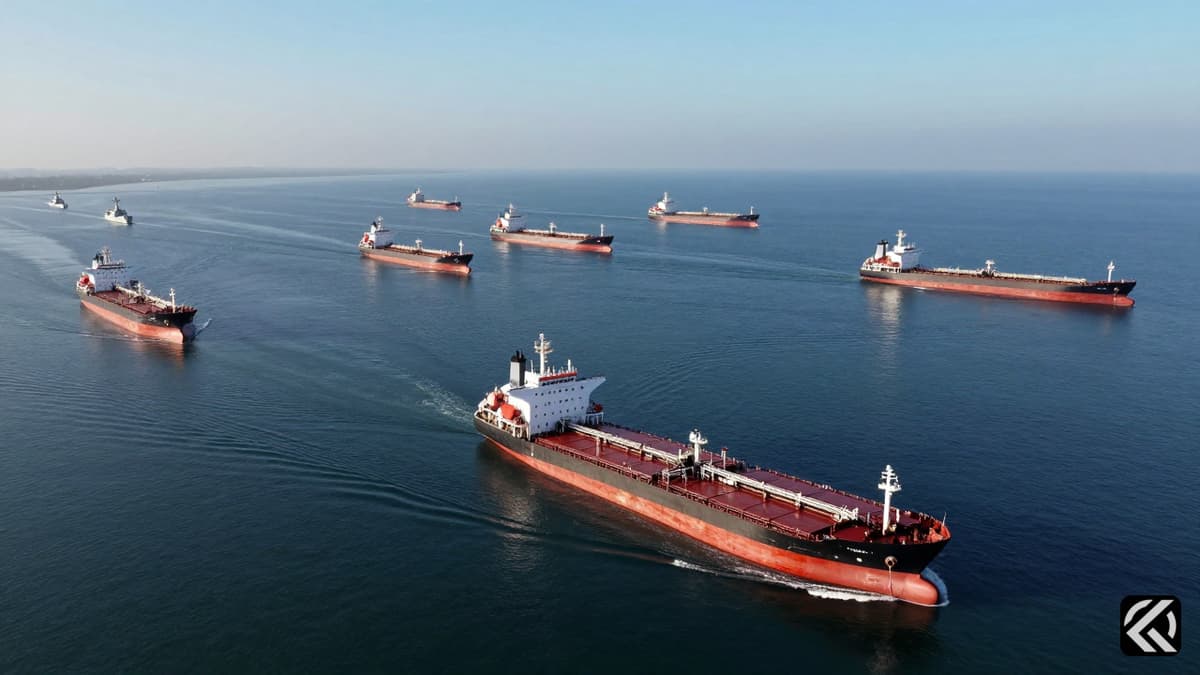
New analysis shows U.S. forces face a three-year gap in replenishing key munitions, while Iran proposes a ceasefire deal that could stabilize global oil markets.
The Center for Strategic and International Studies (CSIS) released an analysis indicating that U.S. military contractors require at least three years to replenish stockpiles of three key weapons systems heavily utilized during the ongoing U.S.-Iran war. These systems, including Tomahawk cruise missiles and Patriot and THAAD interceptors, are essential for deep strikes and defense against incoming threats. The report warns that while current munitions suffice for the Iran conflict, the depleted inventories create a significant "window of vulnerability" for any potential future conflict in the Western Pacific, particularly involving China.
This strategic concern emerges as diplomatic efforts intensify to end the hostilities that began in February. Iran’s State TV reported that Tehran obtained a draft of an initial, unofficial framework for a memorandum of understanding (MoU) with the United States. Under this proposed framework, Iran would restore commercial shipping through the Strait of Hormuz to pre-war levels within a month. In return, the United States would withdraw military forces from Iran’s vicinity and lift its naval blockade. The framework excludes military vessels and envisions Iran managing ship traffic in cooperation with Oman.
The potential MoU stems from indirect talks mediated by Pakistan. Tehran stated it would take no steps without "tangible verification" and noted that if a final agreement is reached within 60 days, it could be approved as a binding U.N. Security Council resolution. However, disputes over language concerning Iran’s nuclear program and sanctions continue to complicate the negotiations between Washington and Tehran.
Despite the diplomatic momentum, military tensions remain high. The Islamic Revolutionary Guard Corps (IRGC) threatened to retaliate after the U.S. carried out what it described as "self-defense strikes" on Iranian missile launch sites and boats near the Strait of Hormuz. The IRGC claimed to have downed a U.S. drone and fired at an F-35 fighter jet. Iranian officials warned Washington of breaching the ceasefire, while U.S. Central Command announced the new wave of bombings targeting Iranian missile sites.
Public opinion in the United States is increasingly shifting against prolonged military engagement. A Fox News poll indicated that only 39% of registered voters wanted U.S. military operations to last "as long as it takes to achieve U.S. objectives," compared to 61% who preferred a "limited timeframe." A New York Times-Siena College poll showed that 52% of registered voters believe the U.S. should end military operations even if no deal is reached on Iran’s nuclear program.
U.S. Senator Mark Warner criticized President Donald Trump for starting a new "forever" war, claiming that American military actions continue against Iran despite claims of imminent peace. Meanwhile, President Trump is preparing to meet with his Cabinet, projecting confidence that he is closing in on a deal to reopen the Strait of Hormuz and diminish Iran’s nuclear capabilities.
Oil prices reacted to these developments, easing from recent highs as traders sought clarity on negotiations. Brent crude fell $1.52 to $98.06 a barrel, while West Texas Intermediate (WTI) crude lost $1.90 to $91.99 a barrel. This pullback follows a surge in prices on Tuesday after U.S. strikes hurt hopes for a weekend agreement.
As the conflict drags on, international actors are stepping in to facilitate peace. China has stated it supports the "active mediation" by Pakistan and other countries between the U.S. and Iran. Chinese Foreign Minister Wang Yi emphasized that the key to resolving the situation lies in the negotiation between the two major parties, noting he had met with Pakistan’s Field Marshal Asim Munir to discuss the issue. China urged both sides to respect the truce and resolve their dispute peacefully.
The strategic implications of the war extend beyond the immediate theater. The analysis by the Washington think tank factors in the Republican Trump administration’s historic defense budget proposal of $1.5 trillion for 2027, which accelerates spending on high-end munitions. While there is bipartisan agreement in Congress to boost inventories, the report highlights that "the problem today isn’t money; it’s time."
China’s stated goal of ensuring its military is capable of taking Taiwan by force if necessary by 2027 is viewed by experts as more aspirational than a hard deadline. However, President Xi Jinping has warned that if Washington mishandles relations with the self-governing island, the U.S. and China could end up clashing or in open conflict. The depletion of U.S. military stockpiles due to the Iran conflict raises concerns about America's ability to deter or respond to such a scenario.
Israel, another key player in the region, reported targeting and killing the new leader of Hamas’ military wing, Mohammed Odeh, during airstrikes in Gaza City. This occurred less than two weeks after the killing of his predecessor, highlighting the continued violence in the Middle East even as negotiations for a broader regional ceasefire proceed. The Israeli military also reported that a projectile launched from Lebanon fell in an open area in Israel, though no injuries were reported.
The situation in the Gulf remains precarious. Iran warned that it stands ready against any attack, with Mohammad Akbarzadeh of the IRGC Navy stating, "The possibility of war is low because of the enemy’s weakness," but adding that Iranian armed forces are "lying in wait with full magazines." He further warned that Iran would turn the area from Chabahar to Mahshahr into a "graveyard for aggressors."
As talks move at a "glacial pace," the international community watches closely. The outcome of these negotiations will not only determine the fate of the current conflict but also influence global energy markets and military readiness in the coming years. The interplay between diplomatic mediation, military posturing, and economic impact continues to shape the trajectory of the Strait of Hormuz and the broader regional stability.
The revelation that U.S. military stockpiles require three years to replenish presents a significant strategic challenge for Washington. If the conflict with Iran extends beyond the immediate ceasefire talks, the U.S. risks leaving itself exposed to potential adversaries, particularly China, which is accelerating its own military capabilities. The bipartisan agreement to increase defense spending may not suffice if production timelines cannot be shortened. Furthermore, the fragile nature of the proposed Iran-U.S. MoU suggests that any breakdown in negotiations could lead to renewed hostilities, further draining resources and exacerbating the supply chain issues for critical defense systems. The global economy, already sensitive to oil price fluctuations in the U.S.-Iran war, may face renewed instability if diplomatic efforts fail, underscoring the urgent need for a sustainable resolution to preserve both regional peace and global military readiness.
Jun 11, 2026 17:21 UTC
Bangladesh Opposition Mobilizes Against India-Bangladesh Border Push-Ins and BSF Killings
Join 50,000+ readers getting the global briefing every morning.
No spam. Unsubscribe anytime.
Jun 11, 2026 17:40 UTC
Boelter Pleads Guilty in Minnesota Political Assassinations
Jun 11, 2026 17:21 UTC
Bangladesh Opposition Mobilizes Against India-Bangladesh Border Push-Ins and BSF Killings
Jun 11, 2026 17:21 UTC
John Healey Quits as UK Defence Secretary Over Funding Dispute
Jun 11, 2026 16:19 UTC
UK Defence Secretary John Healey Quits Over Funding Dispute


