A US freelance journalist has been seized in Baghdad by suspects linked to a militant group. Authorities have detained a suspect and are urgently coordinating for her release.
In a shocking development confirmed by both Iraqi and US officials, freelance journalist Shelly Kittleson has been kidnapped in the Iraqi capital of Baghdad. The abduction, which occurred on Tuesday evening, has sent ripples of concern through diplomatic and journalistic communities, with evidence suggesting the perpetrators are linked to an Iran-backed militia. The US State Department has confirmed awareness of the situation and is actively coordinating with federal and local authorities to secure her immediate release.
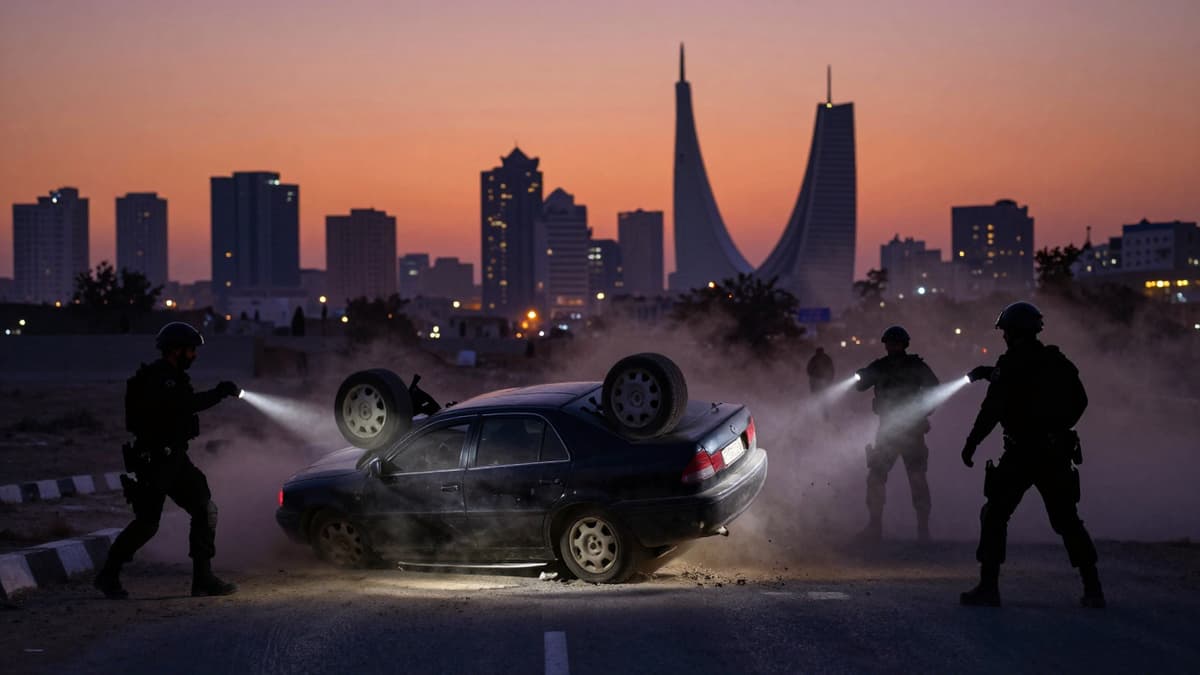
The incident began with the abduction of Kittleson near a hotel in the heart of the capital, according to reports from Al-Monitor, the news outlet for which she frequently contributes. The Iraqi Interior Ministry immediately launched a targeted security operation in response. Acting on precise intelligence, security forces tracked the kidnappers' movements and engaged in a high-speed pursuit. The chase ended dramatically when a vehicle belonging to the abductors was intercepted and overturned as the suspects attempted to flee the scene.
Authorities moved swiftly following the intercept, resulting in the arrest of one suspect. A US State Department official subsequently confirmed to the press that the individual detained by Iraqi authorities possesses ties to the Kataib Hezbollah militia, a group aligned with Iran. This revelation underscores the severity of the threat, as the kidnappers appear to be motivated by political or ideological affiliations rather than random criminal enterprise. The State Department expressed its commitment to the case, stating they would continue to coordinate with the FBI to ensure Kittleson's safe return.
It has come to light that US officials had engaged with Kittleson multiple times prior to the abduction, explicitly warning her of the threats she faced. These warnings were issued as recently as Monday night. The specific nature of the threat was detailed by her emergency contact, Alex Plitsas, a CNN national security analyst, who spoke to CBS. Plitsas revealed that Kittleson had been informed that her name was on a list held by Kataib Hezbollah. While a second source confirmed that Kittleson had been warned of a risk, this individual noted that the journalist initially believed the intelligence to be false information, a tragic miscalculation that likely contributed to the vulnerability that led to her capture.
The Iraqi Interior Ministry released a translated statement detailing the intensity of their response. They affirmed that security forces were acting on precise intelligence and conducting intensive field operations to locate the perpetrators. The statement highlighted that the pursuit resulted in the interception of the kidnappers' vehicle, which overturned during their escape attempt. The Ministry has reaffirmed that efforts to track down the remaining perpetrators are ongoing, alongside the primary mission of securing the release of the abducted woman. They further stated that due legal action will be taken against all those involved in this criminal act, in accordance with the law.
Al-Monitor, based in the United States, described the organization's deep alarm regarding the situation. They have publicly called for the safe and immediate release of Kittleson, emphasizing the danger faced by journalists operating in the region. The State Department, when asked for further comment by the BBC, cited privacy and other considerations as reasons for not sharing additional details at this time, though they acknowledged they are working closely with the Iraqi government.
On the ground in Baghdad, the gravity of the situation has prompted a high-level response. An Iraqi official confirmed to the US partner CBS that local authorities are working at the highest level to bring Kittleson home. The involvement of the State Department, which had previously fulfilled its duty to warn the journalist of threats against her, signals a multi-layered international effort to resolve the crisis. The detention of a suspect with militia ties suggests that while the operation has achieved a tactical victory, the broader challenge of neutralizing the network behind the kidnapping remains.
The timeline of events indicates a calculated approach by the kidnappers, given the specific knowledge of the journalist's travel plans and the prior warnings. The fact that the US government knew of the threat yet the journalist was still able to be taken near a hotel in the capital highlights the pervasive nature of the security risks in the region. The overturning of the kidnappers' vehicle suggests a chaotic but aggressive defense by the perpetrators, further indicating their desperation and the potential for further violence if negotiations do not proceed swiftly.
As the search for the remaining abductors continues, the focus remains on the safety of Kittleson. The coordinated efforts between US and Iraqi agencies, combined with the specific intelligence regarding the militia's involvement, provide a roadmap for the ongoing investigation. The State Department's statement that they will continue to coordinate with the FBI underscores the seriousness with which the US government is treating this incident. The situation serves as a stark reminder of the dangers facing independent journalists in conflict zones, particularly those operating in areas controlled or influenced by Iran-backed groups.
The discovery of the suspect's affiliation with Kataib Hezbollah has likely accelerated the pressure on the group and its allies to facilitate the journalist's release. Based on the source material, the Iraqi authorities' willingness to act on "precise intelligence" suggests that further arrests or intelligence breakthroughs are imminent. If the pattern of US government warnings followed by successful abductions continues, it could necessitate a broader review of security protocols for journalists in the region, potentially leading to stricter travel advisories or coordinated international security deployments to protect foreign nationals. The ongoing efforts to track down the remaining perpetrators will be critical in determining whether the group can be dismantled or if they will attempt to exploit the situation for further leverage.
Jun 8, 2026 04:15 UTC
Trump Urges Netanyahu to Halt Iran Strike for Peace
Join 50,000+ readers getting the global briefing every morning.
No spam. Unsubscribe anytime.
Jun 8, 2026 02:28 UTC
Trump Walks Out of Meet the Press After Rejecting Evidence Demands
Jun 8, 2026 02:17 UTC
Magnitude 7.8 Quake Shakes Philippines, Urging Immediate Evacuations
Jun 8, 2026 00:51 UTC
Trump Claims Iran Nuclear Deal Imminent Despite Diplomatic Fractures
Jun 8, 2026 00:47 UTC
Iran Fires Missiles at Israel After Beirut Strike


