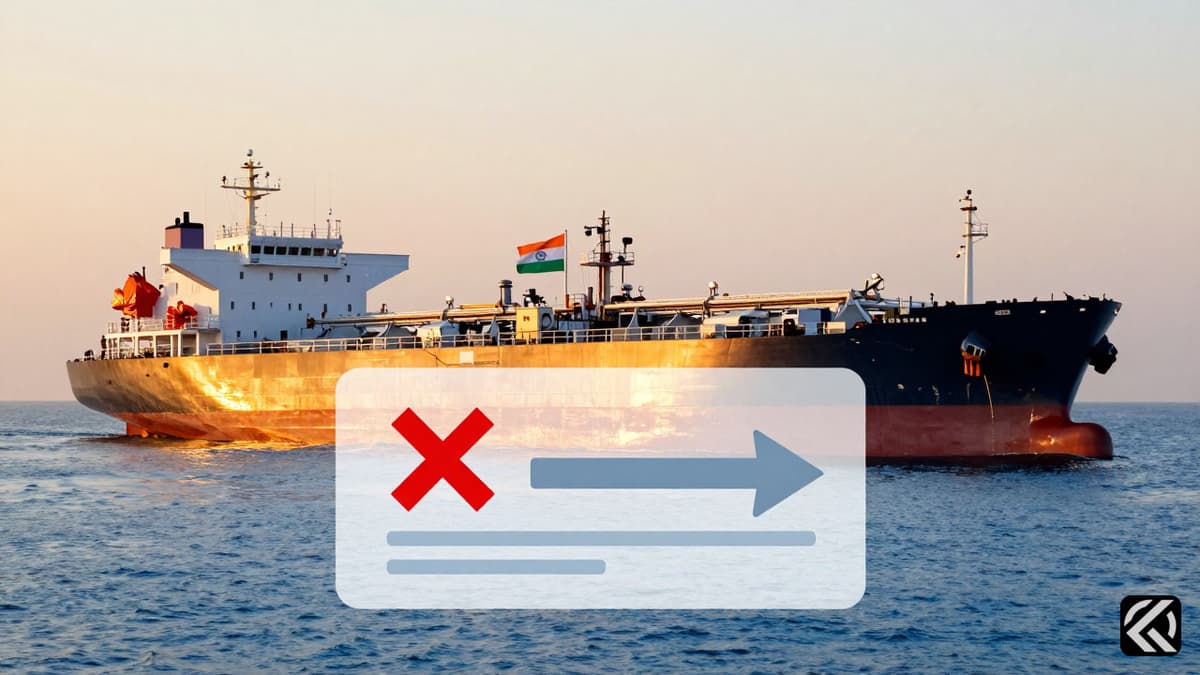
India firmly denies rumors of a payment crisis diverting Iranian crude to China, asserting refiners have secured supplies for the coming months despite trade rumors.
The Ministry of Petroleum and Natural Gas on Saturday firmly dismissed reports claiming an Iranian crude oil shipment destined for India was rerouted to China due to payment hurdles. Asserting that such claims are factually incorrect, the ministry clarified that Indian refiners have secured their energy supplies for the upcoming months without any financial barriers. This clarification addresses circulating rumors that a vessel, intended for the Vadinar port in Gujarat, was diverted mid-voyage to China, a development that would have signaled a significant disruption in trade relations.
The Ministry took to the social media platform X to address the specific allegations, stating that news reports and posts regarding the diversion were baseless. They emphasized that India imports crude oil from over 40 countries, granting companies full flexibility to source oil from various geographies based on commercial considerations rather than government-imposed restrictions. Amidst reports of supply disruptions in the Middle East, the ministry confirmed that Indian refiners have successfully secured their crude requirements, including those from Iran, with no payment hurdles affecting the imports.
This official statement comes in direct response to reports indicating that the Aframax tanker Ping Shun altered its course after previously indicating Vadinar as its destination. Ship-tracking firm Kpler later reported that the vessel was heading towards Dongying in China. The cargo was significant as it represented India's first expected Iranian crude shipment since 2019, following a period where volumes had fallen and eventually halted during a sanctions waiver period.
The ministry's response highlighted that changes in vessel destinations are not unusual in global oil trade. They explained that claims about vessel diversions often ignore the operational mechanics of the industry, noting that Bills of Lading frequently carry indicative discharge port destinations. Cargoes can and do change destinations mid-voyage based on trade optimization and operational flexibility, a standard practice rather than a sign of payment failure.
Addressing allegations of pending payments, the ministry reiterated that the narrative of a stalled transaction due to financial constraints was unfounded. While financial constraints, including Iran's exclusion from the SWIFT system, have continued to affect transactions, the ministry stated that the Indian Ministry of Petroleum clarification confirmed no such hurdle was preventing the delivery of Iranian crude at this specific instance. The ministry assured the public that India's crude oil requirements remain fully secured for the coming months, countering the narrative of a trade breakdown.
On related matters concerning liquefied petroleum gas (LPG) supplies, the ministry also rejected claims suggesting similar issues. They stated that the LPG vessel Sea Bird, carrying around 44 TMT of Iranian LPG, had already berthed at Mangalore, India on April 2 and was currently discharging its cargo. This successful discharge further refuted the broader narrative of a systemic payment dispute halting Iranian energy imports.
Historically, India had been a significant buyer of Iranian energy, importing around 518,000 barrels per day in 2018. However, volumes fell in 2019 during a sanctions waiver period and eventually halted, with Iranian crude once accounting for about 11.5 percent of India's total imports. The current situation involves a recent US waiver permitting limited purchases of Iranian oil at sea for 30 days, which is set to expire on April 19.
Despite the expiration approaching, the ministry emphasized that Iranian crude oil reroute rumors were unfounded and that the logistics of global trade allow for dynamic routing based on commercial needs. The US waiver has allowed for some flexibility, yet the ministry maintained that the specific India-China oil payment dispute narrative regarding the Ping Shun was incorrect. The ministry clarified that the vessel's movement was likely a result of standard trade optimization rather than a payment blockage.
An estimated 95 million barrels of Iranian oil are currently stored on vessels at sea, highlighting the sensitivity of the situation. However, the official stance remains that the flow of energy to India is secure, and the rumors of a diverted cargo due to payment issues are simply factually incorrect. The ministry's assurance aims to stabilize market perceptions and confirm that commercial considerations continue to drive the sourcing of oil from Iran and other global partners without interference from the alleged payment issues.
The Ministry of Petroleum and Natural Gas has effectively closed the door on rumors regarding payment blockages, confirming that Iranian crude oil reroute narratives were unfounded and that energy supplies remain robust. As the US waiver expires on April 19, the strategic importance of maintaining these trade routes becomes critical, especially with 95 million barrels currently held on vessels at sea. The clarification underscores that operational flexibility, rather than financial distress, dictates vessel movements, ensuring India's energy needs are met despite the complex geopolitical landscape and the expiration of waivers. The immediate future suggests that while transactional challenges like SWIFT exclusion persist, commercial negotiations will continue to secure necessary imports without the need for publicized diversions.
Jun 8, 2026 00:51 UTC
Trump Claims Iran Nuclear Deal Imminent Despite Diplomatic Fractures
Jun 8, 2026 00:47 UTC
Iran Fires Missiles at Israel After Beirut Strike
Jun 7, 2026 22:00 UTC
US, Iran Peace Hops Fade 100 Days Into War
Jun 7, 2026 20:57 UTC
Iran Strikes Israel: IRGC Promises Week of Continuous Offensive
Jun 8, 2026 02:28 UTC
Trump Walks Out of Meet the Press After Rejecting Evidence Demands


