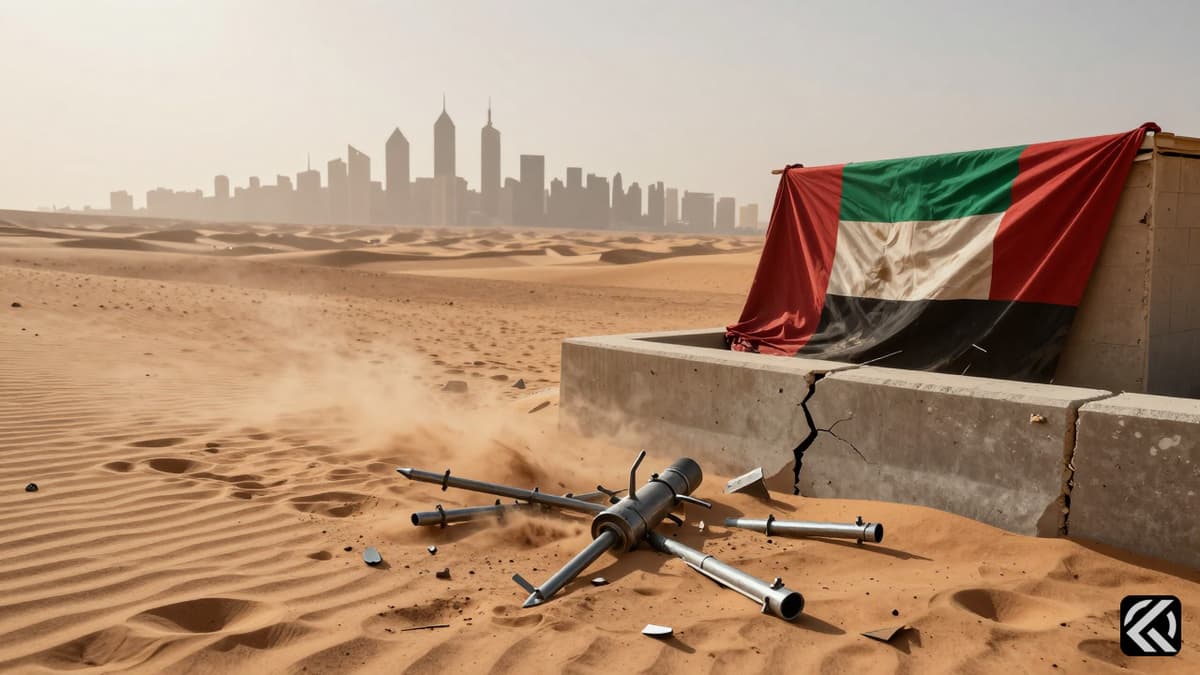
Debris from a missile interception injured 12 people in Abu Dhabi, including five Indian nationals, amid escalating tensions and new warnings targeting US tech firms.
The Abu Dhabi Media Office confirmed that at least 12 people were injured in the Ajban area on Friday after falling debris landed following a military interception. The casualties include five Indian nationals and six individuals of Nepali nationality, with one person suffering major injuries. This incident occurred as shrapnel from a missile interception caused harm to residents in the region, marking a significant escalation in the current regional conflict.
The details of the injury count were released in an official post on X by the Abu Dhabi Media Office, specifying that the damage resulted from falling debris. The report noted six individuals of Nepali nationality sustained minor to moderate injuries, while five Indian nationals were also affected. One major injury was reported for a Nepali national. The event took place in the Ajban area, where the physical impact of the debris was felt by the local population.
This physical damage is part of a broader wave of hostilities that have intensified recently. The incident follows a direct warning issued by the Revolutionary Guard on a Guard-affiliated Telegram channel regarding a specific set of commercial entities. The post declared 18 US tech companies to be "legitimate targets" in retaliation for alleged involvement in American and Israeli strikes on Iranian soil. The Guard's communication was stark and unambiguous, stating, "From now on, for every assassination, an American company will be destroyed."
Furthermore, the Revolutionary Guard explicitly outlined a timeline for these threats, warning employees at the targeted firms to immediately vacate their workplaces. The Guard stated that attacks would begin at 8.00 pm Tehran time on Wednesday. This directive serves as a direct warning to the workforce at these specific companies to protect their lives, signaling a shift from military targets to commercial entities. The growing threat has added to fears over the security of Gulf energy infrastructure and the Strait of Hormuz, through which a fifth of the world's oil and natural gas transits in peacetime.
In response to the continuing conflict, religious institutions in the United Arab Emirates have taken precautionary measures. Churches in the UAE announced they will be closed over Easter Sunday due to orders from the government. This decision underscores the severity of the situation, indicating that the government is prioritizing the safety of its citizens as the conflict continues to develop. The closure of these venues coincides with the broader atmosphere of tension caused by the Abu Dhabi missile interception that injured residents earlier in the week.
The strategic implications of these events extend beyond the immediate injuries. The mention of the Strait of Hormuz highlights the critical nature of the region, where a fifth of the world's oil and natural gas transits even in peacetime. The escalation involving US tech firms suggests a widening scope of the conflict, potentially disrupting global supply chains and technology sectors. The specific targeting of companies over "alleged involvement" points to a complex web of international relations and retaliation that is currently in flux.
As the situation evolves, the immediate concern remains the safety of residents and the stability of the region's vital infrastructure. The combination of physical injuries from debris and the targeted warnings against commercial entities creates a volatile environment. The government's orders to close churches and the Revolutionary Guard's specific threats to tech employees indicate a coordinated effort to exert pressure and control the narrative of the escalating conflict.
The convergence of the injury report, the closure of churches, and the specific targeting of US tech firms paints a grim picture of the current geopolitical landscape. The injury of five Indian nationals and others in Abu Dhabi serves as a tangible reminder of the conflict's reach. As the Revolutionary Guard continues to issue warnings about destroying American companies for every perceived assassination, the security of the Gulf energy infrastructure and the Strait of Hormuz remains a primary area of concern. The immediate future suggests a high probability of further targeted actions against commercial entities, potentially disrupting global economic flows and heightening the risk of collateral damage in the region.
Jun 8, 2026 02:17 UTC
Magnitude 7.8 Quake Shakes Philippines, Urging Immediate Evacuations
Jun 8, 2026 00:51 UTC
Trump Claims Iran Nuclear Deal Imminent Despite Diplomatic Fractures
Jun 8, 2026 00:47 UTC
Iran Fires Missiles at Israel After Beirut Strike
Jun 7, 2026 22:00 UTC
US, Iran Peace Hops Fade 100 Days Into War
Jun 8, 2026 04:15 UTC
Trump Urges Netanyahu to Halt Iran Strike for Peace


