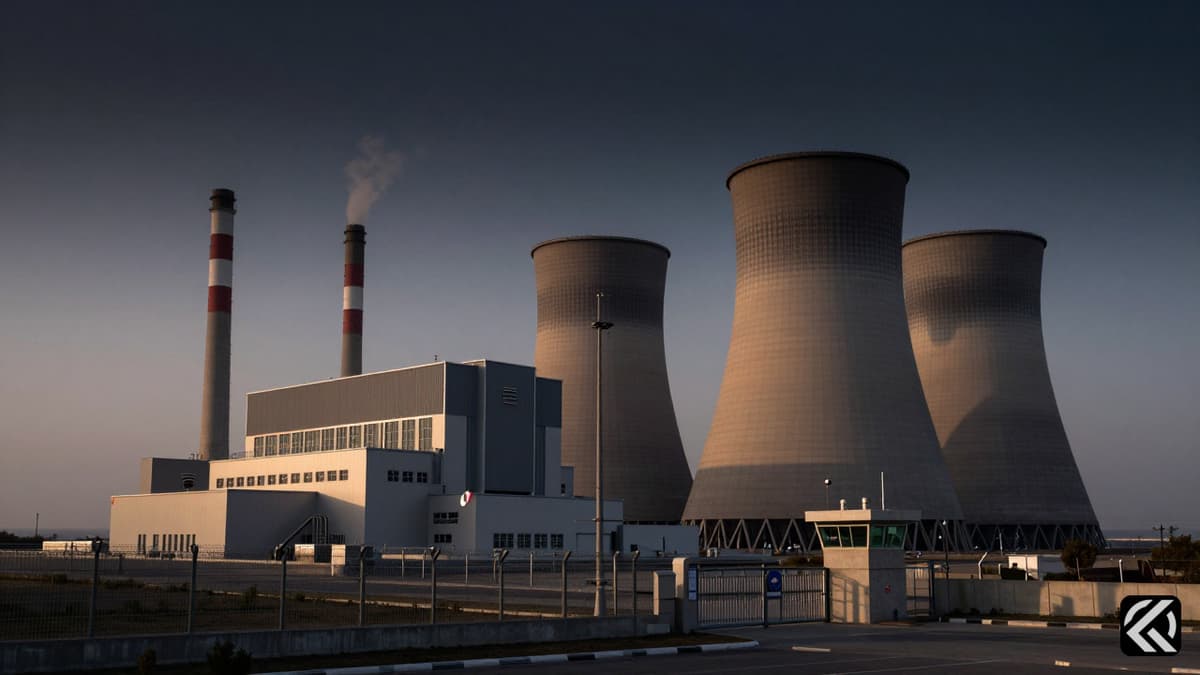
A projectile struck Iran's Bushehr nuclear power plant killing a guard, while US forces race to locate a missing pilot after an F-15 shootdown marks a critical escalation in the Middle East conflict.
The conflict in the Middle East intensified this morning with a projectile striking the perimeter of Iran’s Bushehr nuclear power plant, killing one security staff member and damaging a nearby building. This attack marks the fourth time the site has been targeted since the war began, raising immediate concerns among international observers. Simultaneously, the United States is conducting an urgent search for a missing crew member after an F-15 fighter jet was shot down over Iranian territory, a rare and significant event in the ongoing hostilities.
The incident at the nuclear facility was confirmed by Iranian state media agency Tasnim, which reported that the projectile damaged a building near the power plant. While the UN's nuclear watchdog stated there was no reported rise in radiation levels, it issued a stern caution against striking nuclear sites, calling for "maximum military restraint to avoid risk of a nuclear accident." The disruption to the Strait of Hormuz continues to worsen, with one of Iran's largest steel plants also struck in the city of Esfahan late Wednesday, further depleting key infrastructure.
The attack on the Bushehr nuclear power plant, Iran's only functioning nuclear facility, underscores the volatility of the region. Projectiles have struck the area around the plant multiple times this month, according to Iranian authorities. The UN Security Council is now expected to vote next week on a Bahraini resolution aimed at securing transit passage through the Strait of Hormuz, which has been effectively closed since the start of the war. The draft resolution, which would authorize "all defensive means necessary" including naval action, has reportedly faced resistance from China and Russia, who warn it could lead to further escalation.
On the military front, a US Air Force F-15 was shot down over Iran, leaving one crew member missing. An A-10 Thunderbolt II was also struck and crashed just after leaving Iranian territory on the same day. Brigadier General Alireza Elhami, commander of Iran's Joint Air Defense Base, claimed the loss of the US aircraft was the result of new tactics, modern equipment, and innovations in Iran's air defense systems. He stated the event caused "confusion and bewilderment for the enemy," though he did not elaborate on the specific innovations used. The F-15 is the first manned US aircraft known to have been shot down over Iran during the conflict.
The F-15 shootdown brings the known toll of manned aircraft destroyed in the war with Iran to seven, including three F-15s downed in a "friendly fire" incident over Kuwait in March and a KC-135 jet tanker crash in Iraq. The conflict has also triggered a severe global supply chain crisis. A growing shortage of crude oil is threatening to morph into a shortage of nearly everything, with oil and natural gas flows crimped through the Strait of Hormuz. This reduction in global supply by about one-fifth has sent fuel prices soaring and squeezed supplies of petrochemicals needed to make everyday items like shoes, clothing, and plastic bags.
Dan Martin, co-head of business intelligence at Dezan Shira & Associates, noted that the strain is spreading into every corner of the consumer market. "This spills into everything very, very quickly: beer, noodles, chips, toys, cosmetics," Martin said, highlighting how plastic caps, crates, and snack bags are becoming difficult to procure. The disruption is most evident in Asia, which accounts for more than half of the world's manufacturing and is heavily reliant on imports for oil and other commodities.
Petrochemical companies in southwestern Iran's Khuzestan Province also sustained damage to their facilities in aerial attacks. Fighter jets targeted the Bu Ali petrochemical complex, the Bandar Imam petrochemical complex, and the Mahshahr Special Petrochemical Zone. These companies are subsidiaries of the Persian Gulf Petrochemical Industries Company (PGPIC), which the US says is the engineering conglomerate of the Islamic Revolutionary Guard Corps (IRGC). A law enforcement official in Khuzestan Province, Valiollah Hayati, said there is a "strong potential of casualties" following the attacks by the US and Israel.
Political analysis suggests the regime is unlikely to soften. US President Donald Trump stated this week that Iran's new leadership is "less radical and much more reasonable," claiming regime change has happened. However, political scientists argue that true regime change involves an outside power transforming how a country is governed, not merely replacing leadership. Experts say the war has given more power to hardline military factions inside the complex system of Iranian governance. Ali Vaez, Iran Project Director at the International Crisis Group, described the leadership as a "wounded regime" that, if it survives, "is not going to give an inch to its population, at least not anytime soon."
Amidst the chaos, Indonesian peacekeepers have suffered casualties. Three peacekeepers of Indonesian nationality were injured in southern Lebanon while serving with the UN Interim Force in Lebanon (UNIFIL), two of them seriously. This marks the third serious incident involving Indonesian peacekeepers in less than a week. The ministry called on the UN Security Council to address the issue urgently, following a separate incident last Monday where two peacekeepers were killed in the same region.
The convergence of the F-15 shootdown, the attack on the Bushehr nuclear power plant, and the damage to petrochemical facilities signals a deepening crisis with global repercussions. As the Strait of Hormuz remains blocked and oil flows diminish, the world faces a prolonged shortage of essential goods. With the Iranian leadership hardened and unlikely to yield, and the US and its allies facing rising costs and supply chain disruptions, the immediate future points toward sustained economic strain and a high probability of further military escalation without a clear path to de-escalation.
Jun 8, 2026 00:51 UTC
Trump Claims Iran Nuclear Deal Imminent Despite Diplomatic Fractures
Jun 8, 2026 00:47 UTC
Iran Fires Missiles at Israel After Beirut Strike
Jun 7, 2026 22:00 UTC
US, Iran Peace Hops Fade 100 Days Into War
Jun 7, 2026 20:57 UTC
Iran Strikes Israel: IRGC Promises Week of Continuous Offensive
Jun 8, 2026 02:28 UTC
Trump Walks Out of Meet the Press After Rejecting Evidence Demands


