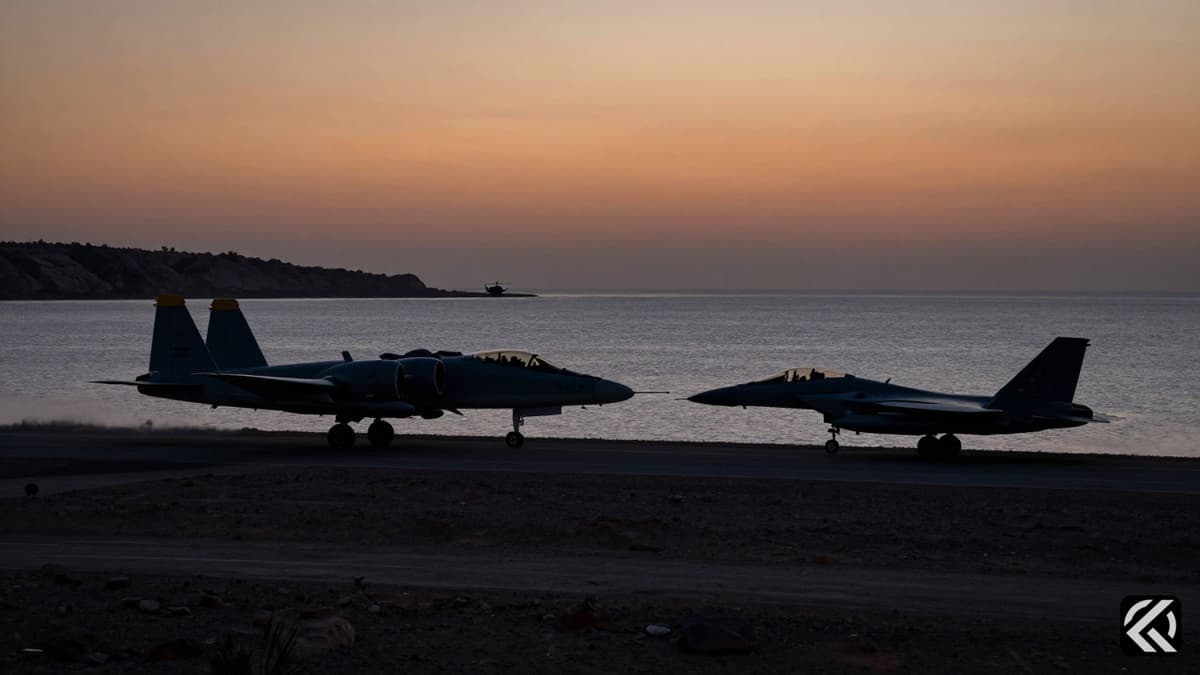
Iran downed a US attack plane near the Strait of Hormuz, marking the second strike this week. Trump calls it war but says negotiations continue.
In a significant escalation of tensions, Iranian forces fired upon and downed an American aircraft near the Strait of Hormuz on Friday. US officials have confirmed that the struck aircraft was an Iran A-10 Warthog attack plane. This event marks the second time in less than 48 hours that a US jet has been targeted by Iranian air defense systems, as the country also shot down an F-15 fighter jet earlier in the week.
President Donald Trump addressed the situation in his first public remarks since the downing, categorizing the hostilities as a state of war. Despite the sharp military escalation, the US President stated that ongoing negotiations between Washington and Tehran would not be altered by these fresh attacks. "No, not at all. No, it's war. We're in a war," Trump told NBC News when specifically asked if the downing of the American jets would alter diplomatic talks with the Islamic Republic. The President declined to provide specific details regarding the ongoing search and rescue operations for the downed crews but expressed frustration over how the media was covering the sensitive mission.
The attack on the A-10 Thunderbolt occurred when the plane was near the Strait of Hormuz. A US official confirmed the specific model of the aircraft involved in the strike. The pilot of the A-10 managed to eject and cross into Kuwaiti airspace before the aircraft crashed on the ground. According to NBC News reports, the pilot was later confirmed to be safe. The Iranian Army subsequently claimed responsibility for the attack, a confirmation also reported by Al Jazeera. This claim adds weight to the narrative of coordinated military action against US assets in the region.
The series of strikes began with the downing of an F-15 fighter jet over southwestern Iran earlier in the week. During that incident, Iranian air defense systems successfully targeted the US fighter, though one of the two crew members was rescued. The conflict intensified rapidly, leading to the attack on the A-10 Warthog. The situation further complicated itself when two UH-60 Black Hawk helicopters were mobilized to assist in the rescue effort for the A-10 pilot. These helicopters were struck during the operation, leaving several service members with minor injuries. Despite the chaos and the strikes on multiple aircraft, a US official stated, "All of them are safe."
This sequence of events represents a sharp escalation in US-Iran relations, occurring less than 48 hours after President Trump declared in a primetime address that Iran had been "completely decimated." The stark contrast between the President's prior statement and the current reality of active combat operations highlights the volatility of the region. The fact that the US President describes the situation as a war while simultaneously maintaining that diplomatic channels remain open creates a complex diplomatic landscape. The military response and the preservation of diplomatic lines suggest a dual-track approach by the US administration in handling the crisis.
The involvement of multiple aircraft types, including the F-15 and the Iran A-10 Warthog, indicates a broad scope of US aerial operations in the region prior to the strikes. The rescue of the A-10 pilot and the minor injuries sustained by the Black Hawk crew members provide some measure of containment to the immediate loss of life, but the destruction of the aircraft underscores the severity of the Iranian countermeasures. The strategic location of the Strait of Hormuz as the site of the downing is significant, given its status as a critical global shipping lane.
While the military situation on the ground and in the air has deteriorated rapidly, the Trump administration appears determined to keep diplomatic negotiations moving forward. The President's insistence that the hostilities would not affect the talks suggests a strategy of decoupling military conflict from diplomatic engagement. If this trend continues, the potential for a negotiated settlement amidst active warfare remains a possibility, though the "war" designation implies a significant hardening of the US posture. The continued US focus on search and rescue efforts alongside the diplomatic rhetoric indicates that the US is managing the immediate crisis while keeping long-term political objectives in view. The resilience of the rescue operations, despite the attack on the Black Hawks, may signal an enduring US commitment to its personnel even as the conflict intensifies.
The future trajectory of this conflict remains uncertain, with the likelihood of further retaliatory strikes increasing. The Iranian Army's public claim of responsibility suggests they are willing to escalate further, potentially testing the limits of the US diplomatic position. If the US maintains the stance that talks are unaffected, the immediate future may see a continuation of skirmishes without a direct, full-scale war declaration from the US side. However, the classification of the current state of affairs as "a war" by the President could embolden US forces to pursue more aggressive defensive postures. The long-term impact could be a sustained period of heightened tension in the Persian Gulf, affecting global shipping and regional stability.
Jun 8, 2026 04:15 UTC
Trump Urges Netanyahu to Halt Iran Strike for Peace
Join 50,000+ readers getting the global briefing every morning.
No spam. Unsubscribe anytime.
Jun 8, 2026 02:28 UTC
Trump Walks Out of Meet the Press After Rejecting Evidence Demands
Jun 8, 2026 02:17 UTC
Magnitude 7.8 Quake Shakes Philippines, Urging Immediate Evacuations
Jun 8, 2026 00:51 UTC
Trump Claims Iran Nuclear Deal Imminent Despite Diplomatic Fractures
Jun 8, 2026 00:47 UTC
Iran Fires Missiles at Israel After Beirut Strike


