Amidst escalating hostilities, Iran searches for a downed U.S. jet crew while the WHO warns of Iran health attacks. The Trump administration response unfolds as the U.S.-Israel war intensifies across the region.
The ongoing U.S.-Israel war has escalated dramatically following the downing of a U.S. warplane inside Iran, prompting a massive search and rescue operation. The White House confirmed that President Donald Trump has been briefed on the incident, marking a significant development in the conflict that began with a bombing campaign in late February. While U.S. media reports indicate that special forces have rescued one of the two crew members, Iranian forces are actively hunting for the remaining pilot, offering a financial bounty to civilians. Simultaneously, the World Health Organization has issued urgent warnings regarding multiple attacks on health facilities, highlighting the widening human cost of the conflict.
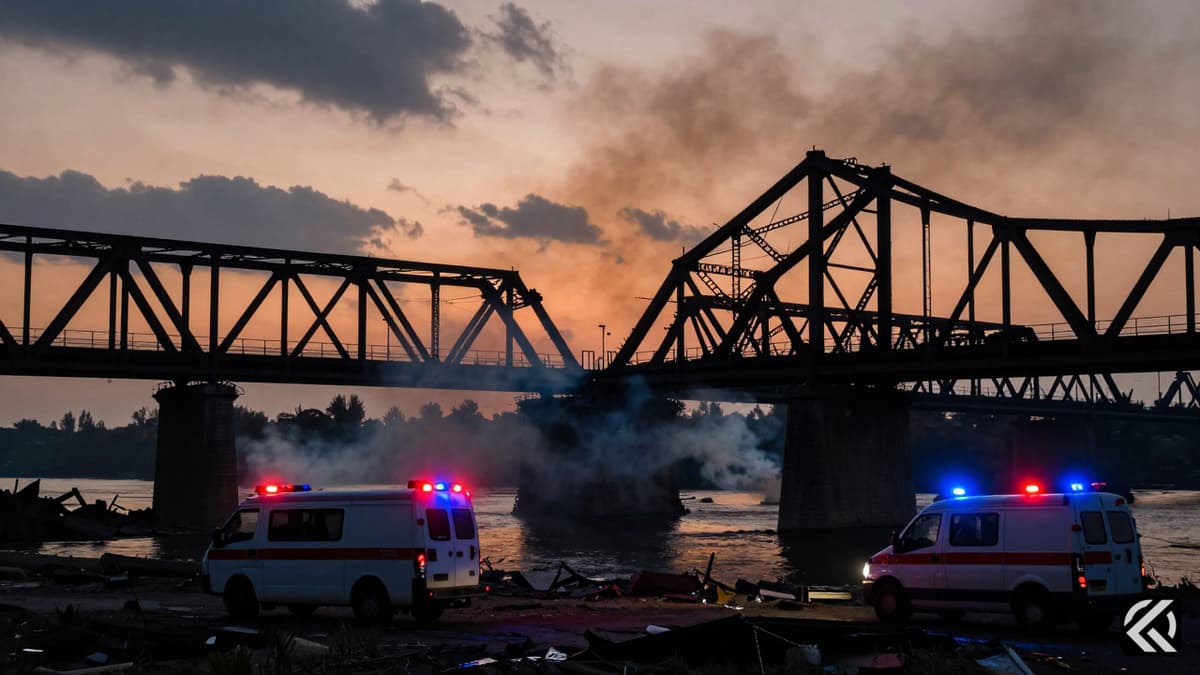
The crisis deepened on April 3, 2026, when an Israeli airstrike destroyed a strategic bridge in eastern Lebanon, connecting Sohmor with Mashghara. Israel had previously warned it would target the site to prevent Hezbollah from reinforcing their positions across the border. This action was part of a broader pattern of escalation that has seen Iran and Israel trading missile salvos since the onset of the U.S.-Israeli bombing campaign. The conflict has already resulted in significant casualties, including the reported killing of Iranian supreme leader Ayatollah Ali Khamenei, transforming what began as a targeted campaign into a full-blown regional war.
In Tehran, the atmosphere is one of heightened mobilization. Iranian state media reported that air defense systems successfully shot down the U.S. jet over the southwestern province of Kohgiluyeh and Boyer-Ahmad. Footage of the wreckage was aired on a local official television station, confirming the location of the crash. In response, a local Iranian television reporter announced a bounty for anyone who captures the enemy pilots alive and hands them over to police or military forces. This call for local assistance underscores the urgency of the situation on the ground as troops are deployed to secure the area.
On the diplomatic and strategic front, the White House issued a statement through Press Secretary Karoline Leavitt, confirming that the President had been briefed on the downing of the U.S. aircraft. This information fuels the current Trump administration response, which focuses on the recovery of the crew and the management of the escalating crisis. The incident represents the first known loss of a jet inside Iran since the conflict began, challenging U.S. military narratives and raising questions about the efficacy of American air defenses in hostile territory. U.S. Central Command (CENTCOM), the authority responsible for operations in West Asia, has not yet provided comment on the loss.
The humanitarian impact of the conflict is also gaining international attention. The World Health Organization (WHO) issued a stern warning on Friday regarding multiple attacks on health facilities in Iran. Following an airstrike on a facility in Tehran, the organization launched an urgent appeal to aid health systems affected by the violence. The WHO emphasized that the region faces a severe threat to medical infrastructure, urging immediate support for impacted health systems. This warning comes as the war continues to destabilize the region, with the WHO noting that Iran health attacks are posing a critical risk to civilians and medical personnel alike.
Contrary to claims made by President Trump suggesting Iran is on the verge of collapse or prepared to concede, analysis suggests the opposite. Tehran has demonstrated it retains multiple instruments of retaliation and the capacity to escalate horizontally. The Iranian government has signaled its ability to strike back against U.S. bases and regional adversaries while simultaneously threatening to block 25% of the global supply of oil and gas. While some reports suggest Iran may be losing specific battles, the strategic capacity to prolong and expand the conflict remains intact. This resilience complicates the Trump administration response and the broader geopolitical landscape of the U.S.-Israel war.
In the immediate aftermath of the U.S. aircraft incident, the Israeli military reported on Saturday that its air defenses were actively intercepting missiles fired from Iran. Medics indicated that one person was wounded during these exchanges, though the military maintained that defensive systems are operating effectively to neutralize the threats. Meanwhile, the United Nations Interim Force in Lebanon (UNIFIL) reported a blast at one of its positions in the south near the border, wounding three peacekeepers. This marks the third similar incident in just days, highlighting the dangerous proximity of UN operations to active combat zones.
The destruction of the bridge in Lebanon serves as a stark example of the war's reach. By targeting the link between Sohmor and Mashghara, Israel aimed to cut off supply lines and reinforcements. The state-run National News Agency confirmed that Israeli warplanes were responsible for the bridge's destruction. These actions illustrate the rapid expansion of the conflict beyond direct Iran-Israel exchanges, drawing in regional actors and international peacekeeping forces. The convergence of these events-air defense interceptions, bridge destruction, and the search for the downed crew-indicates a volatile and unpredictable phase in the war.
As the search for the U.S. crew continues, the tension remains high. The availability of a bounty from Iranian officials suggests a determination to capture the pilot, which could lead to further escalation if the crew member is detained. The rescue of one pilot by U.S. special forces is a critical development, but the fate of the second remains uncertain. The WHO's warning about Iran health attacks serves as a sobering reminder that the infrastructure supporting civilian life is under threat. The potential for the conflict to disrupt global oil supplies and cause further regional destabilization remains a significant concern. The coming days will likely see continued military exchanges and diplomatic efforts to manage the fallout of these intensifying hostilities. The Trump administration response will be closely watched as the situation evolves, with the world waiting to see if de-escalation is possible or if the conflict will spiral further.
The convergence of military setbacks for the U.S. over Iranian soil and the persistent attacks on health infrastructure signals a dangerous trajectory for the U.S.-Israel war. If the search for the remaining pilot fails or results in a prolonged detention, the retaliatory capabilities Tehran has threatened-specifically the potential to block 25% of global oil and gas supplies-could be deployed. This scenario, coupled with the WHO's urgent warnings about Iran health attacks, suggests that the humanitarian crisis will deepen regardless of military outcomes. The Trump administration response will likely face increasing pressure to balance immediate rescue operations with broader strategic containment, as the conflict shows no signs of abating. Unless a diplomatic breakthrough occurs, the region faces a prolonged period of instability with expanding casualties and economic disruption.
Jun 8, 2026 00:51 UTC
Trump Claims Iran Nuclear Deal Imminent Despite Diplomatic Fractures
Jun 8, 2026 00:47 UTC
Iran Fires Missiles at Israel After Beirut Strike
Jun 7, 2026 22:00 UTC
US, Iran Peace Hops Fade 100 Days Into War
Jun 7, 2026 20:57 UTC
Iran Strikes Israel: IRGC Promises Week of Continuous Offensive
Jun 8, 2026 02:28 UTC
Trump Walks Out of Meet the Press After Rejecting Evidence Demands


