
Section
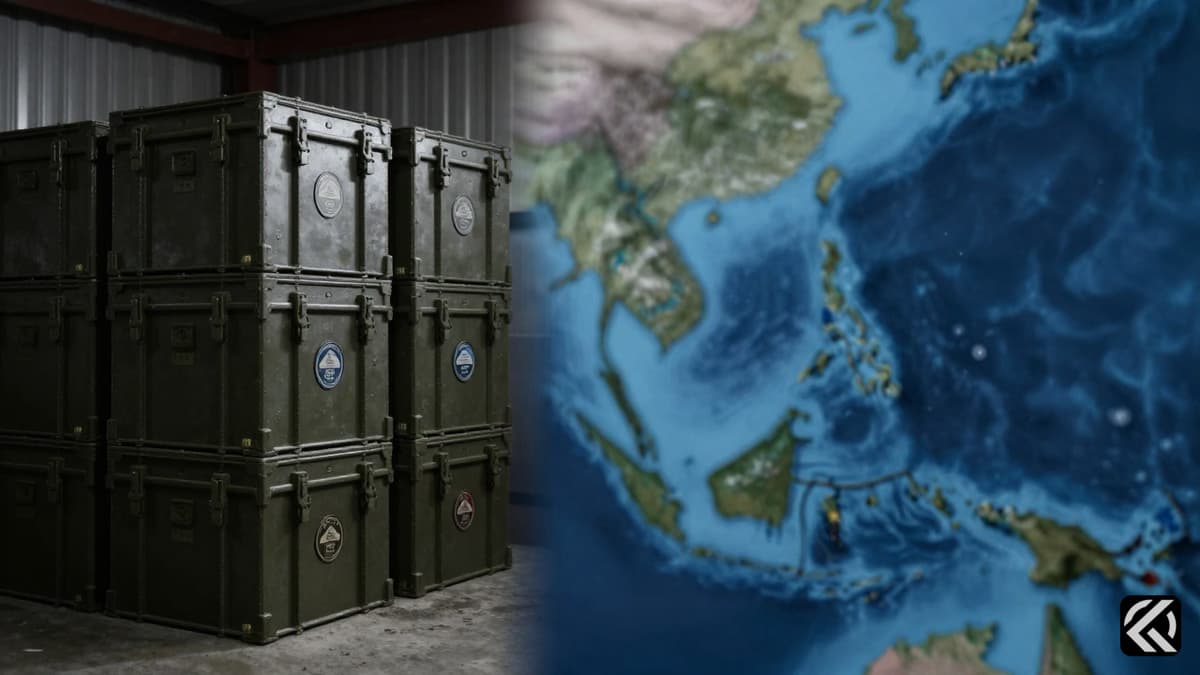
Washington halts a historic $14bn weapons transfer to Taipei, citing military needs for its war with Iran, sparking diplomatic tensions and security concerns.
Acting Navy Secretary Hung Cao revealed that Washington is temporarily halting a $14bn weapons transfer to Taiwan to preserve necessary munitions for its ongoing military engagement with Iran.
Cao provided this strategic update to lawmakers during a Senate hearing on Thursday, just one week after the potential arms package had become a significant topic in discussions between US President Donald Trump and Chinese leader Xi Jinping in Beijing. The suspension highlights the prioritization of active combat requirements over diplomatic commitments.
“Right now, we’re doing a pause in order to make sure we have the munitions we need for Epic Fury - which we have plenty,” Cao told the Senate Appropriations Subcommittee on Defense. He emphasized that while the administration is ensuring all necessary resources are secured, foreign military sales will resume when deemed appropriate by the government.
Any final decision to proceed with this historic transfer, which would represent the largest weapons deal ever approved for the island, rests with Secretary of Defense Pete Hegseth and Secretary of State Marco Rubio. The US Congress had previously approved the weapons package in January, but the final execution requires explicit sign-off from President Trump.
If approved in the future, the sale would significantly surpass the previous record-breaking $11bn arms package approved by Trump in December. However, the current military situation has complicated these diplomatic efforts. The conflict with Iran had been paused since both nations agreed to an Iran ceasefire on April 8, yet the two sides have not yet negotiated a permanent peace agreement. This unresolved status leaves military resources in a state of strategic limbo.
Taiwanese Premier Cho Jung-tai addressed reporters on Friday, stating that Taiwan would continue to pursue arms purchases regardless of the current US stance, according to reports from Taiwanese news outlet FTV News. Despite these public assurances, internal confusion persists. Taiwan officials later clarified that they had not received any official notification regarding a pause in the deal.
Presidential spokesperson Karen Kuo told the AP news agency that while Taiwanese authorities were aware of the reports, there was currently no information regarding any adjustments the US would make to this US arms sale. This lack of direct communication has fueled uncertainty within Taipei.
William Yang, a senior analyst for Northeast Asia at the Crisis Group, warned that the pause would exacerbate anxiety and skepticism about US support in Taiwan. He noted that this move could make it difficult for the Taiwanese government to request additional defense budgets in the foreseeable future, as trust in American reliability erodes.
President Trump, who confirmed discussing the weapons deal with Xi during their recent meeting, indicated in a Fox News interview last week that he “may” or “may not” approve the package. This ambiguity has heightened diplomatic sensitivities. China claims self-governing Taiwan as part of its territory and strongly objects to Washington’s ongoing, albeit unofficial, support for Taipei.
During their summit, Xi reportedly issued a strong warning to the US leader. He told Trump that the “Taiwan question” is the most critical issue in US-China relations and warned that the two nations could face “clashes and even conflicts” if the issue is not handled with extreme care. This warning underscores the high stakes involved in any military support for the island.
Trump has further complicated the situation by suggesting that the arms package could be used as a “negotiating chip.” This approach breaks with a decades-old precedent against consulting with Beijing on arms sales, a long-standing diplomatic norm intended to maintain stability in the region.
In response to the growing tensions, a Chinese Foreign Ministry spokesperson stated on Friday that “China’s opposition to the US arms sale to China’s Taiwan region is consistent, clear-cut and resolute.” The spokesperson’s language reflects the Beijing’s zero-tolerance policy regarding external military involvement in what it considers internal affairs.
Under the 1979 Taiwan Relations Act, enacted shortly after Washington severed diplomatic ties with Taipei, the US government remains committed to helping the island defend itself, despite not officially recognizing it as a sovereign state. However, Trump has continued to test the established diplomatic status quo in recent weeks.
Earlier this week, Trump suggested he would consider speaking directly to Taiwanese President William Lai Ching-te about the arms deal. Such a move would break with four decades of diplomatic protocol against direct talks with the Taiwanese leader and would almost certainly provoke an angry response from Beijing.
While Trump held a phone call with former Taiwanese President Tsai Ing-wen after winning the 2016 election, those talks occurred before he was sworn into office, distinguishing them from his current potential actions. The current pause in the US arms sale signals a shift in priorities, linking the security of the Pacific to the conflict in the Middle East.
The suspension of this historic transaction fundamentally alters the strategic landscape for the island. By linking the availability of advanced weaponry to the duration of the conflict with Iran, the US has introduced a variable that Taipei cannot control. If the ceasefire with Iran remains fragile or collapses, the weapons deal may remain stalled indefinitely. This dependency creates a prolonged period of vulnerability for Taiwan, potentially forcing Taipei to accelerate its own domestic defense production or seek alternative suppliers, none of whom can match the scale or technology of American arms. Furthermore, the lack of official notification to Taiwan officials damages the credibility of Washington as a reliable security partner, potentially weakening deterrence against Beijing. As diplomatic protocols are further eroded by potential direct talks with President Lai, the risk of miscalculation increases. The long-term impact will likely be a more isolated Taiwan and a more unpredictable US foreign policy, where treaty obligations are weighed against immediate military resource allocation. The region will remain on edge, waiting to see if the pause is temporary or a permanent redirection of strategic focus.
Jun 11, 2026 17:21 UTC
Bangladesh Opposition Mobilizes Against India-Bangladesh Border Push-Ins and BSF Killings
Join 50,000+ readers getting the global briefing every morning.
No spam. Unsubscribe anytime.
Jun 11, 2026 17:40 UTC
Boelter Pleads Guilty in Minnesota Political Assassinations
Jun 11, 2026 17:21 UTC
Bangladesh Opposition Mobilizes Against India-Bangladesh Border Push-Ins and BSF Killings
Jun 11, 2026 17:21 UTC
John Healey Quits as UK Defence Secretary Over Funding Dispute
Jun 11, 2026 16:19 UTC
UK Defence Secretary John Healey Quits Over Funding Dispute


