
Section
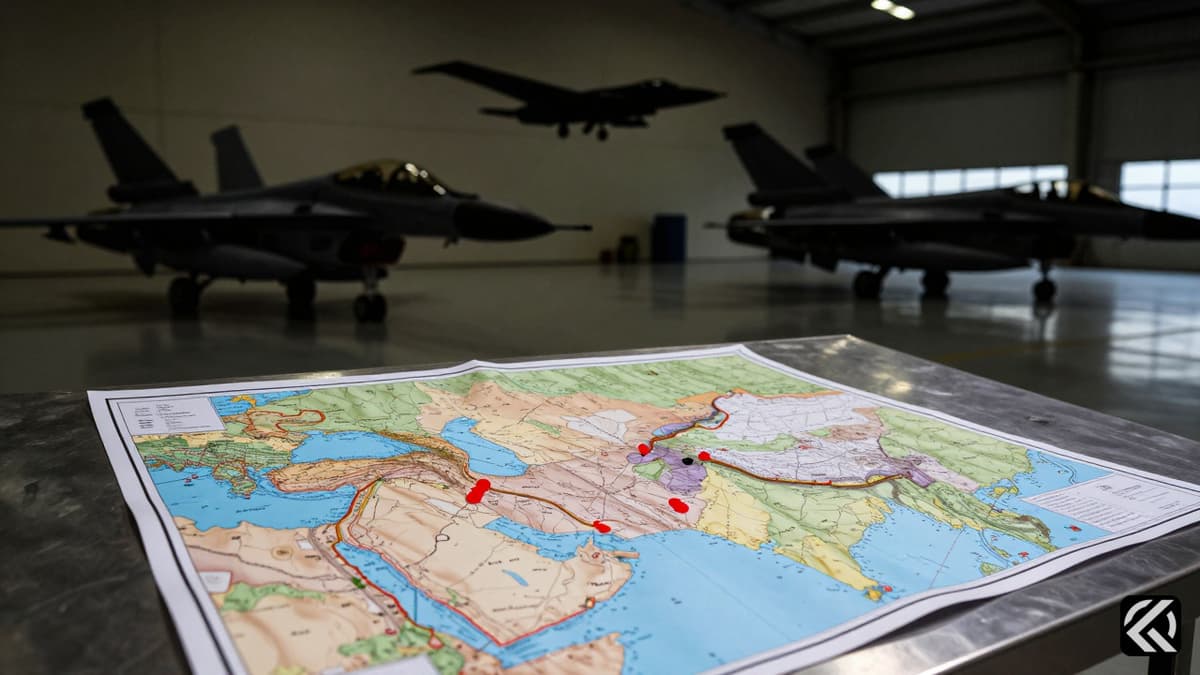
New reports reveal significant U.S. military asset losses in Iran, driving defense costs to $29 billion amid ongoing regional hostilities.
The United States has reported significant military equipment losses during Operation Epic Fury, the offensive campaign launched against Iran on February 28. According to a recent official report, at least 42 U.S. aircraft were either lost or damaged during the hostilities. This figure encompasses a variety of critical military assets, ranging from advanced fighter jets to essential support drones. The Congressional Research Service (CRS) noted that the final tally remains subject to revision due to the classified nature of the data, ongoing combat activities, and complexities in attribution.
The specific inventory of lost or damaged aircraft includes four F-15E Strike Eagle fighter jets, one F-35A Lightning II fighter aircraft, and one A-10 Thunderbolt II ground-attack aircraft. Additionally, the losses include seven KC-135 Stratotanker aerial refuelling aircraft, one E-3 Sentry AWACS aircraft, two MC-130J Commando II special operations aircraft, one HH-60W Jolly Green II helicopter, 24 MQ-9 Reaper drones, and one MQ-4C Triton drone. The CRS compiled these figures by analyzing news reports and official statements from the Department of Defense and U.S. Central Command, providing a factual baseline for the extent of the material damage.
The financial implications of these losses have become a central topic in recent congressional hearings. During a testimony before the House Appropriations subcommittee on May 12, Acting Pentagon Comptroller Jules W Hurst III revealed that the department’s cost estimate for military operations in Iran has increased to $29 billion. This substantial figure reflects not only the direct costs of deployment but also the heavy burden of equipment recovery and replacement. Hurst explicitly stated that a large portion of this cost increase stems from having a refined estimate on repair or replacement costs for equipment. This highlights the tangible economic impact of the conflict on the U.S. defense budget, moving beyond abstract strategic assessments to concrete financial liabilities.
The loss of high-value assets like the F-35A Lightning II is particularly significant due to the aircraft's advanced capabilities and high unit cost. The inclusion of support aircraft such as the KC-135 Stratotanker and E-3 Sentry AWACS in the damage report suggests that the conflict has affected not only combat wings but also the logistical and command infrastructure supporting them. The damage to seven aerial refuelling aircraft indicates potential strain on the sustained air operations capability, while the loss of the E-3 Sentry impacts airborne early warning and control functions. These technical losses complicate the operational landscape, forcing the Department of Defense to recalibrate its strategies for maintaining air superiority and support networks in the region.
The CRS report underscores the difficulty in accurately quantifying military losses in real-time. The agency emphasized that multiple factors, including classification protocols and the fluid nature of ongoing combat activity, mean that the current number of 42 aircraft may be revised upwards or downwards. Attribution issues also play a critical role; determining whether an aircraft was "lost" due to enemy action, mechanical failure, or accident during combat can be complex. Despite these uncertainties, the CRS has provided a comprehensive list of the confirmed damages, drawing on the best available information from the Department of Defense and U.S. Central Command. This approach ensures that policymakers have a grounded understanding of the situation, even if the complete picture is still evolving.
The financial figure of $29 billion represents a significant escalation in the cost of the conflict. For context, this amount reflects the immediate financial response to the identified hardware losses. As Hurst noted, the refinement of repair and replacement estimates is a primary driver of this increase. This suggests that initial budget projections were conservative and have been adjusted to reflect the reality of the damage sustained. The Department of Defense is now facing the dual challenge of managing active hostilities while financing the extensive rehabilitation or replacement of its air fleet. This financial burden may have long-term implications for defense spending priorities and the allocation of resources to other global theaters.
The specific mix of aircraft lost indicates a broad impact on U.S. military capabilities. The loss of four F-15E Strike Eagles affects strike capability, while the loss of one F-35A impacts stealth operations. The 24 MQ-9 Reaper drones lost represent a significant portion of the unmanned aerial reconnaissance and strike force. The Operation Epic Fury has thus far resulted in substantial material degradation of U.S. air power. The CRS data serves as a critical indicator of the intensity of the engagement with Iran. It validates the assertion that the conflict is not merely a limited skirmish but a substantial military campaign requiring significant resource expenditure.
The testimony by Jules W Hurst provides the first official confirmation of the scale of the financial hit. His statement that "a lot of that increase comes from having a refined estimate on repair or replacement costs for equipment" clarifies the source of the budget spike. It moves the narrative from speculation to concrete accounting. This transparency, while stark, is necessary for congressional oversight and budgetary planning. The House Appropriations subcommittee hearing serves as a forum for understanding the fiscal consequences of military action. The data presented there will likely influence future funding decisions and strategic assessments.
The CRS’s methodology of perusing news reports and official statements highlights the intersection of media coverage and government data in modern conflict reporting. While the CRS provides an analytical layer, the underlying data comes from the front lines of the conflict. The inclusion of the HH-60W Jolly Green II helicopter and MC-130J Commando II aircraft in the loss list suggests that special operations and search-and-rescue capabilities were also impacted. This broad spectrum of losses affects the overall readiness of the U.S. military in the region. The Iranian military losses are often the subject of propaganda and strategic assessment, but the U.S. losses are equally critical to understanding the conflict's dynamics.
The ongoing nature of the conflict means that the final count of aircraft losses will likely change. The CRS noted that the number is subject to revision, implying that more losses may be confirmed in the future. The classified nature of some data adds another layer of complexity. However, the current report provides a solid foundation for understanding the immediate impact. The $29 billion cost estimate is a snapshot of the current financial reality. It reflects the immediate need to address the damage sustained during the early phases of the operation.
The loss of the MQ-4C Triton drone and 24 MQ-9 Reapers points to a heavy reliance on unmanned systems and their vulnerability. These drones are crucial for persistent surveillance and precision strikes. Their loss may force a reliance on manned aircraft for certain missions, increasing risk to pilots. The structural damage to the aerial refuelling fleet also poses a long-term logistical challenge. Repairing or replacing seven KC-135 Stratotankers is a complex and time-consuming task. This could limit the endurance of U.S. air operations in the short to medium term.
The confirmation of $29 billion in costs and 42 aircraft losses signals a prolonged and expensive conflict. The need for refined replacement estimates suggests that initial planning underestimated the intensity of Iranian resistance. Future impacts may include stretched defense budgets and a reevaluation of air asset deployment strategies in high-threat environments. The financial and material toll will likely drive further congressional scrutiny and strategic reassessment.
Jun 11, 2026 12:59 UTC
US Strike on Settebello Kills Indian Sailors Amid Strait of Hormuz Tensions
Jun 11, 2026 12:49 UTC
Air India Flight 171 Crash Sparks Debate Over Boeing 787 Dreamliner Faults
Jun 11, 2026 08:51 UTC
US-Iran Conflict: Indian Seafarers Killed in Gulf Strike
Jun 11, 2026 18:04 UTC
Healey Quits Government Over Defence Spending Dispute


