
Section
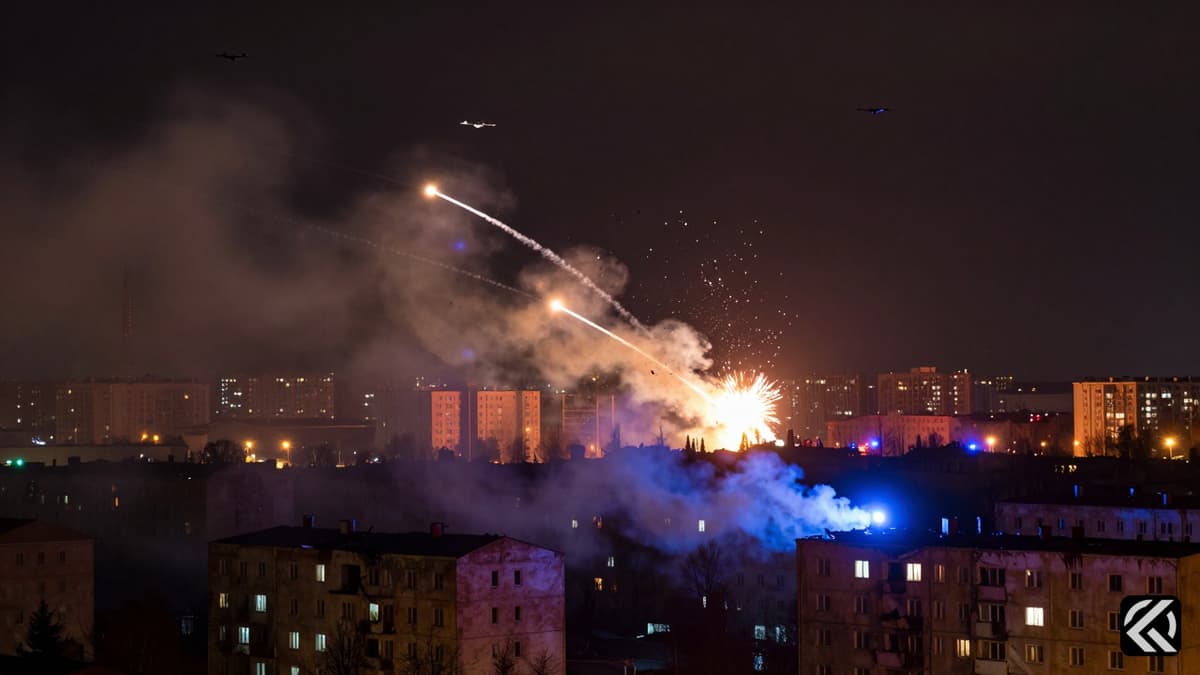
A sweeping Ukrainian aerial assault targets Russian regions, including the capital, in a significant escalation that claims four lives and damages critical infrastructure.
In a sweeping aerial assault, Ukraine launched one of its largest drone offensives of the war, targeting multiple Russian regions in a significant escalation of hostilities.
The overnight strike, described by Russian officials as the most significant attack on the Moscow region in over a year, resulted in at least four fatalities and extensive damage to residential buildings and infrastructure. This operation marks a critical turning point in the conflict, as Moscow and Kyiv exchange intensified aerial strikes following the collapse of a temporary three-day truce.
The sheer scale of the Ukraine drone offensive was immediately evident in the response from Russian authorities. Russia’s defence ministry reported that its air defence systems intercepted and destroyed 556 Ukrainian drones across more than a dozen regions during the overnight barrage. Explosions were reported widely across Moscow and western Russia, forcing emergency services and military personnel into continuous, high-intensity operations.
Regional authorities confirmed the tragic human cost of the attack. At least four people were killed, with three deaths reported in the Moscow region and one in the Belgorod region, which is located near the Ukrainian border. Moscow regional Governor Andrey Vorobyov provided specific details regarding the casualties on Telegram, stating that the attacks began in the early hours of the morning.
“A woman was killed as a result of a UAV hitting a private house. One more person is trapped under rubble,” Vorobyov wrote, highlighting the direct impact on civilian homes. He added that two other men were also reported dead in separate incidents linked to the strikes. Vorobyov confirmed that at least four people were wounded in addition to the fatalities, with several infrastructure facilities targeted during the barrage.
Within the capital itself, the intensity was notable. Moscow Mayor Sergei Sobyanin reported that air defence systems intercepted at least 74 drones approaching the city overnight. While Moscow and its surrounding areas have faced drone attacks before, strikes directly affecting the Russian capital have remained comparatively rare, making this one of the heaviest drone attack nights the city has faced during the conflict.
Sobyanin noted that 12 people sustained injuries in the broader Moscow region as debris from intercepted drones fell across different areas. “Minor damage has been recorded at the sites where debris fell,” the mayor posted on Telegram, urging residents to follow emergency instructions. Although Russian authorities did not immediately disclose the full extent of infrastructure damage, officials indicated that both residential areas and strategic facilities were among the intended targets.
The timing of this massive strike is significant, coming just days after Ukrainian President Volodymyr Zelensky vowed to intensify retaliatory operations. This promise followed a major Russian strike on Kyiv that killed 24 people. Zelensky had explicitly warned that Moscow would face “consequences” for its continued attacks on Ukrainian cities and civilians, signaling a shift in Kyiv’s strategy toward more direct strikes on the Russian capital.
Moscow and Kyiv have exchanged intensified aerial strikes in recent days, a development that coincides with the completion of a prisoner swap and the expiration of a temporary three-day truce earlier this week. The breakdown of that truce has removed previous constraints on aerial operations, allowing for the large-scale coordination seen in this latest offensive.
Ukraine has repeatedly defended its drone operations inside Russia, asserting that they are aimed specifically at military infrastructure, logistics hubs, and energy facilities that support Moscow’s war effort. Russian officials, however, have accused Kyiv of deliberately targeting civilian areas and attempting to spread panic through attacks on populated regions.
The conflict has increasingly evolved into a war characterized by long-range missile and drone strikes. Both countries are now using unmanned systems on an unprecedented scale, forcing a shift in military strategy and defense priorities. Analysts note that the growing sophistication and volume of these drone attacks have compelled both sides to invest heavily in layered air defence systems and electronic warfare capabilities.
The Russian capital’s air defense apparatus faced unprecedented pressure as Moscow drone attacks reached critical volumes. Mayor Sobyanin’s confirmation of 74 intercepted drones in a single night underscores the saturation of the air defense grid in the capital. The presence of debris falling on populated areas, causing 12 injuries, illustrates the limitations of even sophisticated interception systems when faced with high-density swarms. The damage to private residences, as confirmed by Governor Vorobyov, highlights the vulnerability of urban centers when air defense shields are breached or overwhelmed by the volume of incoming fire.
This latest escalation suggests a deepening commitment to asymmetric warfare, where unmanned systems serve as the primary tool for inflicting damage and psychological pressure. The high volume of drones suggests that Ukraine is prioritizing the saturation of Russian air defense networks, potentially to degrade their ability to launch retaliatory strikes on Ukrainian cities. The collapse of the truce and the immediate, massive response to the Kyiv strike indicate that diplomatic channels are currently inactive, and the conflict is entering a phase of intensified kinetic engagement. As both sides invest in electronic warfare and layered defenses, the long-term impact will likely be a more fortified and hardened battlefield, with civilian infrastructure becoming an increasingly contested and dangerous asset in the broader strategic calculus of the Russia Ukraine war. The death of four civilians in these recent strikes further complicates the humanitarian landscape, potentially hardening public opinion on both sides and reducing the window for immediate diplomatic de-escalation. As the war of attrition continues, the reliance on unmanned systems will likely persist, driving further innovation in drone technology and counter-drone defenses in the coming months.
Jun 11, 2026 12:59 UTC
US Strike on Settebello Kills Indian Sailors Amid Strait of Hormuz Tensions
Jun 11, 2026 12:49 UTC
Air India Flight 171 Crash Sparks Debate Over Boeing 787 Dreamliner Faults
Jun 11, 2026 08:51 UTC
US-Iran Conflict: Indian Seafarers Killed in Gulf Strike
Jun 11, 2026 18:04 UTC
Healey Quits Government Over Defence Spending Dispute


