Section
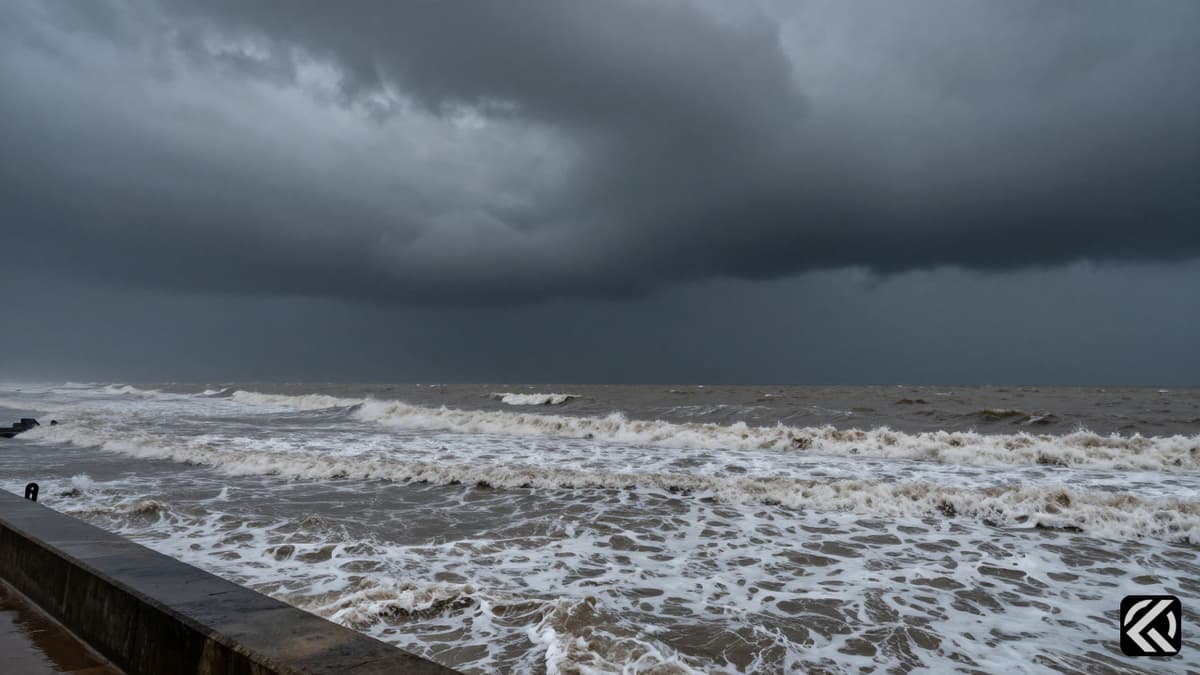
Powerful winds and torrential rains from Typhoon Dujuan have disrupted Silver Week in Japan, forcing mass evacuations and halting Asian Games preparations along the east coast.
The Japanese government has issued urgent evacuation warnings to nearly two million residents as Typhoon Dujuan continues its destructive path along the country’s eastern seaboard. This powerful storm, the 25th of the year in the region, has not made direct landfall but has nevertheless brought dangerous winds and torrential rain to the nation.
The storm’s presence has caused significant disruption across the country, particularly during the holiday period known as Silver Week. Authorities report that more than 50,000 households have lost power, and close to 400 flights were cancelled on Monday due to the turbulent weather conditions. Fire departments have responded to multiple emergencies, including reports of a woman in her 60s potentially swept away in a landslide in Kanagawa prefecture and a man in Chiba hospitalized after a three-hour rescue from debris.
The timing of the storm has been particularly unfortunate for event organizers and holidaymakers. The typhoon arrived just as Aichi prefecture was gearing up to host the Asian Games, thwarting plans for holidaymakers and raising concerns among organizers about the disruption to scheduled events. Despite the fears, meteorological updates indicate that the worst of the immediate danger has passed. As night set in and the storm continued its trajectory away from the main populated areas, wind speeds dropped, leading the government to downgrade alert levels across several regions.
The Japan Meteorological Agency updated its guidance on the typhoon at 20:45 local time, confirming that the center of Typhoon Dujuan remains offshore to the east of the Izu islands. Sustained wind speeds at the storm's center were recorded at 143km/h (89mph), with gusts reaching 198km/h. While the strongest winds remain offshore, southern and eastern Honshu still experienced sustained wind speeds of 126km/h with higher gusts.
Although the typhoon is not expected to make direct landfall, the leading edge of the storm has pushed very heavy rain into south-eastern Honshu. Parts of Chiba prefecture have recorded more than 500mm of rain in the last two days. Oshima Town, located south-west of Tokyo, saw an even more extreme total of 800mm. Meteorologists warn that plenty more rainfall is expected until Tuesday evening, with an additional 100-200mm anticipated. Heavy rain across the Izu islands has triggered the highest level of landslide warning, urging residents in eastern Japan to remain vigilant for further landslides, flooding, lightning strikes, and tornadoes.
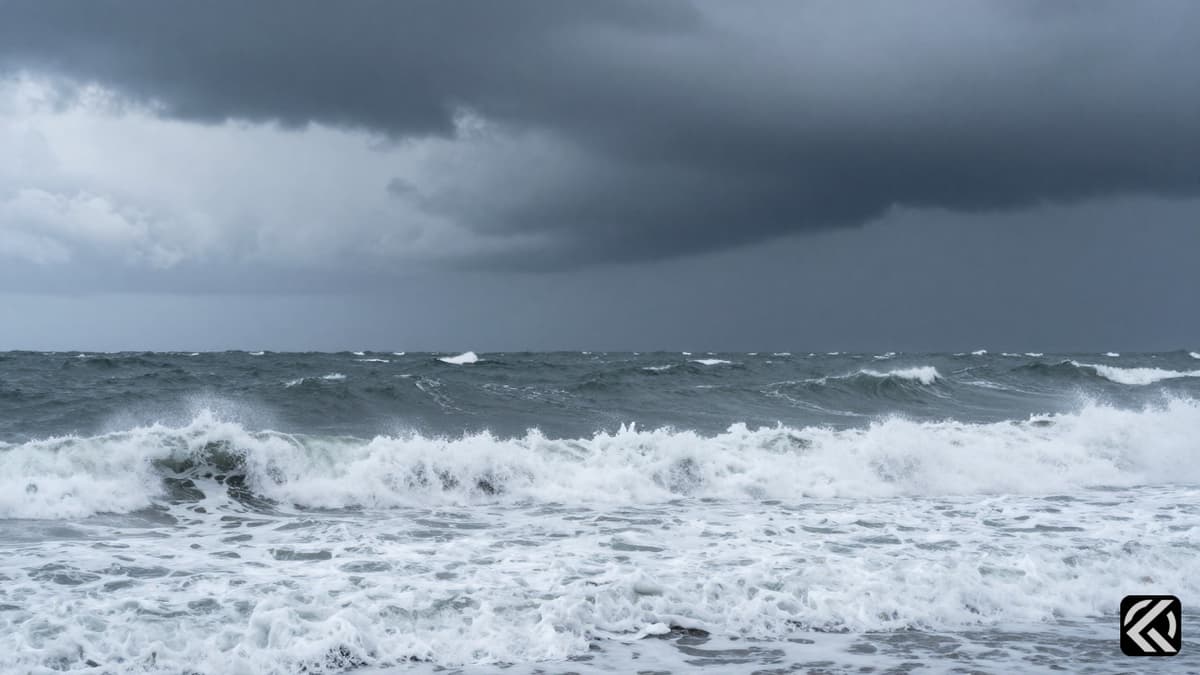
Rough seas are expected to continue into Tuesday, although wave heights are predicted to drop from between 6-9m to 5-7m. The storm will track away from Japan in a north-easterly direction, with eastern Honshu seeing the heaviest of the rain before it eventually weakens and loses energy by moving out of warm waters.
In Tokyo, the storm brought the height of its force as it passed through the Kanto region. Correspondents reported that after a full day of downpour, the rain finally let up, and the intense battering against windows ceased. Tokyo’s alert level was downgraded from a level 4, a high warning status, to level 2, which is an advisory. This marked a long and very wet day for residents who usually enjoy travels and events during Silver Week, the string of public holidays that kicks off the period.
Despite the rain subsiding, the potential for damage remains high. The typhoon seems to have hit Chiba prefecture, located just east of Tokyo, the hardest. Videos shared on social media showed cars submerged in water and smaller landslides. While the rain has let up, the full extent of the damage will likely not be known until the morning when it becomes light. The storm continues to travel along the Pacific coast toward northern Japan, meaning authorities must watch for any further damage in those regions as well.
Power outages were widespread, with reports of outages affecting about 4,000 households specifically in the Kanto region. One resident near the Meguro River noted that water levels in the river had swelled significantly, prompting him to stay put in his third-floor apartment. The meteorological agency had issued a level five emergency warning, the highest level, for flooding and landslides in Oshima town and parts of the Izu islands. Areas in the northern Izu islands, Chiba, Kanagawa, and Shizuoka were at a level four alert.
Research suggests that Japan has become more exposed to destructive storms in recent decades. While climate change is not thought to be increasing the number of these storms globally-and could even make them less common in some regions-the intensity of those that do form is likely to increase on average. Warmer ocean waters allow storms to pick up more energy, leading to higher wind speeds. Additionally, a warmer atmosphere can hold more moisture, resulting in heavier rainfall.
This year, El Niño, the natural weather phenomenon bringing warmer water to parts of the tropical Pacific, is another factor. While it does not have a clear effect on the total number of typhoons, it can affect where they form, their strength, and which countries they hit. Some El Niño events may expose Japan to stronger typhoons, compounding the risks posed by the Silver Week holiday season when millions are traveling.
As the storm clears, authorities are preparing to assess the widespread damage, from infrastructure failures to potential loss of life. The downgrading of alert levels suggests the immediate threat is passing, but the consequences of 800mm of rain and powerful winds will be felt for days. With travel disruptions still likely and the full extent of the damage unknown, Japan must now focus on recovery efforts while monitoring the storm's continued track toward northern Japan. The intersection of intense weather patterns, climate factors, and high-volume holiday travel highlights the complex challenges facing the nation.
Oct 3, 2026 04:08 UTC
FlyDubai Co-Pilot Banned in Oman Over Extremism Concerns
Oct 3, 2026 00:50 UTC
Israel-Mumbai Campaign Honors Captain Smit After Flydubai Incident
Oct 2, 2026 18:13 UTC
Captain Smit Machchhar’s Courage Saves Flydubai Flight FZ1073 From Disaster
Oct 2, 2026 16:45 UTC
Captain Smit Machchhar Saves Plane Mid-Fall
Oct 3, 2026 06:56 UTC
Supreme Court Hears Cases on Guns, Voting Rights, and Climate