Actor-turned-politician C. Joseph Vijay assumes the top office in Tamil Nadu, ending decades of dominance by traditional parties and reshaping the state's political landscape.
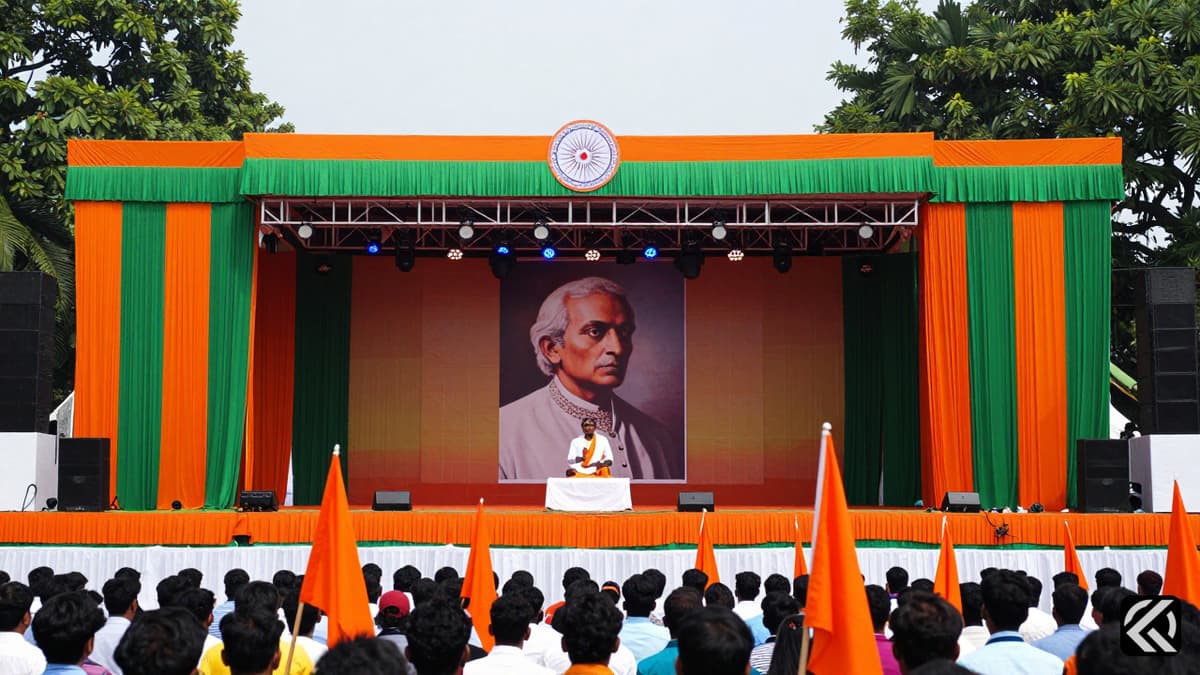
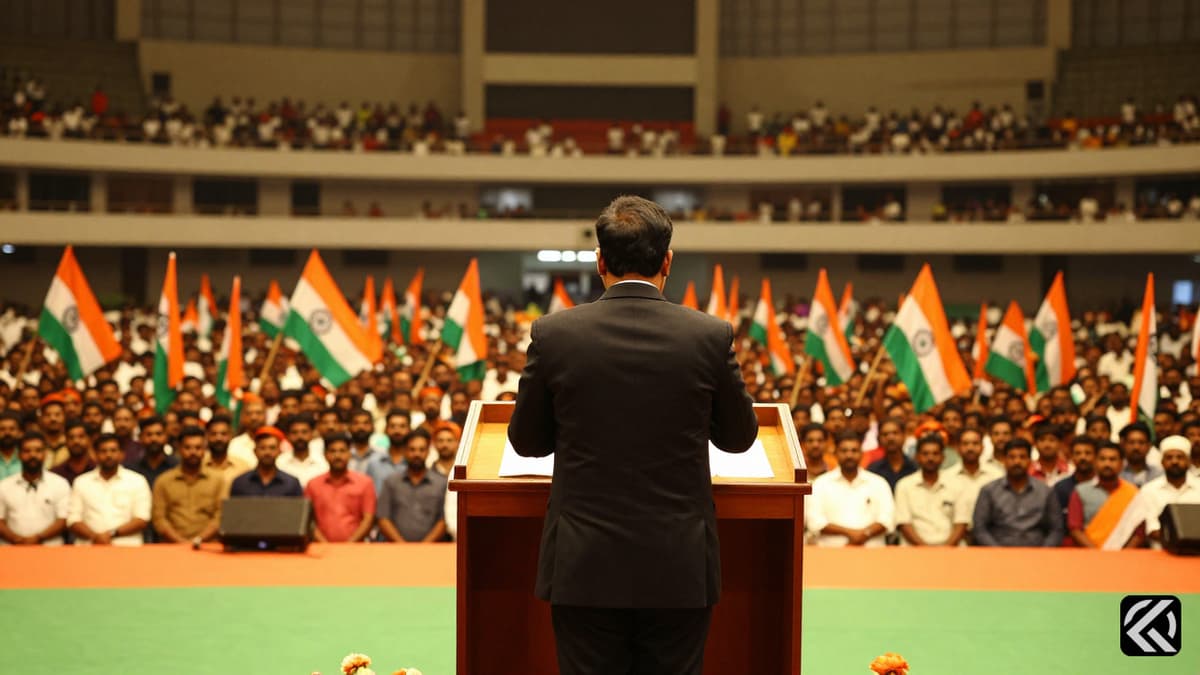
The Tamilaga Vettri Kazhagam (TVK) president C. Joseph Vijay was officially sworn in as the Tamil Nadu Chief Minister at the Jawaharlal Nehru Indoor Stadium in Chennai on the morning of Sunday, May 10, 2026. This historic event, anticipated by thousands of fans and political observers, marked the culmination of a rapid political ascent for the actor-turned-politician. As Governor Rajendra Vishwanath Arlekar administered the oath of office and secrecy, the stadium erupted in cheers from emotionally charged supporters who witnessed their 'Thalapathy' assume Tamil Nadu’s top political office. Many in the crowd were visibly moved, with tears of joy reflecting the significance of the moment.
The ceremony was characterized by intense enthusiasm and a sense of political arrival. Dressed in a formal black blazer and black pants, Vijay maintained his characteristic smile as he approached the podium. The atmosphere shifted from anticipation to celebration the moment he began uttering the customary oath, starting with "C. Joseph Vijay ennum naan…". The stadium was filled with the sound of whistles and cheers, signaling a new era for the state's governance. Notable political figures, including Congress leader Rahul Gandhi, were present on the stage, underscoring the collaborative nature of this new government formation.
The path to this moment was paved by the results of the April 23 Assembly election, where TVK contested in 233 constituencies without any allies. Despite running alone, the party secured approximately 1.7 crore votes out of the total 4.9 crore polled. Following the declaration of results on May 4, which saw TVK win 108 of the 234 seats in the Assembly, Vijay engaged in extensive negotiations over five days. He successfully secured the support of the Congress party, the Communist Party of India (CPI), the Communist Party of India (Marxist) (CPM), the Viduthalai Chiruthaigal Katchi (VCK), and the Indian Union Muslim League (IUML). These alliances were crucial in forming a stable government that could challenge the traditional political hegemony of the region.
On Saturday evening, Governor Arlekar officially appointed Vijay as the Chief Minister, directing him to seek the vote of confidence of the Assembly on or before May 13. This directive ensures that the new government must demonstrate its majority support within the legislative body, a standard procedure for establishing legitimacy. The resulting cabinet represents a significant departure from the past five decades of Tamil Nadu politics, which were largely scripted by the AIADMK and the DMK. The emergence of a new political chapter suggests a diversification of political power and a potential realignment of voter preferences.
Vijay’s entry into formal politics began in February 2024, when he launched his party after concluding that his existing fan club, Vijay Makkal Iyakkam, was insufficient to drive social, economic, and political reforms. In a statement issued on February 2, 2024, he vowed to oppose a political culture riddled with corruption and divisive practices based on caste and religion. This ideological positioning has resonated with many voters who seek an alternative to the established parties. The rapid rise of TVK from a newly formed entity to the leading party in the state highlights the impact of Vijay’s personal brand and his anti-establishment narrative.
The political journey of the past two years has prompted several young people and cinema fans to take greater interest in politics. TVK has emerged as an alternative political platform for many in the state, leveraging its leader’s cultural influence to build a substantial electoral base. While the two-year-old party’s ideological positioning, organizational structure, and the political acumen of its functionaries are still evolving, the initial electoral success indicates significant potential. The party’s ability to unite various political factions demonstrates a strategic approach to governance that may define its future operations.
The swearing-in of Vijay as Tamil Nadu Chief Minister signals a definitive shift in the state's political dynamics. The new government’s reliance on a diverse coalition of parties, including communists and religious minority representatives, suggests a governance model that prioritizes broad-based support over traditional ideological blocs. The historical context of AIADMK and DMK dominance is now being challenged by a party that has successfully combined star power with anti-corruption rhetoric. As the state moves towards the vote of confidence, the focus will likely remain on how effectively the new administration can translate its electoral promises into policy. The long-term impact may include a more fragmented political landscape where coalition politics becomes the norm rather than the exception. This evolution indicates that future elections in Tamil Nadu may be increasingly competitive, with multiple parties vying for influence rather than a binary choice between the two major historical contenders. The success of this new administrative structure will depend on its ability to deliver on its vows of reform and maintain the trust of its varied coalition partners.
May 9, 2026 19:32 UTC
Hardliners Sabotage Iran-US Negotiations Amidst Fractured Regime
May 9, 2026 17:43 UTC
Moscow's Stripped-Down Victory Day: A Shift in Military Display
May 8, 2026 19:28 UTC
Iran Transforms Destroyed B1 Bridge Into Symbol of Resistance
May 8, 2026 15:53 UTC
China Confirms Technical Aid for J-10CE Fighter Jets in Regional Conflict
May 10, 2026 11:57 UTC
Suvendu Adhikari Sworn In As First BJP West Bengal Chief Minister