History is made in Kolkata as Suvendu Adhikari takes the oath, marking a pivotal political shift for West Bengal and the BJP’s expansion.
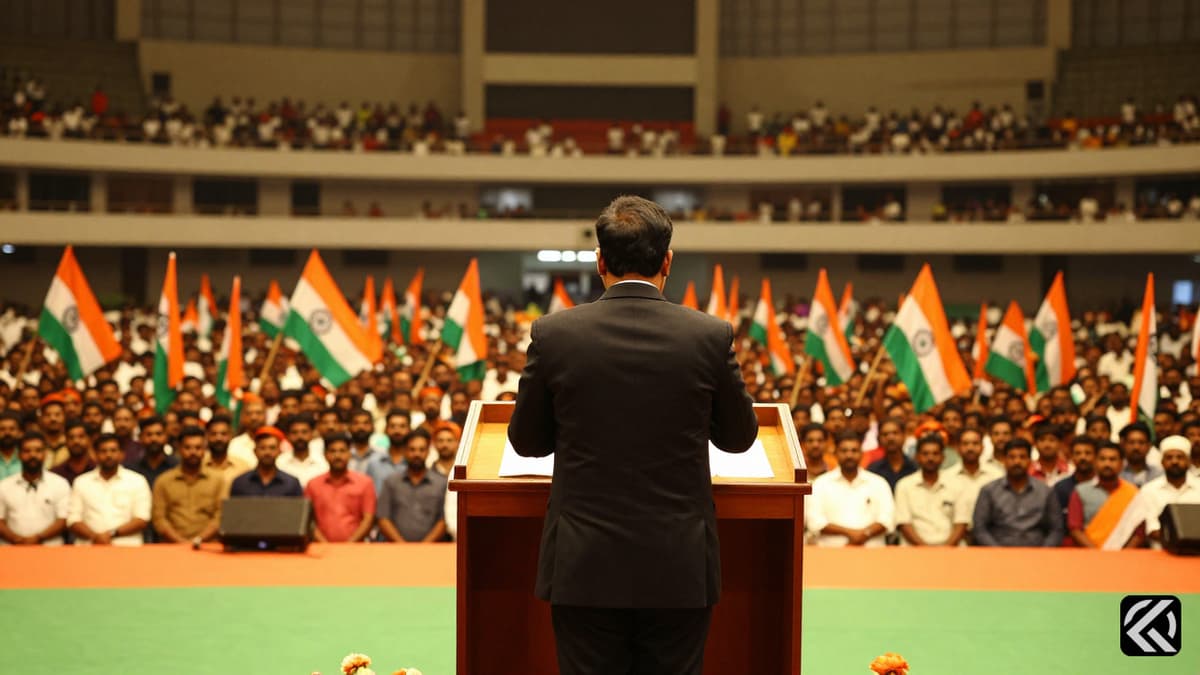
Bharatiya Janata Party leader Suvendu Adhikari was sworn in as the Chief Minister of West Bengal on Saturday, May 9, 2026, at a grand ceremony held at Kolkata’s Brigade Parade Ground. This historic moment marks a significant political transition for the state, as Adhikari becomes the first leader from the BJP to hold the office of Chief Minister.
Prime Minister Narendra Modi accompanied Mr. Adhikari in a vehicle to the stage, where West Bengal Governor R. N. Ravi administered the oath of office and secrecy. Adhikari, who was elected leader of the BJP legislature party on Friday, May 8, 2026, took the oath clad in a saffron kurta and dhoti, speaking in Bengali amidst loud cheers from supporters. The event saw the presence of Chief Ministers from nearly 20 BJP and NDA-ruled states, along with Union Home Minister Amit Shah, Defence Minister Rajnath Singh, and several other Union Cabinet Ministers. Mr. Modi bowed to the crowd to express gratitude for the mandate secured in the recently concluded Assembly election, where the party won 207 of 293 constituencies, while the Trinamool Congress was reduced to 80 seats.
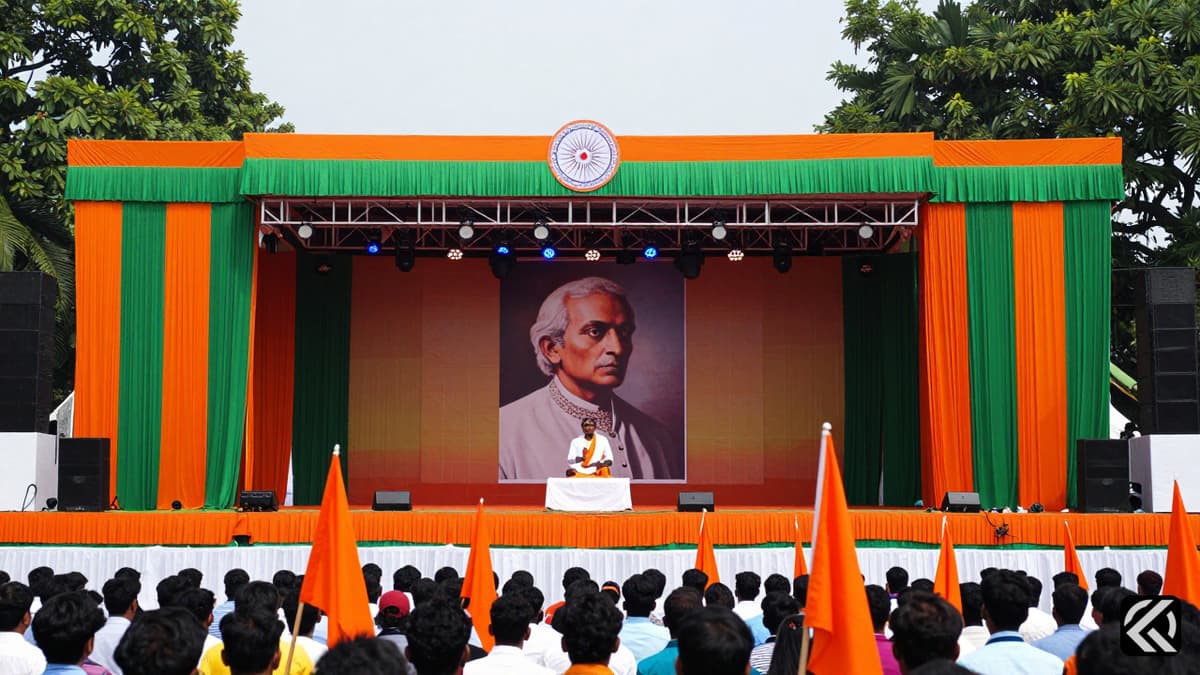
The oath-taking ceremony took place on Pochishe Boishakh, the 25th day of Baisakh, which coincides with the birth anniversary of Gurudev Rabindranath Tagore. Describing this as a “pleasant coincidence,” the stage was adorned with a large portrait of Tagore, emphasizing cultural reverence. Soon after the swearing-in, Mr. Adhikari visited Jorasanko Thakurbari, Tagore’s ancestral home, and paid floral tributes before formally beginning his official duties. “My official work begins after paying tribute to Kaviguru,” he stated, invoking the legacy of the poet laureate.
Invoking the philosophy of Swami Vivekananda, the newly elected Chief Minister cited the monk’s words, “Charaiveti, Charaiveti” (keep going), calling upon people to work towards building a new Bengal. “Let us rebuild Bengal,” he declared, setting a tone of renewal and forward momentum. Mr. Adhikari is the ninth Chief Minister of the State and will preside over the 18th West Bengal Legislative Assembly. Notably, he is the first Chief Minister from rural Bengal in nearly five decades, following in the footsteps of leaders like Mamata Banerjee, Buddhadeb Bhattacharjee, Jyoti Basu, and Siddharth Shankar Roy, all of whom were from Kolkata.

In a social media message, Mr. Modi wished Mr. Adhikari, the first BJP Chief Minister of the State, a “fruitful tenure.” Congratulating the new Ministers, the Prime Minister said, “They will further strengthen West Bengal’s journey of development.” Five other BJP leaders-Dilip Ghosh, Agnimitra Paul, Ashok Kirtania, Kshudiram Tudu, and Nisith Pramanik-were also sworn in as Ministers during the event.
Congratulatory messages poured in from across several quarters, including from the Bangladesh Awami League, which stated, “The mandate of the people of West Bengal is a unique recognition of Shri Suvendu Adhikari’s strong leadership.” Former Union Minister and High Commissioner of India to Bangladesh Dinesh Trivedi, who participated in the swearing-in ceremony, said the State was witnessing “real independence.”
Following the ceremony, Mr. Trivedi held a meeting with senior civic and police officials, including Chief Secretary Dushyant Nariala, Director General of Police Siddh Nath Gupta, and Kolkata Police Commissioner Ajay Nand to take stock of the law-and-order situation. Meanwhile, Subrata Gupta, who had served as the Election Commission’s special roll observer for the 2026 West Bengal Assembly elections, has been appointed as an advisor to the Chief Minister.
The inauguration of Suvendu Adhikari as the West Bengal Chief Minister signifies a major restructuring of political power in eastern India. With the BJP holding a commanding majority in the Legislative Assembly, the new government is poised to implement its policy agenda without the coalition constraints that often characterize state governance in the region. The presence of senior central leadership, including the Prime Minister and Home Minister, underscores the strategic importance of this political shift for the national ruling party.
Looking ahead, the administration will likely focus on consolidating its rural support base, a demographic that has historically been less dominant in Bengal’s urban-centric political landscape. The emphasis on cultural icons like Rabindranath Tagore and Swami Vivekananda suggests a governance strategy rooted in regional identity and philosophical resilience. As the new cabinet begins its work, the focus will be on addressing public service delivery, law and order, and infrastructure development to validate the electoral mandate. The appointment of former election observers and the inclusion of diverse ministers indicates an effort to broaden administrative competence and ensure effective governance across all sectors. The long-term impact of this transition will be closely monitored by opposition parties and national political observers, as it marks a departure from decades of political continuity in the state.
May 9, 2026 21:40 UTC
Russia Cuts Heavy Armor From Victory Day Parade Amid War
Join 50,000+ readers getting the global briefing every morning.
No spam. Unsubscribe anytime.
May 10, 2026 09:36 UTC
TVK's Vijay Sworn In as Tamil Nadu Chief Minister
May 10, 2026 07:57 UTC
Celebrate 2026 Mom with Heartfelt Tributes and Humor
May 10, 2026 05:52 UTC
Celebrate Mother's Day 2026 With These Essential Wishes
May 10, 2026 05:02 UTC
MV Hondius Arrives in Tenerife Amid Hantavirus Outbreak