President Trump signals a strategic pivot, willing to halt the Iran military campaign despite a closed Strait of Hormuz, even as drone attacks intensify across the Middle East region.
U.S. President Donald Trump has reportedly instructed aides he is prepared to conclude the military campaign against Iran, even if the critical Strait of Hormuz remains largely closed for an extended period. This strategic shift emerges as the White House seeks a diplomatic resolution with Tehran ahead of a looming April 6 deadline. Simultaneously, the conflict intensifies on the ground with fresh drone attacks and rising casualties in the region.
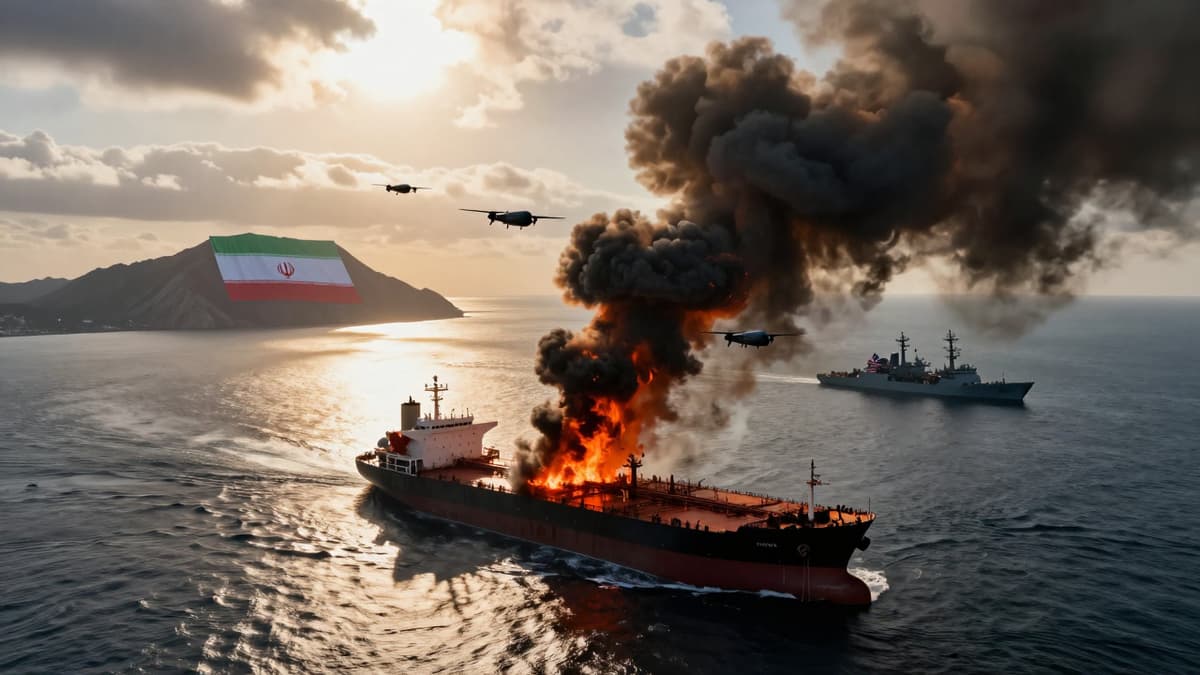
The announcement follows a day of significant escalation, where an Iranian drone attack ignited a fire on a Kuwaiti oil tanker at the Dubai Port. Despite the destruction, state media confirmed no injuries occurred, and all 24 crew members were safely evacuated. However, the incident has raised fears of a potential oil spill in the surrounding waters, adding an environmental and economic layer to the growing crisis. The situation is further complicated by a drone assault on Amir Sultan Air Base in eastern Saudi Arabia, which hosts U.S. forces, according to Iranian Press TV. The conflict has also claimed the lives of three UN peacekeepers in southern Lebanon within a 24-hour window, prompting an investigation by the Israeli army into the attack's source.
Amidst this volatility, President Trump has communicated to his team that he is willing to leave the complex operation of reopening the Strait of Hormuz for a later date rather than continuing the immediate military campaign. This willingness to decouple the military action from the immediate reopening of the vital shipping lane suggests a recalibration of U.S. strategic priorities. The White House has indicated a desire to finalize a deal with Iran before the April 6 deadline, signaling that diplomacy is increasingly being weighed against kinetic military options. The President's stance appears to be driven by the need to manage the broader regional fallout, including the threat to civilian infrastructure which he has previously threatened to strike if no agreement is reached.
The immediate trigger for the current heightened tension involves a series of coordinated actions and retaliations across the Middle East. On Monday, March 30, Israeli Prime Minister Benjamin Netanyahu declared that the war had already achieved more than half of its stated aims. However, Netanyahu notably failed to provide a specific timeline for when the military operations would conclude, leaving the duration of the conflict uncertain. This ambiguity has fueled uncertainty among regional allies and international observers, particularly as the Strait of Hormuz, a crucial artery for global oil trade, remains under threat of closure.
On Tuesday, March 31, 2026, the situation worsened with reports of an Iranian drone attack sparking a fire on a Kuwaiti oil tanker at the Dubai Port. While Dubai authorities successfully extinguished the blaze and ensured the safety of all 24 crew members, the incident underscores the vulnerability of civilian and commercial assets in the region. The assessment of damage is currently underway, with warnings circulating about a possible oil spill that could have severe environmental consequences for the surrounding waters. This event serves as a stark reminder of the stakes involved, especially given the previous reports of Trump threatening to strike Iran's civilian infrastructure should no deal be reached.
Further complicating the security landscape, Amir Sultan Air Base in eastern Saudi Arabia, a key location hosting U.S. forces, came under drone attacks on the same day. Iranian Press TV confirmed the incident, highlighting the direct threat to American military presence in the Gulf. The attacks on the air base coincide with a tragic development in Lebanon, where three UN peacekeepers were killed in southern Lebanon in less than 24 hours. The Israeli army has stated it is investigating the source of these attacks, indicating a complex web of responsibility and retaliation that continues to shift rapidly.
The convergence of these events-drone attacks on oil infrastructure, assaults on military bases, and the loss of international peacekeepers-creates a volatile environment where the path to peace remains narrow. The White House's focus on a deal before the April 6 deadline suggests an urgency to prevent further escalation, particularly concerning the potential long-term closure of the Strait of Hormuz. If the shipping lane remains closed, the economic repercussions could be staggering, affecting global energy markets and necessitating a complex, time-consuming operation to reopen, which the President seems willing to defer.
The region stands at a critical juncture where the threat of total war is balanced against the immediate need to secure vital economic lifelines. As the United States weighs the costs of continued military engagement against the benefits of a diplomatic settlement, the role of the Strait of Hormuz as a pivotal geopolitical flashpoint becomes increasingly apparent. The willingness to leave the reopening of the strait to a later date indicates a strategic recognition that immediate military success may not yield the desired long-term stability or economic security.
Looking ahead, the outcome of the negotiations before the April 6 deadline will likely determine the trajectory of the conflict for years to come. If a deal is reached, it may prevent further attacks on civilian infrastructure and secure the safety of commercial shipping lanes. However, if negotiations fail, the threat of expanded military strikes, potentially targeting civilian infrastructure as previously threatened by Trump, looms large. The ongoing attacks on air bases and the death of peacekeepers suggest that the conflict could deepen, drawing in more actors and potentially leading to a broader regional war.
The situation in the Strait of Hormuz will remain a focal point of international concern. The potential for a prolonged closure could disrupt global oil supplies, leading to economic instability worldwide. Consequently, the decision by the President to prioritize ending the military campaign, even at the risk of leaving the strait closed temporarily, represents a significant shift in strategy. This approach aims to de-escalate immediate hostilities while preserving the option to address the logistical challenges of reopening the strait once a political framework is established. The coming weeks will be decisive in determining whether diplomacy can prevail or if the cycle of violence will continue to escalate, with dire consequences for the entire region and the global economy.
The unfolding events highlight the precarious balance between military action and diplomatic resolution in the Middle East. As the deadline for a deal with Iran approaches, the potential for a breakthrough remains the primary hope for de-escalation. However, the continued attacks on critical infrastructure and the loss of life indicate that the window for a peaceful settlement is narrowing rapidly. If the Strait of Hormuz remains closed for an extended period, the economic fallout will likely force a more aggressive international response, potentially altering the strategic calculations of all involved parties. The coming days will test the resolve of leadership to prioritize long-term stability over immediate tactical gains.
Jun 8, 2026 02:17 UTC
Magnitude 7.8 Quake Shakes Philippines, Urging Immediate Evacuations
Jun 8, 2026 00:51 UTC
Trump Claims Iran Nuclear Deal Imminent Despite Diplomatic Fractures
Jun 8, 2026 00:47 UTC
Iran Fires Missiles at Israel After Beirut Strike
Jun 7, 2026 22:00 UTC
US, Iran Peace Hops Fade 100 Days Into War
Jun 8, 2026 04:15 UTC
Trump Urges Netanyahu to Halt Iran Strike for Peace


