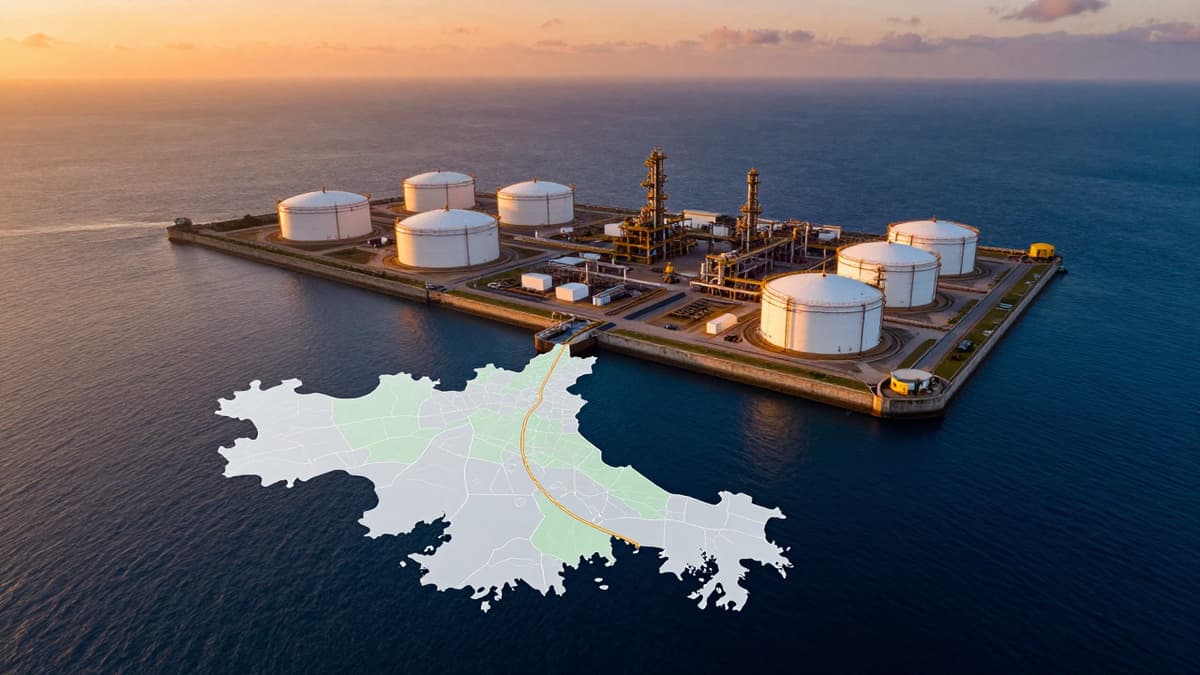
President Trump revisits a decades-old strategy, weighing a seizure of Iran's Kharg Island while Iran proposes new tolls for the Strait of Hormuz amidst rising regional hostilities.
President Trump has declared he is considering a military operation to seize Iran's Kharg Island, a critical energy hub, though he noted a diplomatic deal could be reached "very quickly." This potential move comes as Iranian officials signal a shift in maritime strategy. On March 29, 2026, BBC reporting indicates that tensions are reaching a boiling point, with the US President revisiting strategies from decades past while simultaneously facing new Iranian proposals for controlling the flow of energy through the region's most vital waterway.
The immediate catalyst for the current crisis involves a series of targeted strikes and counter-measures affecting both nuclear infrastructure and naval command structures. Iran's Islamic Revolutionary Guard Corps (IRGC) officially acknowledged the killing of Alireza Tangsiri, a senior naval commander, four days after Israel claimed responsibility for targeting him. Tangsiri, who managed defense for the islands and coasts, died from severe injuries while organizing forces. His death underscores the high stakes of the current conflict, with the IRGC vowing "not to rest until the enemy is completely destroyed" and asserting continued control over the strait despite the loss of their commander.
Simultaneously, the political and legal framework governing the waterway is being challenged by Tehran. Alaeddin Boroujerdi, a Member of Parliament, stated that a new parliamentary plan to govern the Strait of Hormuz will be "approved as soon as possible." Under this proposed "new system," no vessel would be allowed to pass "without the permission" of Iran. Boroujerdi explicitly justified this shift by noting that maintaining security and providing services to vessels involves significant costs. Consequently, he argued that "the time has come" to levy Strait of Hormuz tolls to establish a framework for collecting transit fees. This move marks a significant departure from current norms, effectively nationalizing the right of passage in response to attacks on Iran's nuclear facilities by the US and Israel. Boroujerdi further suggested that Iran has lost the "relevance" of the Treaty on the Non-Proliferation of Nuclear Weapons (NPT) following these recent strikes, hinting at a potential withdrawal from the agreement.
The strategic implications of seizing Kharg Island are deeply rooted in history as well as current military calculations. Donald Trump had previously targeted the island in a 1988 interview with The Guardian, stating, "I'd do a number on Kharg Island" and "I'd go in and take it." In a recent interview on March 13, 2026, when asked about those comments, Trump noted that taking the island was "not high on the list" at that specific moment but conceded he could change his mind "in seconds." On the same day, Trump posted on Truth Social claiming he had directed bombing raids that "totally obliterated" military targets on the island, a "crown jewel" of Iran's infrastructure, though he initially chose not to wipe out the oil infrastructure entirely. However, he warned he would reconsider if Iran interfered with the Strait of Hormuz. In a Financial Times interview published on March 30, 2026, Trump reiterated that the US "had a lot of options," stating, "Maybe we take Kharg Island, maybe we don't," but acknowledged that occupying it would require a long-term presence.
Complicating the strategic landscape is a report from the Wall Street Journal indicating that the US president is considering a military operation with the specific goal of extracting 1,000 pounds of uranium from Iran. This operation would likely require American forces to operate inside the country for days or longer. Security officials suggest Trump remains generally open to the idea because it could help accomplish his central goal of preventing Iran from ever making a nuclear weapon. The New York Times adds that troops deployed to the region could be tasked with a mission aimed at Iran's highly enriched uranium at the Isfahan nuclear site, which is believed to be stored deep under a mountain. Both outlets emphasize that such an operation would be complicated and high-risk. While the initial target could be the uranium at Isfahan, the same forces could alternatively be used to seize Kharg Island or protect the Strait of Hormuz from further disruption.
The conflict has created a precarious situation for the Gulf states, where the implications of energy infrastructure attacks are massive. As described by BBC correspondent Katy Watson, there is a clear tit-for-tat dynamic: when Iran's energy infrastructure is hit, the Gulf can expect missiles and drones targeting its own infrastructure in return. Earlier in March, Qatar's Ras Laffan liquefied natural gas facility was attacked following Israeli strikes on Iran's South Pars gas field. Shortly after, an Iranian electricity facility was hit, and Kuwait reported an attack on one of its power and desalination plants. This latest attack resulted in the death of one Indian worker and caused significant damage to the facility.
The vulnerability of the region is compounded by its geography. The Gulf is an arid desert where natural freshwater is scarce. Consequently, hundreds of desalination plants, which convert sea water into drinking water, are essential to making the region liveable. With 90% of drinking water in the Gulf coming from these plants, any disruption to their operation poses a massive risk to the population. Leaders from across the Gulf have condemned the recent attacks, recognizing that escalation is a massive worry. If these facilities become inoperable due to the ongoing hostilities, the region's ability to sustain its population would be severely compromised. The current trajectory suggests that without a rapid diplomatic resolution, the physical and human cost of the conflict will continue to rise, with the Strait of Hormuz remaining the flashpoint for potential regional collapse.
The convergence of Trump's potential seizure of Kharg Island and Iran's imposition of transit controls creates a volatile environment where the balance of power is rapidly shifting. If the US proceeds with a military operation to extract uranium or occupy the island, the immediate result would likely be a complete shutdown of oil flows through the Strait of Hormuz. Conversely, if Iran successfully implements its new system of tolls and passage permissions, the global economic impact could be profound, with shipping costs soaring and security risks escalating to new heights. The confirmed death of Alireza Tangsiri and the subsequent IRGC vows to continue "crushing blows" suggest that retaliation will be relentless. The Gulf states, already suffering from attacks on their critical desalination and energy infrastructure, face a future where the stability of their primary water supply is directly threatened by the geopolitical maneuvers of major global powers. Unless a "very quickly" made deal is reached, the region faces a prolonged period of instability where the physical security of the Strait and the survival of its populations remain in precarious balance.
Jun 8, 2026 02:17 UTC
Magnitude 7.8 Quake Shakes Philippines, Urging Immediate Evacuations
Jun 8, 2026 00:51 UTC
Trump Claims Iran Nuclear Deal Imminent Despite Diplomatic Fractures
Jun 8, 2026 00:47 UTC
Iran Fires Missiles at Israel After Beirut Strike
Jun 7, 2026 22:00 UTC
US, Iran Peace Hops Fade 100 Days Into War
Jun 8, 2026 04:15 UTC
Trump Urges Netanyahu to Halt Iran Strike for Peace


