
Section
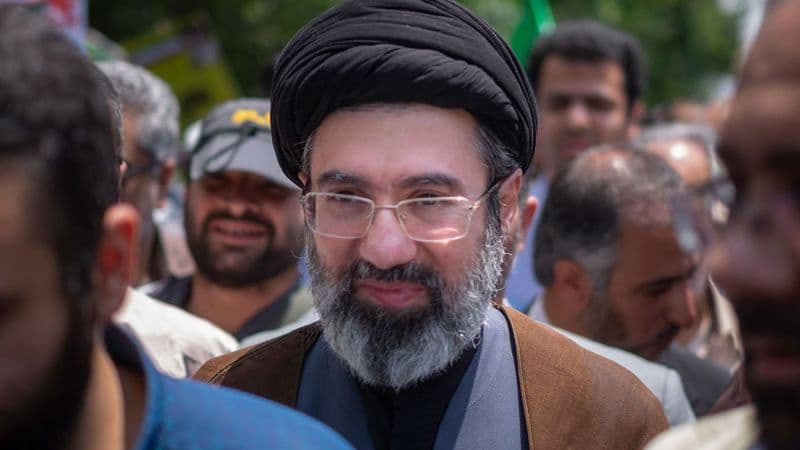
As Mojtaba Khamenei remains hidden amidst heavy bombing, tensions escalate between Washington and Tehran over oil chokepoints and leadership succession.
The geopolitical landscape has shifted dramatically following the appointment of Mojtaba Khamenei as Iran’s third supreme leader. Amidst a backdrop of intense conflict, the new leadership faces immediate scrutiny regarding his visibility and the ongoing military engagement with US forces. Nearly 48 hours since being appointed, Mojtaba Khamenei is nowhere to be seen, creating an atmosphere of uncertainty that contrasts sharply with the state narrative attempting to project stability through AI-generated imagery and archival footage.
State propaganda networks have heavily relied on artificial intelligence to create an image of an all-wise leader who rightly inherits the mantle of leadership. A prominent mural at Vali Asr Square in Tehran depicts a young Khamenei receiving an Iranian flag from his slain father while Ayatollah Ruhollah Khomeini looks on approvingly. This imagery is deliberate, signaling a seamless passing of the torch. However, it conspicsciously avoids reckoning with the central contradiction at its heart: a father-to-son succession in a system born from a revolution against hereditary monarchy.
President Donald Trump has expressed clear disappointment in this pick, insisting the US be involved in selecting the country's next leader. When asked if Mojtaba Khamenei has a target on his back, Trump responded that he did not want to say, though later told Fox News he does not believe the new leader can "live in peace." He noted he had a target on his own back previously, implying potential risks for the successor.
The conflict has resulted in significant loss of life and economic disruption. Thunderous strikes rained down on Tehran late Monday, marking the tenth consecutive night of heavy Israeli bombing. Residents described the shelling as constant and impossible to sleep through. More than 1,200 civilians have been killed in Iran and at least 486 people killed in Lebanon since the US and Israel launched strikes. Additionally, nearly 140 US service members have been injured since the start of the war.
The Strait of Hormuz remains a critical flashpoint. Just 39 kilometers at its narrowest point, it carries about one-fifth of the crude oil produced around the world. Nearly 15 million barrels per day of crude production, plus another 4.5 million barrels of refined fuels, remain effectively stranded in the Gulf. Asian markets receive most of this oil, with China taking nearly 40% and India about 15%. Saudi Aramco’s CEO Amin Nasser warned that the conflict would have catastrophic consequences for the oil market if the Strait does not reopen. While France and its allies prepare a defensive mission to reopen the strait, US naval escorts are not imminent.
High-level rhetoric has intensified between Tehran and Washington. Ali Larijani, head of Iran’s National Security Council, warned Trump to watch out so as "not to get eliminated." He stated that even those greater than the President could not eliminate the Iranian nation. This follows a previous warning where Larijani said Trump must pay the price for the strikes. In response, Trump left the door open for conversation but noted it depends on terms.
Meanwhile, diplomatic issues extend beyond state actors. The Iranian women’s soccer team is essentially stuck in Australia because no country is willing to accept their transit back to Iran. Sports journalist Raha Pourbakhsh reported that while a bus was thought to be heading to the Gold Coast Airport, the squad has been unable to leave. Two further members of the team have sought asylum, following five players granted humanitarian visas earlier on Tuesday. The rest of the team is staying in Sydney overnight amidst fears they will face punishment back in Iran after staying silent during the national anthem last week.
The situation remains volatile as Iran grapples with a hereditary succession crisis while under heavy military assault. The closure of the Strait of Hormuz threatens global energy markets, with vast amounts of oil stranded and storage tanks filling rapidly. While US President Trump maintains a stance of skepticism regarding the new leadership, Iranian officials have responded with direct threats to his safety. Simultaneously, the human cost continues to rise, evidenced by civilian casualties and the plight of athletes unable to return home from international competitions.
Jun 13, 2026 07:25 UTC
Trump Blames Iran for Attacks on Indian Ships
Jun 13, 2026 04:59 UTC
Abbas Araghchi Details Draft U.S. Deal Amidst Donald Trump's Drone Accusations
Jun 13, 2026 03:39 UTC
Jaishankar Lodges Strong Protest Over US Navy Attacks on Indian Crew
Jun 13, 2026 02:22 UTC
Border Guard Bangladesh Challenges BSF Over Immigrant Pushbacks
Jun 13, 2026 07:29 UTC
IAF An-32 Aircraft Meets Accident During Landing in Jorhat


