
Section
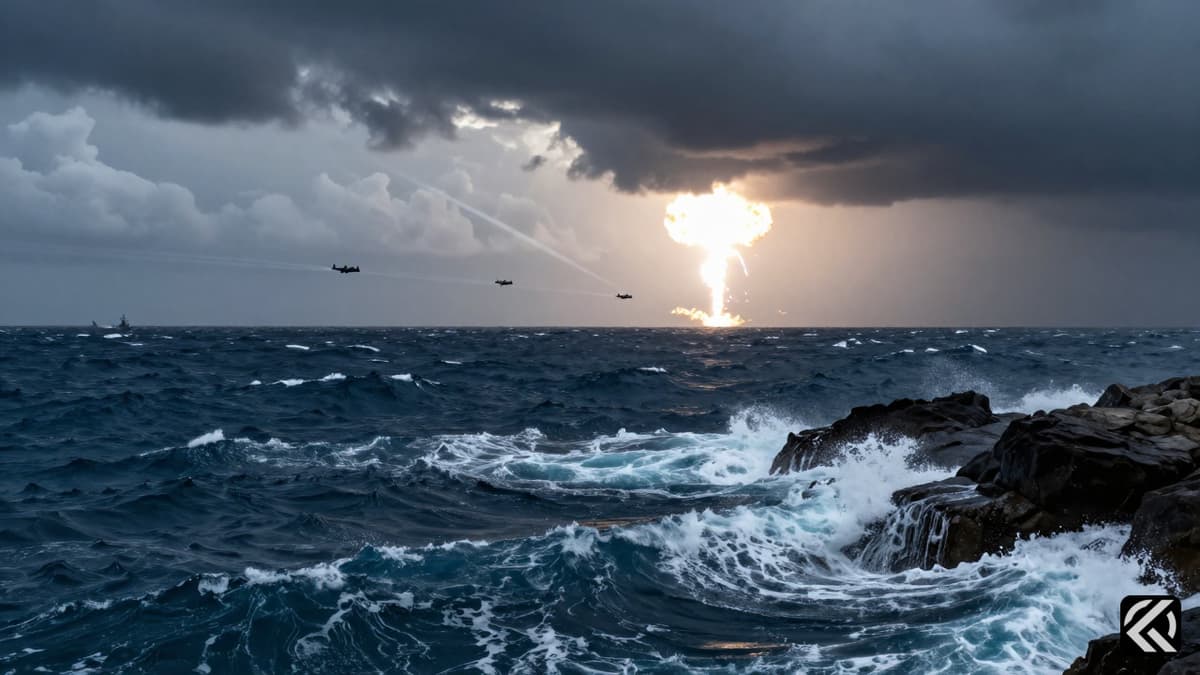
Tensions escalate as President Trump issues a stern warning to Tehran, while Iranian officials claim regional neighbors share responsibility for potential retaliatory strikes.
U.S. President Donald Trump issued a stark warning to Tehran on Wednesday, June 10, 2026, stating that Iran has taken too long to negotiate a beneficial deal and must now "pay the price." This declaration coincided with a significant escalation in military activity, as the United States launched airstrikes against Iran following the crash of a U.S. Army Apache helicopter near the Strait of Hormuz. The rapid succession of diplomatic threats and kinetic military operations marks a critical turning point in the ongoing conflict.
The immediate trigger for the latest wave of hostilities was the crash of the U.S. Army Apache helicopter. The United States blamed Tehran for the incident, prompting an immediate military response. In a statement released on the same day, Iran’s Foreign Ministry warned its Gulf neighbors that they bear a "legal and moral responsibility" to prevent American and Israeli strikes. Tehran argued that regional countries, particularly those along the southern shores of the Persian Gulf, must stop their territory and facilities from being used to plan, organize, or execute hostile actions against Iran.
In response to the U.S. strikes, Iran launched retaliatory attacks targeting Bahrain, Kuwait, and Jordan. These strikes are part of a widening round of retaliatory actions that threaten to derail ongoing talks aimed at ending the Iran war. The Iranian Foreign Ministry emphasized that the situation requires regional actors to intervene to prevent further escalation. The tension is palpable as Washington and Tehran trade attacks, with the Strait of Hormuz serving as a focal point for the geopolitical struggle.
The strategic implications of these events are profound. The Strait of Hormuz is a critical chokepoint for global oil supplies, and any disruption here has immediate global economic consequences. The involvement of Bahrain, Kuwait, and Jordan in the conflict expands the geographical scope of the war, raising fears of a broader regional conflagration. The U.S. decision to blame Iran for the helicopter crash and respond with airstrikes demonstrates a firm stance, but it also risks deepening the cycle of violence.
Diplomatic channels appear to be straining under the pressure. President Trump’s comment on Truth Social that Iran has taken "too long to negotiate" suggests that the window for a peaceful resolution is closing. The administration’s message is clear: inaction or delay will be met with force. This hardline approach aligns with the military escalation, signaling that the U.S. is prepared to use significant power to compel a resolution.
Iran’s response indicates that it does not intend to absorb the blows quietly. By holding neighboring countries responsible, Tehran is attempting to internationalize the conflict and place pressure on the Gulf states to mediate or distance themselves from U.S. operations. This strategy could strain relations between Iran and its Gulf neighbors, potentially leading to further instability in the region. The war is no longer a bilateral conflict but a complex web of alliances and hostilities.
The timeline of events highlights the fragility of peace in the region. What began as a single incident involving a helicopter crash has quickly spiraled into a multi-front conflict. The speed at which the U.S. moved from attribution to action underscores the high stakes involved. Meanwhile, Iran’s assertion of moral and legal responsibility for its neighbors challenges the established geopolitical order in the Gulf.
As the conflict continues, the focus remains on the Strait of Hormuz and the surrounding airspace. The area has become a zone of intense military activity, with both sides engaging in a dangerous game of brinksmanship. The international community watches closely, concerned about the potential for a wider war that could engulf the entire Middle East. The outcome of this confrontation will have lasting implications for global security and energy markets.
The immediate aftermath of these events suggests a dangerous trajectory for Middle East stability. The combination of Trump’s ultimatum and Iran’s retaliatory strikes indicates that diplomatic efforts are currently overshadowed by military posturing. If negotiations do not resume quickly with concrete terms, the risk of prolonged conflict increases. The involvement of neighboring states in the crossfire could force them to choose sides, fracturing regional unity. Long-term impacts may include heightened militarization of the Gulf states and a significant disruption in global energy supply chains, as the Strait of Hormuz remains a key concern for international trade.
Jun 11, 2026 12:59 UTC
US Strike on Settebello Kills Indian Sailors Amid Strait of Hormuz Tensions
Jun 11, 2026 12:49 UTC
Air India Flight 171 Crash Sparks Debate Over Boeing 787 Dreamliner Faults
Jun 11, 2026 08:51 UTC
US-Iran Conflict: Indian Seafarers Killed in Gulf Strike
Jun 11, 2026 18:04 UTC
Healey Quits Government Over Defence Spending Dispute


