President Trump addressed the nation on the ongoing conflict, confirming US strikes on Tehran and promising severe consequences to end the oil crisis.
U.S. President Donald Trump addressed the nation on Thursday, April 2, 2026, to discuss the escalating war with Iran and the subsequent global economic turbulence. The speech, delivered just hours after the President had previously indicated an imminent end to operations, detailed the U.S. strikes on Tehran and the fluctuating state of global oil prices.
The address served as a comprehensive review of the military campaign initiated on February 28, 2026, when Israel and the U.S. launched a joint "pre-emptive action." The administration, referencing the operation as either "Operation Roaring Lion" or "Operation Epic Fury," stated that key Iranian cities, including Tehran, Qom, and Isfahan, were targeted. These strikes resulted in the death of Iran's Supreme Leader, Ayatollah Ali Khamenei, and over 200 civilians, marking a pivotal shift in the geopolitical landscape.
In his speech, President Trump outlined a strategy of aggressive retaliation. He declared, "We are going to hit them extremely hard over the next two or three weeks," and vowed to "bring them back to the Stone Age." This rhetoric was aimed at the Iranian leadership, which Trump claims has already suffered a regime change due to the death of its leaders. He added, "Regime change has occurred because of all their leaders' death. Yet if there is no deal, we are going to hit each of their electric generating plants." The President characterized the U.S. military as "unstoppable," asserting, "We have all the cards, they have none."
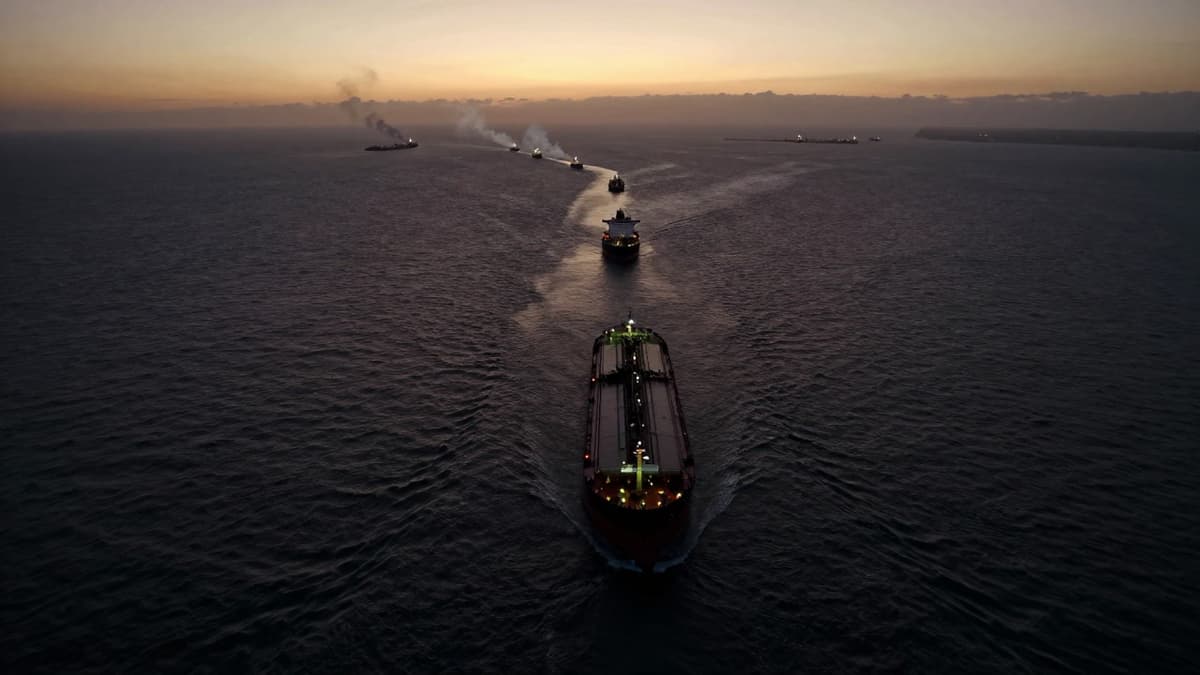
The conflict has had immediate and severe consequences for global energy markets. In response to the U.S. and Israeli strikes, Iran has practically closed the Strait of Hormuz, a vital choke point for global oil exports. This closure has triggered a surge in oil prices, creating turmoil in supply chains worldwide. Trump directly attributed this economic instability to the Iranian government, stating, "This short-term increase has been entirely the result of the deranged Iranian regime."
President Trump utilized the platform to highlight American energy independence and the reduced global reliance on the strait. He boasted, "We are the number one producer of oil and gas on the planet. We produce more than Saudi Arabia and Russia combined." Furthermore, he noted, "U.S. imports almost no oil through the Hormuz Strait. We haven't needed it, and we don't need it."
Addressing the international community, the President urged other nations that still rely on the strait to take action. He challenged them to "build up some delayed courage" and stated, "Go to the Strait and just take it. Use it for yourself." He encouraged countries to purchase American energy instead, saying, "Buy oil from the United States of America. We have so much." The President also emphasized that nations receiving oil through the passage must now protect the strait themselves.
On the domestic front, Trump contrasted the current conflict with his administration's economic achievements. He claimed, "We built the strongest economy in history. In one year, we have taken a dead and crippled country and made it the hottest country in the world." He linked the resolution of the war to the immediate stabilization of the economy, telling the audience, "All I have to do is leave Iran, and we'll be doing that very soon, and they'll tumble down."
The timeline for the military campaign was a focal point of the address. On March 31, 2026, Trump had stated that U.S. forces would end operations in Iran "very soon," a sentiment he reinforced by citing a two-to-three-week window for the remainder of the aerial campaign. During a White House event following the initial attacks, he reiterated that the high fuel prices since the war began on February 28 would vanish once the U.S. withdrawal from active combat operations is complete.
The situation remains fluid as the administration pursues talks with Iranian authorities while maintaining its aerial assault. The President's words underscore a dual approach: relentless military pressure to dismantle the Iranian command structure and a diplomatic push to stabilize the global oil market by forcing other nations to secure the shipping lanes themselves. The U.S. stance is clear that the regime's collapse is inevitable if they do not negotiate, with the threat of hitting critical infrastructure looming large.
President Trump's address confirms that the U.S. believes the war is effectively won militarily but remains a tool for geopolitical leverage. With the Supreme Leader killed and key cities struck, the regime is in a state of collapse. However, the closure of the Strait of Hormuz by Iran poses a persistent threat to global energy security that cannot be resolved solely by American military might. The prediction for the immediate future suggests that the U.S. will likely maintain a naval presence or push other nations to enforce the strait's security, as Washington has made it clear it will not shoulder the burden alone. If negotiations fail, the threat to hit electric plants implies a further degradation of Iran's infrastructure, potentially prolonging the global economic impact. The President's assertion that the U.S. does not need Hormuz oil suggests a long-term pivot where American energy dominance becomes the primary buffer against such blockades, reshaping global trade dynamics for years to come.
Jun 8, 2026 02:17 UTC
Magnitude 7.8 Quake Shakes Philippines, Urging Immediate Evacuations
Jun 8, 2026 00:51 UTC
Trump Claims Iran Nuclear Deal Imminent Despite Diplomatic Fractures
Jun 8, 2026 00:47 UTC
Iran Fires Missiles at Israel After Beirut Strike
Jun 7, 2026 22:00 UTC
US, Iran Peace Hops Fade 100 Days Into War
Jun 8, 2026 04:15 UTC
Trump Urges Netanyahu to Halt Iran Strike for Peace


