
Section
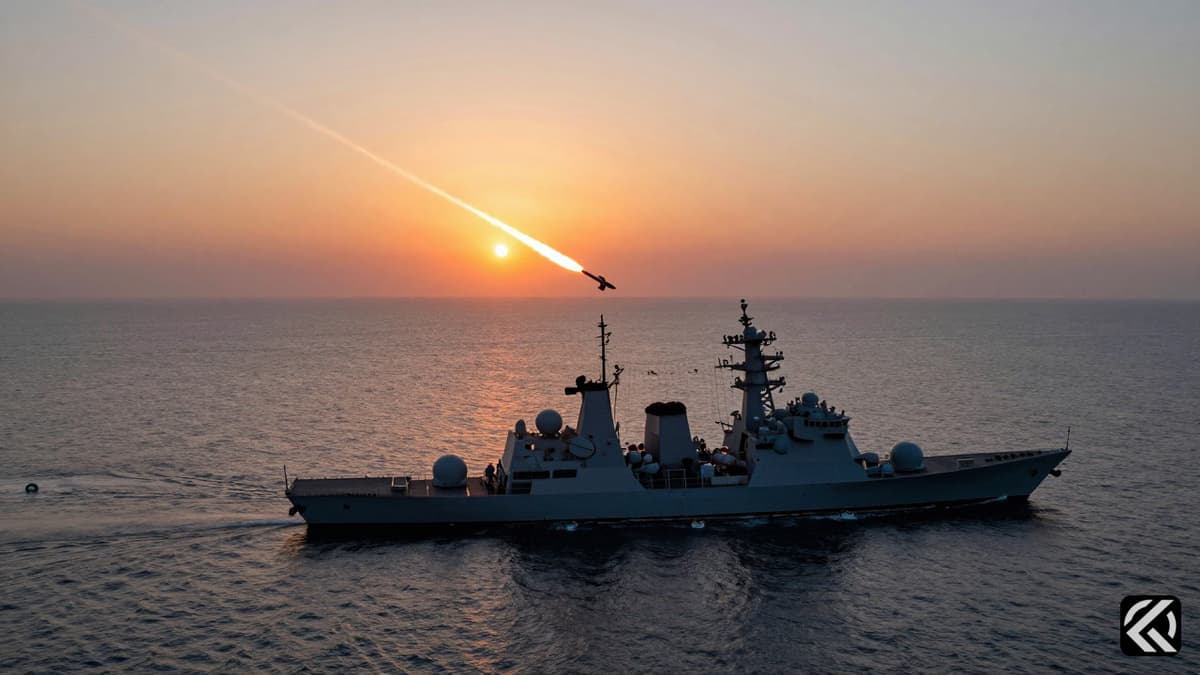
President Trump vows intensified military pressure on Iran today, citing failed negotiations and aggression, as strikes continue to reshape the geopolitical landscape.
In a significant escalation of tensions, President Donald Trump announced on Wednesday that the United States would deliver a heavy blow to Iran later that day. This statement followed a night of renewed hostilities where both sides exchanged strikes, marking a sharp turn in the ongoing geopolitical standoff that began in late February.
The threat of renewed force comes as diplomatic channels remain strained. Trump addressed reporters in the Oval Office, stating, "We hit them hard yesterday and we're going to hit them hard again today." This declaration was made shortly after the US military confirmed the commencement of operations against Iranian targets. The timing of these remarks underscores the volatile nature of the region, where previous ceasefire agreements have struggled to hold as mutual accusations of aggression mount.
US Central Command (Centcom) confirmed on Wednesday night that forces had begun launching strikes at 17:15 Eastern Time against multiple targets within Iran. In a post on X, the command characterized these actions as a response to Iran's "unwarranted and continued aggression." This recent wave of military activity follows US strikes on Tuesday, which were triggered by Trump’s assertion that Iran had downed a US Army helicopter. The rapid succession of these events highlights the fragility of the current security architecture in the Gulf region.
President Masoud Pezeshkian of Iran responded swiftly to Trump’s briefing with a post on X, asserting that Iran "will stand firm against any pressure or threat." This stance reflects Tehran’s broader strategy of defiance in the face of American military pressure. Meanwhile, the Iranian Islamic Revolutionary Guard Corps (IRGC) claimed responsibility for counter-strikes, stating it had launched attacks on US bases in the region, including targets in Bahrain and Jordan. Kuwait’s army also reported intercepting an attack aimed at its territory.
The conflict has severely impacted regional stability and civilian infrastructure. On Tuesday, US strikes targeted Iranian defense systems, ground control stations, and radar sites near the Strait of Hormuz. Iranian state media reported that these strikes hit two reservoirs in the area, leaving thousands of residents in the southern port town of Sirik without drinking water for 12 hours. This humanitarian consequence adds a layer of complexity to the military engagement, drawing attention to the collateral damage of the prolonged conflict.
In a separate development illustrating the breadth of the US naval blockade, the US military struck an oil tanker in the Gulf of Oman that had attempted to transport oil from Iran. The Indian government reported that three Indian sailors were missing and 21 crew members were rescued after the Settebello was attacked off the coast of Oman. The Settebello is the eighth ship the US has fired upon since establishing the blockade, which was enacted after Iran effectively closed the key Strait of Hormuz shipping route in response to earlier US and Israeli attacks on Tehran.
Diplomatic negotiations continue to unravel amidst the violence. Trump reiterated a call for Iran to "sign a deal" during his Wednesday briefing, emphasizing that the proposed agreement would "totally prohibit them from ever having a nuclear weapon." However, Iranian foreign ministry spokesman Esmaeil Baqai accused the US of damaging the diplomatic process through "contradictory messages" and repeated shifts in positions. He noted that any viable diplomatic process requires a minimum of stability, which has been absent since the fighting began on 28 February.
The origins of this current conflict trace back to late February when the US and Israel launched strikes on Iran that killed the country's supreme leader. Iran responded by launching attacks on Israel and US-allied states in the Gulf, leading to a rapid escalation that drew Lebanon into the conflict in March. Although a ceasefire was agreed upon in April for two weeks, both sides have since exchanged intermittent fire without returning to full-scale hostilities, until these recent developments.
The persistent cycle of violence suggests that a lasting resolution remains elusive. While representatives have engaged in fraught negotiations, including a meeting in Pakistan, the breakdown of trust is evident. If the current trajectory holds, with both sides exchanging fire and diplomatic channels failing, the risk of a broader regional war increases. The blockade and targeted strikes indicate a strategy of coercion that may harden Iranian resolve rather than force compliance. Consequently, the Middle East faces a prolonged period of instability, with civilian populations and international shipping bearing the brunt of a diplomatic process that appears to be collapsing under the weight of military action.
Jun 11, 2026 12:59 UTC
US Strike on Settebello Kills Indian Sailors Amid Strait of Hormuz Tensions
Jun 11, 2026 12:49 UTC
Air India Flight 171 Crash Sparks Debate Over Boeing 787 Dreamliner Faults
Jun 11, 2026 08:51 UTC
US-Iran Conflict: Indian Seafarers Killed in Gulf Strike
Jun 11, 2026 18:04 UTC
Healey Quits Government Over Defence Spending Dispute


