
Section
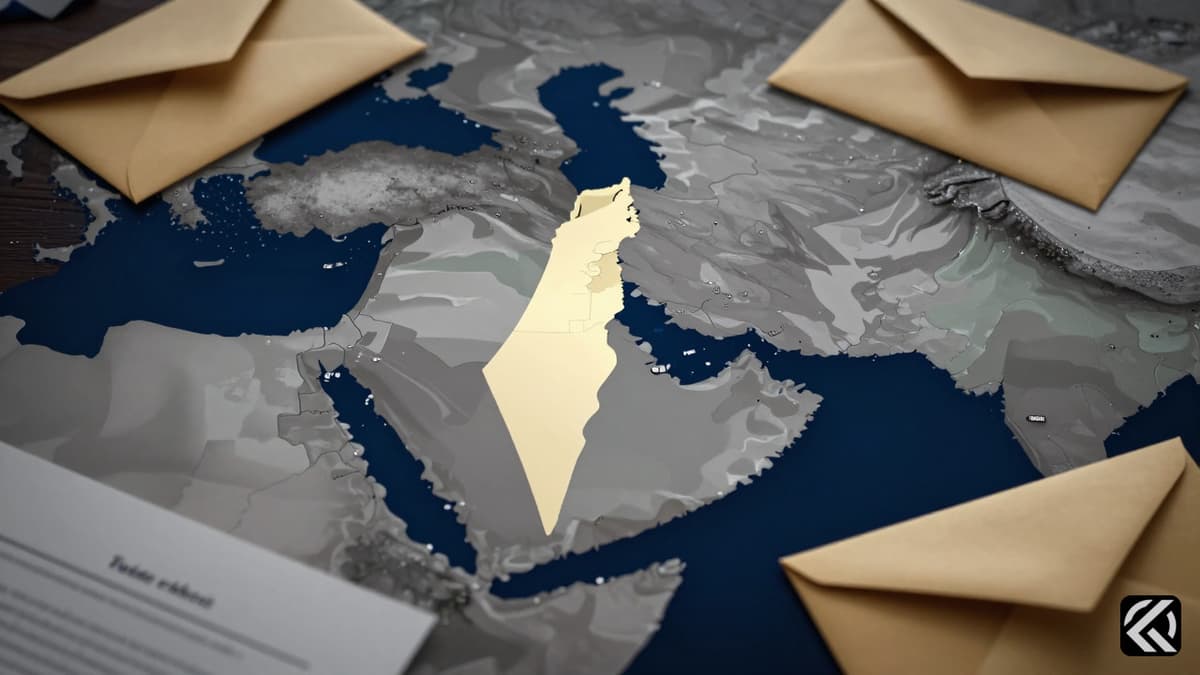
President Donald Trump has urged Pakistan and other Muslim-majority nations to join the Abraham Accords, sparking a complex diplomatic challenge for Islamabad.
US President Donald Trump has issued a direct call for several Muslim-majority countries, including Pakistan, to sign the Abraham Accords, framing it as a historic reshaping of Middle Eastern geopolitics. This push creates significant tension for Islamabad, which must balance deep economic ties with Gulf states against its longstanding political support for the Palestinian cause.
The President’s remarks, delivered via a Truth Social post and a high-level diplomatic call, suggest that participation in the US-brokered framework should be mandatory for regional stability. He cited discussions with leaders from Saudi Arabia, the UAE, Qatar, Pakistan, Türkiye, Egypt, Jordan, and Bahrain as evidence that the accords bring "Financial, Economic, and Social BOOM." Trump argued that these agreements could deliver "true Power, Strength, and Peace to the Middle East for the first time in 5,000 years."
Axios reports that Trump raised this issue during a Saturday call with Arab and Muslim leaders, a move that reportedly caught participants off guard. This is particularly notable for Saudi Arabia, Qatar, and Pakistan, none of which formally recognize Israel. Trump even floated the possibility of Iran eventually joining the "unparalleled World Coalition" if a final agreement is reached with Washington, signaling an expansion of his diplomatic ambitions beyond the initial signatories.
For Pakistan, this directive presents an acute diplomatic crisis. The country has consistently refused to recognize Israel, maintaining that such a move is contingent upon the creation of an independent Palestinian state based on pre-1967 borders, with East Jerusalem as its capital. This stance puts Islamabad in an uncomfortable position as its primary economic backers and security partners in the Gulf are increasingly normalizing relations with Israel under US pressure.
The Abraham Accords, first signed in September 2020 between Israel, the UAE, and Bahrain, have since expanded to include Morocco, Sudan, and Kazakhstan, which formally joined in 2025 despite having established ties with Israel since the 1990s. The framework marked a significant departure from previous diplomacy by prioritizing trade, investment, and defense cooperation over a final resolution to the Palestinian issue.
Pakistan’s foreign minister, Ishaq Dar, firmly rejected any speculation that Islamabad might join the accords in 2025. During a press conference at the Foreign Office, Dar stated, "We are not ready to recognise Israel until the two-state solution to the Palestine conflict is accepted." He emphasized that there is "no change in our stated policy on the Palestine issue" and that signing the accords would amount to abandoning Pakistan’s demand for a Palestinian state with "Al-Quds Al-Sharif as its capital."
The pressure on Pakistan is multifaceted. The nation relies heavily on Gulf financial assistance, remittances, and security cooperation. However, any recognition of Israel risks provoking strong opposition from religious groups and political factions within Pakistan. This contradiction has strained Islamabad since the accords' inception in 2020, forcing the government to navigate a narrow path between maintaining critical economic relationships and adhering to its ideological stance on Palestine.
Trump’s insistence that the accords should be "mandatory" for most Muslim nations intensifies this pressure. By linking potential regional stability and economic benefits directly to membership, the US administration is effectively challenging Pakistan’s sovereignty over its foreign policy decisions. The inclusion of Kazakhstan, a Central Asian nation rather than a traditional Arab or Muslim-majority power in the Middle East, further underscores the US strategy of decoupling diplomatic recognition from immediate territorial or religious conflicts, focusing instead on strategic alignment against shared adversaries like Iran.
As negotiations between Washington and Tehran continue over a potential ceasefire, the role of the Abraham Accords becomes even more pivotal. Trump’s vision of a broader coalition, potentially including Iran, suggests a long-term strategy to isolate Tehran through diplomatic integration rather than military confrontation. For Pakistan, the implication is clear: the era of non-alignment in the face of US-driven normalization is ending. The government must now decide whether to risk economic fallout by resisting US pressure or to compromise its core ideological principles to secure vital Gulf support.
Trump’s push forces Pakistan to confront the limits of its non-recognition policy. As Gulf states deepen ties with Israel, Islamabad’s economic stability may become increasingly tied to its diplomatic flexibility. Without a concrete advancement in the two-state solution, Pakistan may face sustained pressure to normalize relations. The long-term impact could be a gradual erosion of Pakistan’s independent foreign policy in the region, compelling it to align more closely with US geopolitical interests despite domestic political costs.
Jun 11, 2026 17:21 UTC
Bangladesh Opposition Mobilizes Against India-Bangladesh Border Push-Ins and BSF Killings
Join 50,000+ readers getting the global briefing every morning.
No spam. Unsubscribe anytime.
Jun 11, 2026 17:40 UTC
Boelter Pleads Guilty in Minnesota Political Assassinations
Jun 11, 2026 17:21 UTC
Bangladesh Opposition Mobilizes Against India-Bangladesh Border Push-Ins and BSF Killings
Jun 11, 2026 17:21 UTC
John Healey Quits as UK Defence Secretary Over Funding Dispute
Jun 11, 2026 16:19 UTC
UK Defence Secretary John Healey Quits Over Funding Dispute


