
Section
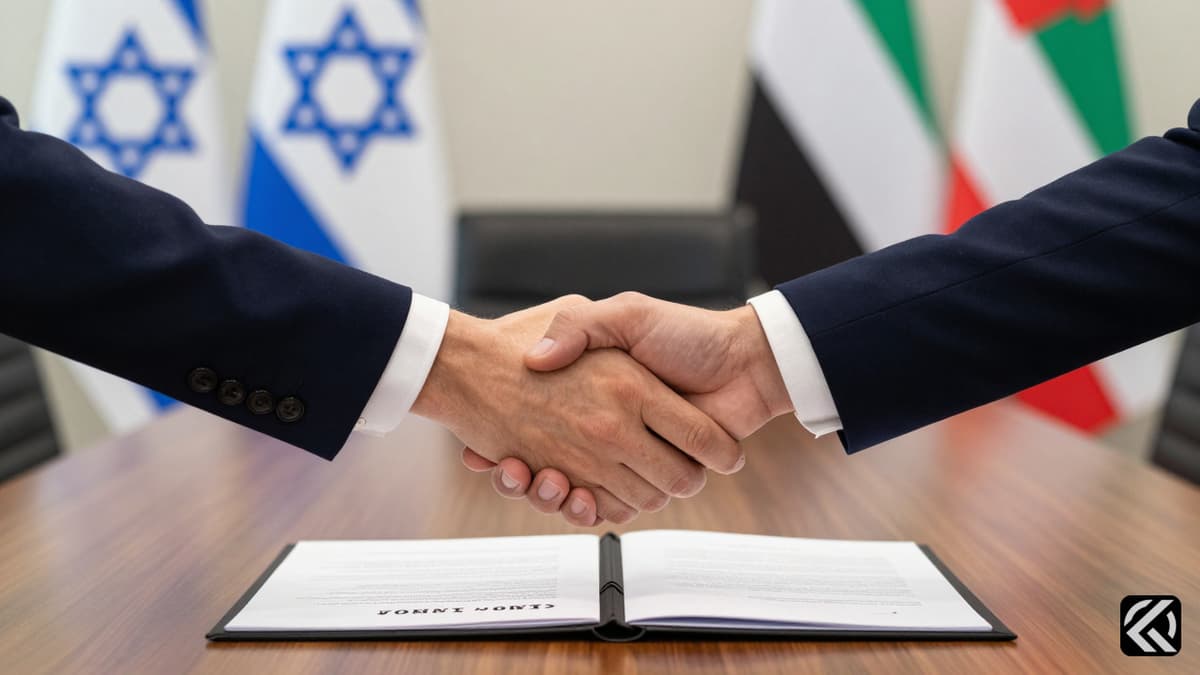
President Trump is leveraging the developing peace agreement with Iran to pressure West Asian nations into normalizing diplomatic ties with Israel through the Abraham Accords framework.
U.S. President Donald Trump on Monday, May 25, 2026, issued a direct appeal to Muslim-majority nations in West Asia and beyond. He urged these countries to establish normalized diplomatic relations with Israel. This push occurs within the critical context of a developing peace agreement with Iran, signaling a major shift in regional foreign policy objectives.
In a recent post on his Truth Social platform, Mr. Trump detailed his diplomatic outreach. He listed the leaders of various nations with whom he spoke on Saturday, May 23. The discussions centered on efforts to end the ongoing war with Iran. Central to these negotiations was the potential signing and expansion of the Abraham Accords, a framework that has already reshaped regional alliances.
The Abraham Accords represent a significant chapter in modern diplomatic history. Brokered by Mr. Trump in 2020, these agreements are widely recognized as a major foreign policy achievement. They marked a pivotal shift in relationships between Israel and several Arab nations. Driven by a shared apprehension regarding Iran’s regional power and nuclear initiatives, the initial signatories sought to strengthen their ties with the United States.
Between August and December 2020, four countries began formalizing diplomatic ties with Israel. These efforts received robust bipartisan support from the United States, which played a crucial role as a mediator. The initial group included the United Arab Emirates, Bahrain, and Israel. Shortly thereafter, in December 2020, Morocco joined the process, signing a normalization agreement.
The United Arab Emirates played a leading role in these early efforts. By normalizing relations with Israel, the UAE aimed to enhance its economic prospects. The goal was to help move the region beyond years of hostility and strife, engaging instead in a framework of peace and prosperity. Bahrain recognized similar potential economic benefits in establishing ties with Israel.
For Israel, these agreements represented a significant diplomatic breakthrough. They expanded the country’s circle of recognition within the Arab world, breaking decades of conflict and hostility. The signing marked a transition toward a framework emphasizing peace and international collaboration. Following the initial agreements, Kosovo and Sudan also sought to establish or strengthen ties with Israel, further broadening the scope of the accords.
Currently, expanding the accords to other Arab and Muslim-majority states remains a major diplomatic objective. Mr. Trump has identified several key nations for potential inclusion. He has discussed joining the accords with Saudi Arabia, Qatar, Pakistan, Turkiye, and Egypt. Notably, he also spoke with Jordan, Bahrain, and the United Arab Emirates, though the latter two are already members of the group.
Despite these high-level discussions, the U.S.’s recent attempts to include more nations have faced significant hurdles. The geopolitical landscape remains complex, with the ongoing war with Iran serving as both a catalyst and a complication for these peace efforts. The success of expanding the Abraham Accords depends heavily on the stability of the developing peace agreement with Iran.
The current diplomatic push by President Trump highlights the interconnected nature of Middle Eastern security. If Muslim-majority nations successfully join the Abraham Accords alongside the developing Iran peace agreement, it could permanently alter the geopolitical map of West Asia. This expansion would likely deepen economic integration and security cooperation among signatories. However, the significant hurdles faced by recent inclusion attempts suggest that consensus remains fragile. The long-term impact will depend on whether the current peace framework with Iran holds, serving as a stable foundation for broader regional normalization.
Jun 11, 2026 12:59 UTC
US Strike on Settebello Kills Indian Sailors Amid Strait of Hormuz Tensions
Jun 11, 2026 12:49 UTC
Air India Flight 171 Crash Sparks Debate Over Boeing 787 Dreamliner Faults
Jun 11, 2026 08:51 UTC
US-Iran Conflict: Indian Seafarers Killed in Gulf Strike
Jun 11, 2026 18:04 UTC
Healey Quits Government Over Defence Spending Dispute


